
You cleanse, you exfoliate, you layer your serums. But your skin still looks flat. Not tired from one bad night, just consistently, stubbornly dull. If that sounds familiar, the answer might not be in your routine. It might be inside your cells.
NAD+ (nicotinamide adenine dinucleotide) is a molecule your skin cells rely on for energy. Think of it as the fuel that keeps your cellular repair crew running. When NAD+ levels are high, your skin renews itself efficiently, repairs daily damage, and reflects light well.
When NAD+ declines, which it does naturally from your 30s onward, that whole system slows down. The result is skin that looks tired, flat, and harder to brighten, no matter what you put on it. This post explains what NAD+ actually does for your skin, why it declines, and what you can do about it.
What Is NAD+ and Why Does Your Skin Need It?
NAD+ stands for nicotinamide adenine dinucleotide. It is a coenzyme, a helper molecule, found in every living cell in your body, including every cell in your skin. Its main job is to support energy production. Without NAD+, your cells cannot make the energy they need to do their work.
In your skin, that work includes renewing old cells, repairing UV damage, producing collagen, and maintaining your barrier. These are not passive processes. They require real cellular energy.
NAD+ is what makes that energy available. It also activates a group of proteins called sirtuins, which help regulate how your cells age and repair themselves. Research published in Cell Metabolism (Imai et al., 2013) showed that NAD+ is directly linked to how efficiently cells maintain themselves over time.
When NAD+ is plentiful, your skin cells are efficient. They turn over at a healthy rate, repair damage quickly, and produce the structural proteins that give skin its firmness and glow. When NAD+ drops, everything slows. That slowdown is visible, and it often shows up first as dullness.
Why Does NAD+ Decline, and When Does It Start?
NAD+ levels begin to fall in your 30s. By your 40s and 50s, research suggests they can be less than half of what they were in your 20s (Verdin, 2015, Science). This is not unusual or avoidable, it is a normal part of how cells age. But it does have real effects on how your skin looks and behaves.
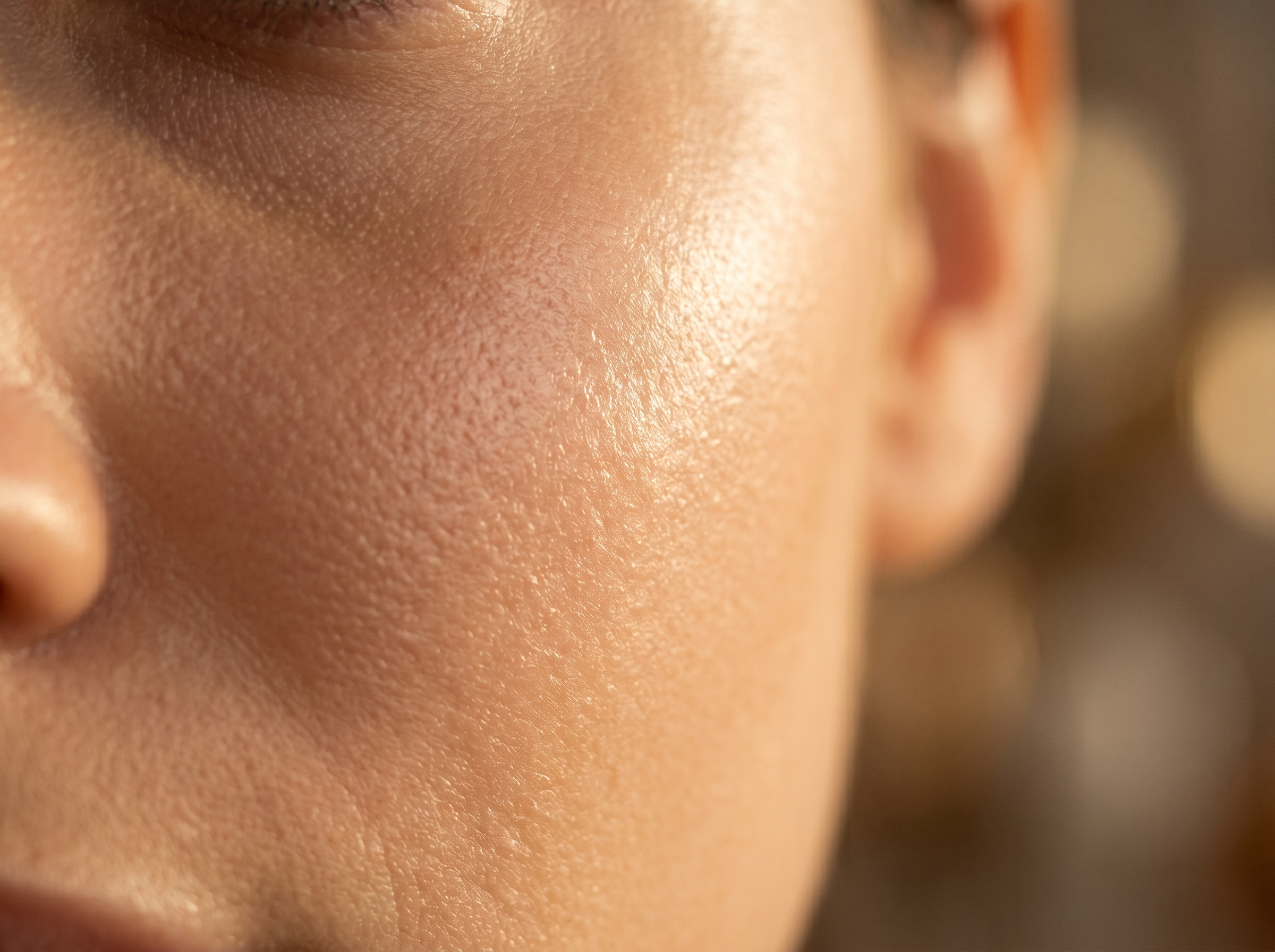
Several things speed up this decline. UV exposure is a major one. When your skin absorbs UV radiation, it triggers a repair enzyme called PARP-1. PARP-1 uses up NAD+ quickly to do its job.
So the more UV exposure your skin gets without protection, the faster your NAD+ reserves are used. Chronic stress, poor sleep, and swelling also draw on NAD+ stores. Your circadian rhythm plays a role too, when sleep is disrupted, your skin's overnight repair processes cannot run efficiently. And NAD+ is depleted faster than it can be restored.
The result is a compounding deficit. Your skin needs more energy to repair itself, but has less fuel available to do it. Cell turnover slows. Damage builds up.
Brightness fades. This is not a skincare product problem. It is a cellular energy problem, and that distinction matters for how you address it.
Key Takeaways
- NAD+ (nicotinamide adenine dinucleotide) is a molecule found in every skin cell.
- It powers the energy your cells need to repair, renew, and function well.
- After your 30s, NAD+ levels drop greatly.
- When this happens, cell turnover slows, repair processes stall, and your skin loses its natural brightness.
- Dullness is often a sign of this cellular energy gap, not just dehydration or a need for more exfoliation.
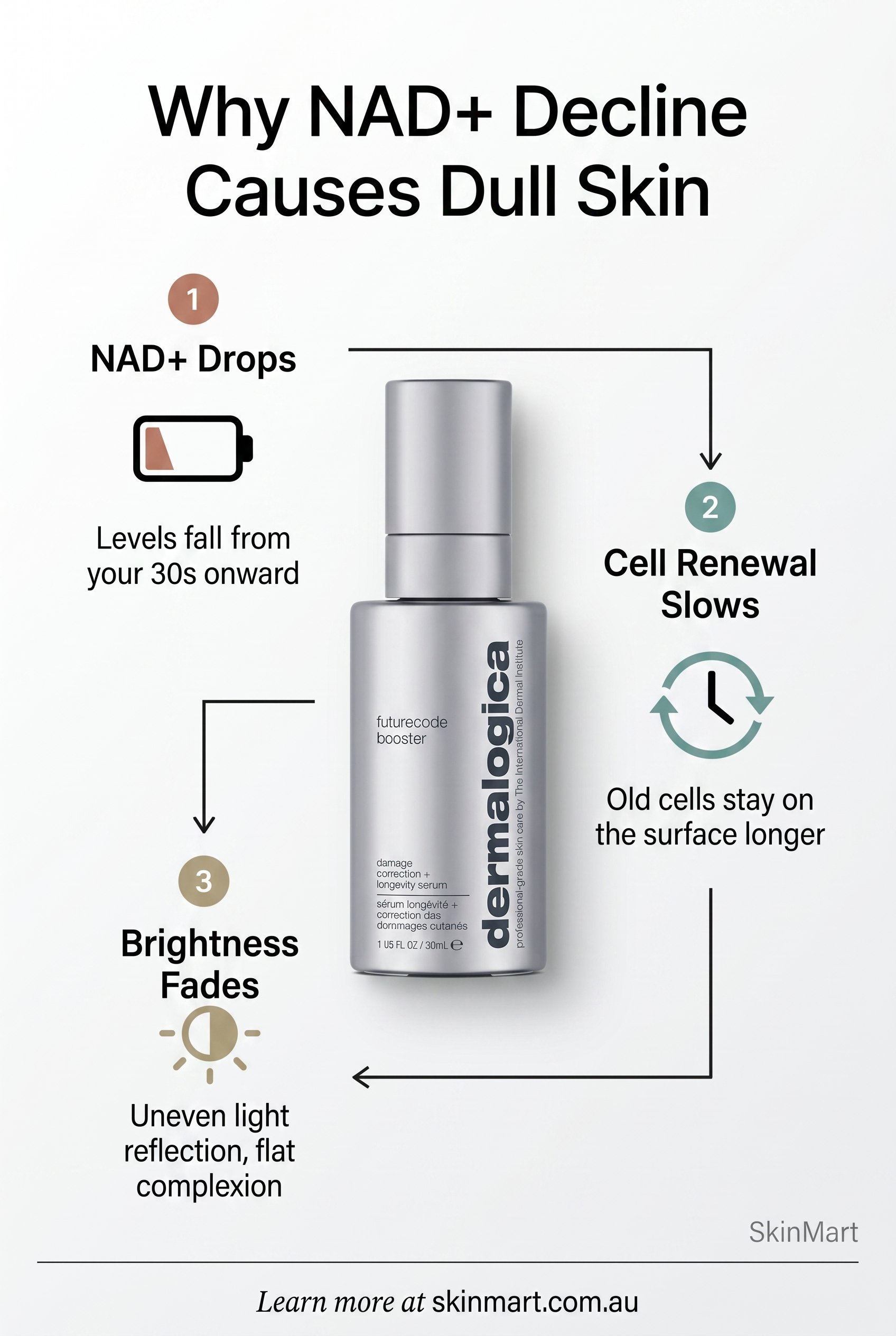
How Does NAD+ Decline Show Up as Dullness?
Skin brightness is not just about hydration or surface texture. It depends on how efficiently your skin cells renew themselves. When cell turnover is healthy, fresh new cells reach the surface regularly.
They reflect light evenly and give skin that clear, luminous quality. When cell turnover slows, as it does when NAD+ drops, older, damaged cells sit on the surface for longer. They scatter light unevenly, and your skin looks flat and tired.
There is also a collagen connection. NAD+ supports the enzymes that help build and maintain collagen. When NAD+ is low, collagen production slows and existing collagen degrades faster.
Collagen gives skin its structure and plumpness, both of which help to how light reflects off your face. Less collagen means skin looks thinner and duller. Brightening ingredients work best when the cells underneath are functioning well, and that is exactly what NAD+ restoration supports.
swelling is another factor. Low NAD+ is linked to higher levels of low-grade skin swelling. This kind of swelling does not always cause redness or sensitivity you can feel. But it does interfere with normal cell function and helps to an uneven, congested-looking complexion. Addressing NAD+ decline helps reduce this background swelling, which allows your skin's natural brightness to come through.
What Can You Do to Support NAD+ in Your Skin?
The most direct way to support NAD+ levels in your skin is through ingredients that either provide NAD+ precursors or protect existing NAD+ from being depleted too quickly. Niacinamide (vitamin B3) is one of the best-studied options. It is a precursor to NAD+, meaning your skin can convert it into NAD+ directly. Research consistently shows niacinamide supports cell energy, reduces swelling, and improves skin clarity. Pairing it with antioxidants like vitamin C gives your cells even more support against the oxidative stress that depletes NAD+.
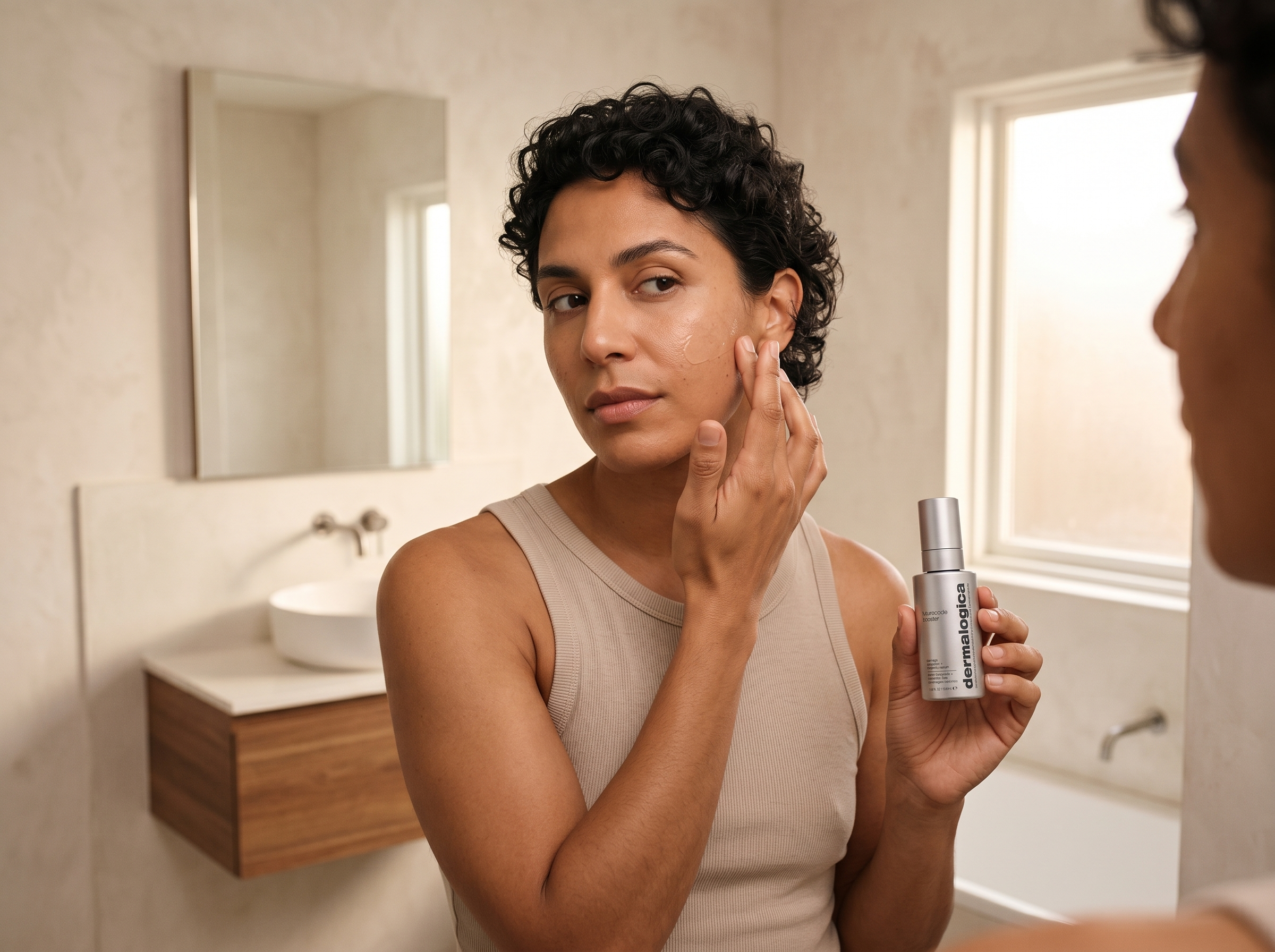
Protecting your skin from UV exposure is equally important. Every time UV radiation hits unprotected skin, PARP-1 activates and burns through NAD+ reserves. Consistent SPF use is not just about preventing sun damage, it is about preserving the cellular energy your skin needs to stay bright and healthy. This is one of the most underrated brightness strategies available.
Sleep quality and consistency also matter more than most people realise. During deep sleep, your skin runs its most intensive repair processes. These processes depend on NAD+. When sleep is fragmented or too short, those repairs are incomplete, and NAD+ is used less efficiently. Prioritising consistent, quality sleep is a genuine cellular investment in your skin's brightness, not just a lifestyle tip.

Featured: FutureCode Booster
Advanced booster that helps extend the longevity of healthy-looking skin by supporting natural skin repair and reducing visible signs of DNA-relate...
Shop Now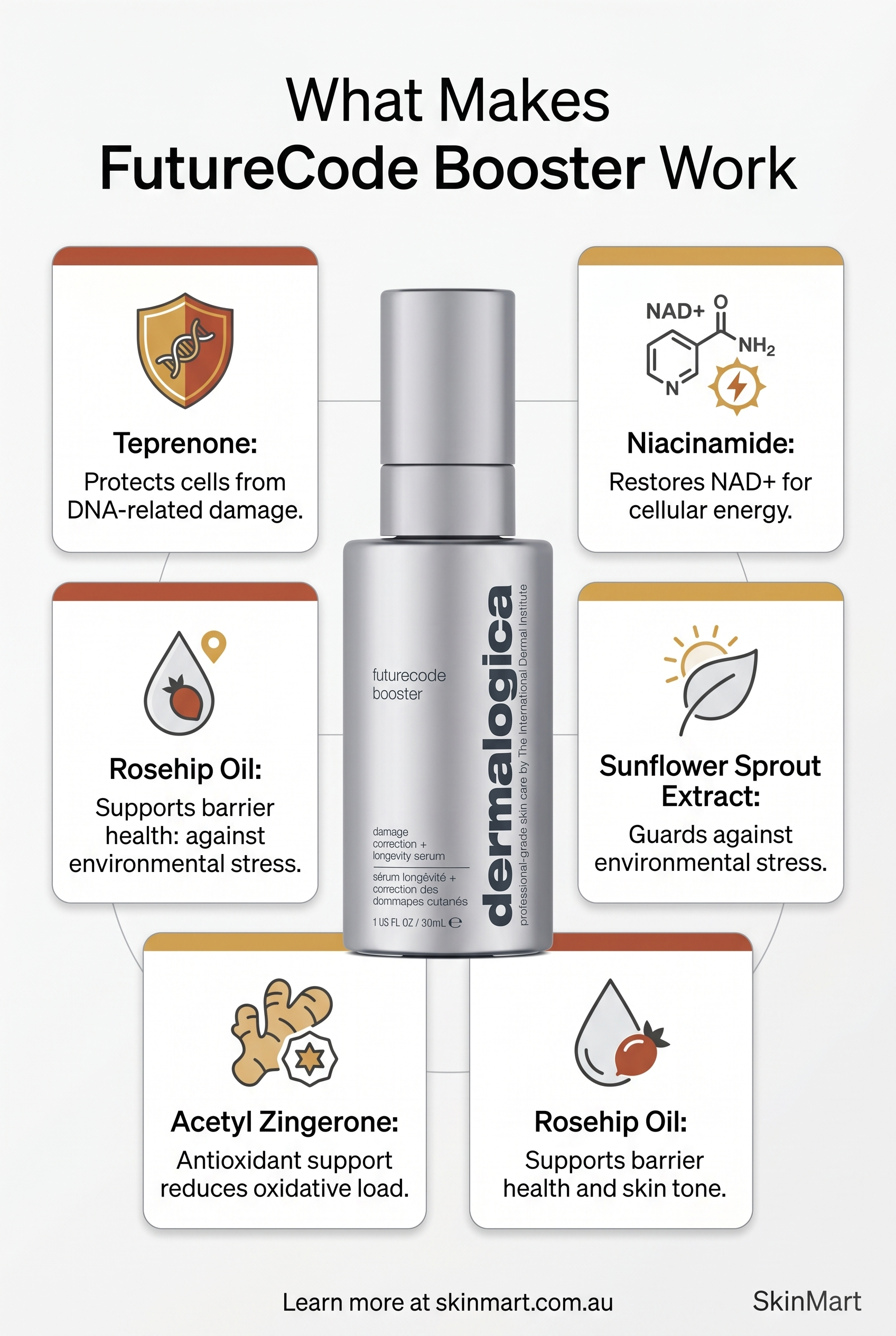
How FutureCode Booster Supports NAD+ and Skin Brightness
Most NAD+-supporting formulas come in heavy creams. FutureCode Booster by Dermalogica delivers this cellular support in a lightweight serum, making it easy to layer into your existing routine without changing everything you already do. It is designed to work alongside your other treatments, not replace them.
The formula combines several targeted ingredients. Teprenone is a longevity compound that helps protect cells from the kind of DNA-related damage that accelerates NAD+ depletion. Niacinamide provides direct NAD+ precursor support, helping restore the cellular energy your skin needs to renew and repair. Helianthus Annuus (Sunflower) Sprout Extract helps protect against environmental stress.
Acetyl Zingerone, derived from ginger, offers protective support that reduces the oxidative load on your cells. Rosehip Oil (Rosa Canina Seed Oil) provides essential fatty acids that support barrier health and skin tone. Together, these ingredients address NAD+ decline at the cellular level, helping your skin work more efficiently rather than just masking dullness at the surface.
If your skin has felt stuck, like your routine is doing everything right but your complexion is not responding the way it used to, this kind of foundational cellular support is worth exploring. Shop FutureCode Booster and see what your skin could be doing with the right cellular fuel.
Is Dullness Always a NAD+ Problem?
Not always, but NAD+ decline is one of the most overlooked reasons skin stops responding to treatments that used to work. Dehydration, product buildup, and slow exfoliation can all help to dull skin. These are worth addressing too. But if you have already covered those bases and your skin still looks flat, the issue is likely deeper than the surface.
It is also worth noting that NAD+ decline does not happen in isolation. It connects to other aspects of skin ageing, slower collagen production, reduced barrier function, and increased sensitivity to environmental stress. Retinol, for example, works by speeding up cell turnover, but that process requires cellular energy to run well. Supporting NAD+ helps your skin get more from the active ingredients you are already using, not just from NAD+-specific products.
Think of it this way: your skincare routine is only as effective as the cells underneath it. If those cells are running low on energy, even excellent products will deliver less than they could. Restoring NAD+ does not replace your routine, it helps your routine work the way it should.
Dullness that does not respond to exfoliation or hydration is often a sign of something happening deeper than the surface. When your skin cells are running low on NAD+, they cannot renew, repair, or reflect light the way they should. That is not a product failure, it is a cellular energy gap. And it is one you can actually address.
Supporting NAD+ through targeted ingredients, consistent sun protection. And quality sleep gives your skin the foundation it needs to respond to everything else you are doing. If you want to understand what your skin just needs, not just what works for everyone, explore FutureCode Booster or start your Skin Blueprint to get tips built around your skin, not around a trend.


