
If you've spent all summer treating pigmentation only to watch it come back darker, you're not alone. Why winter is best for pigmentation might sound surprising, but the science behind it is simple. Australian summers bring some of the highest UV levels in the world. And that UV light is exactly what triggers new pigment production in your skin.
Winter changes the equation. Lower UV levels give your skin a real window to work with photosensitising actives, ingredients that become more reactive in strong sunlight, without fighting against fresh sun exposure at the same time. Understanding this seasonal shift can help you build a pigmentation routine that actually sticks.
Why Does UV Undo Your Pigmentation Progress?
Pigmentation forms when cells called melanocytes produce melanin, the pigment that gives your skin its colour. UV light is the strongest trigger for this process. Within minutes of sun exposure, UV rays switch on an enzyme called tyrosinase inside melanocytes. This enzyme starts building new melanin, even before you see any change on the surface.

This means every bit of unprotected sun exposure adds new pigment production, layered right on top of what you're trying to fade. If you're using brightening actives in summer while UV is high, you're often working against your own skin. The fading and the triggering happen at the same time.
This is one reason many people feel stuck in a cycle. For a deeper look at how pigmentation forms and spreads across different patterns, our guide on pigmentation and how we can treat it breaks down the types you might be dealing with.
Key Takeaways
- Winter is the best time to work on pigmentation because UV light is lower across the Southern Hemisphere winter.
- Strong UV re-triggers melanocytes, the cells that make pigment, often faster than treatment can fade it.
- Photosensitising actives like tranexamic acid, retinoids, and exfoliating acids need protection from UV to work safely and well.
- Using winter's lower UV months to build these actives into your routine, alongside daily sun protection, gives your skin its best chance to visibly ev...
Why Is UV Lower in the Southern Hemisphere Winter?
Australia's UV levels shift heavily with the seasons. Summer months regularly push the UV index into the extreme range across most of the country. Winter brings a real drop, especially in southern states, though UV protection still matters every single day of the year.
Lower UV doesn't mean no UV. It means fewer spikes and less risk of your melanocytes being switched on while you're actively trying to calm them down. For a full breakdown of how these rays affect your skin differently across the year, read our explainer on UVA and UVB rays.
Why Are Photosensitising Actives Safer to Build in Winter?
Some of the most effective pigmentation ingredients are also photosensitising. This means they can make your skin more reactive to UV light while you're using them. Tranexamic acid, retinoids (a form of vitamin A), and exfoliating acids like glycolic or lactic acid all fall into this group.
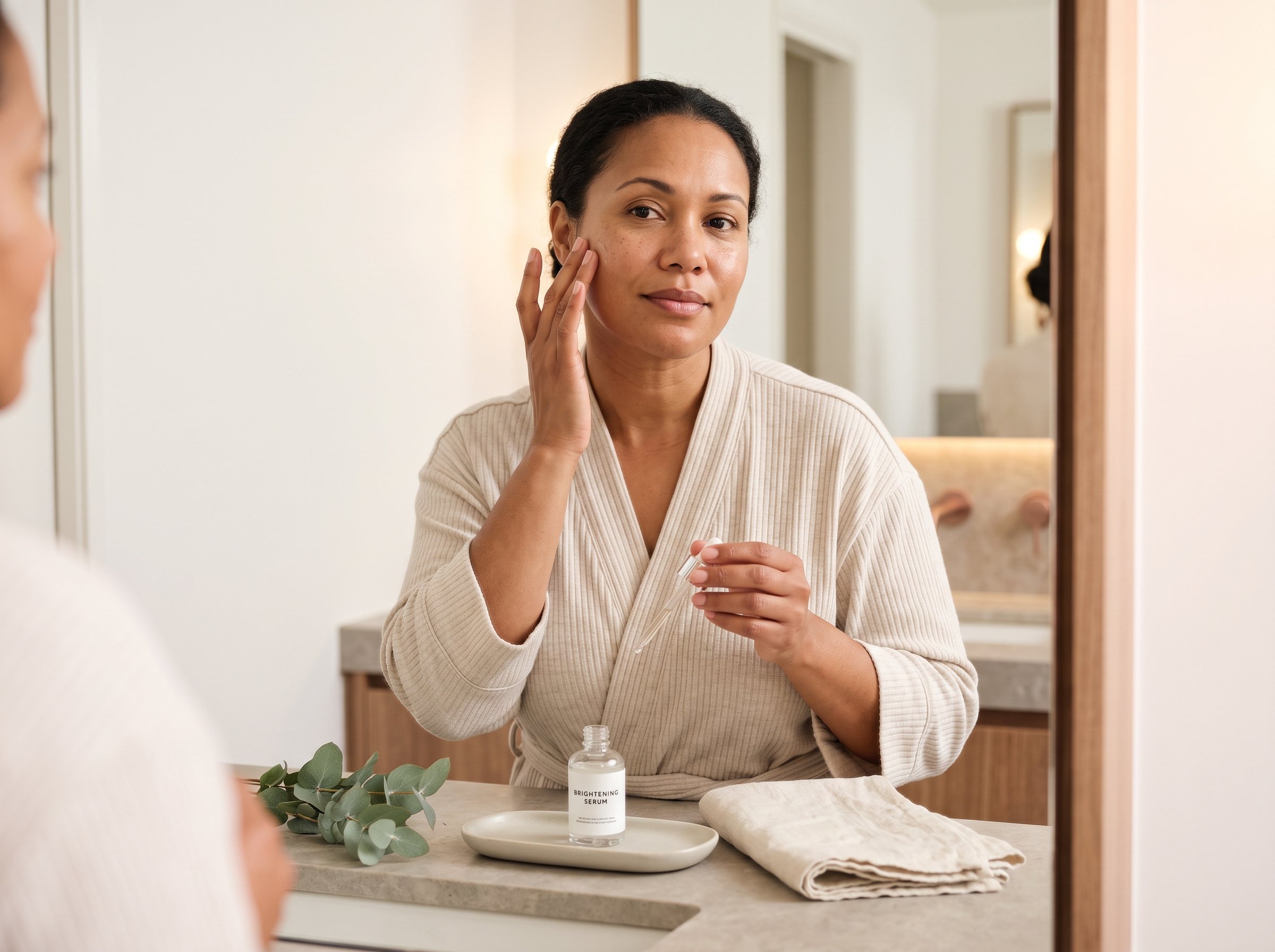
Tranexamic acid works by calming the inflammatory signals that push melanocytes into overdrive, which is why it's used in tone-evening formulas. Retinoids speed up cell turnover, helping pigmented cells shed faster. Acids support this same turnover. All three need consistent sun protection to work safely.
Building these actives into your routine during winter, when UV is lower, gives your skin a gentler runway. You lower the chance of irritation or rebound pigmentation while your skin adjusts. If you're new to retinoids, our guide on starting the retinol journey walks through how to introduce them without overwhelming your skin.
What Does Correct While You Protect Actually Mean?
Working on pigmentation was never meant to happen without protecting your skin at the same time. Winter simply lowers the risk while you build up your active ingredients. Daily SPF stays essential, rain or shine, because UV exposure still adds up on cloudy days.
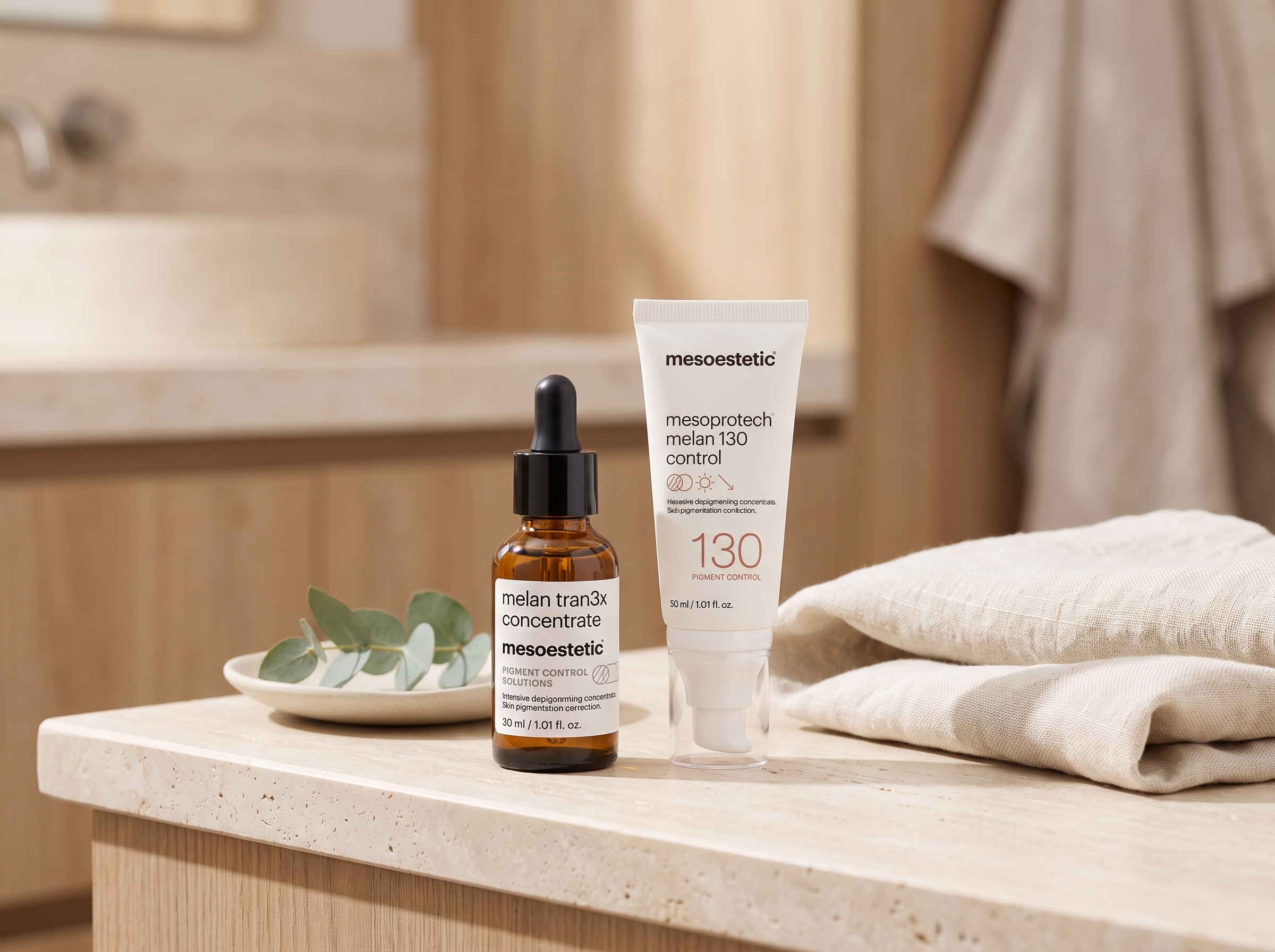
Formulas built for tone evening, such as mesoestetic's Melan Tran3x Concentrate, combine tranexamic acid with other ingredients to help visibly even skin tone as part of a daily routine. Mesoprotech Melan 130 Pigment Control pairs high SPF protection with pigment-calming ingredients, so protection and tone support happen in the same step. These are examples of how a winter routine might look, not a one-size-fits-all fix.
Vitamin C is another worthwhile addition, supporting your skin's defence against daily environmental stress. Our article on why you need vitamin C in your skincare routine explains how it fits alongside tone-evening actives.
When Should Persistent Pigmentation See a Professional?
Most pigmentation responds well to a consistent, protected routine over several months. But melasma, a hormone-related pigmentation pattern, can behave differently. If your pigmentation is spreading, changing shape, or not responding after a few months of consistent care, it's worth a chat with a dermal therapist or your dermatologist.
Persistent or widespread melasma often needs a tailored approach beyond home care. A professional can check what's actually driving your pattern before recommending next steps. For more on how pigmentation location and colour hint at its cause, our guide on saying goodbye to pigmentation covers this in more detail.
Winter isn't just a quieter season for your skin, it's a genuine window of opportunity. Lower UV means less risk of undoing your progress, and safer conditions for building photosensitising actives like tranexamic acid, retinoids, and acids into your routine. Correct while you protect isn't just a slogan. It's the actual science behind making pigmentation care work.
If you're not sure which actives suit your skin's pigmentation pattern, or how to layer them safely, our team can help map out a plan built around your skin, not a generic routine.


