
You uncap a new serum, squeeze out a small amount, and go straight to your face. Most of the time that's fine. But some serums, like Dermalogica Stabilizing Repair Serum, ask for one extra step first. Warm it between your palms for a few seconds before you touch your skin.
This isn't a fussy extra step. It's how you apply Stabilizing Repair Serum the way it was designed to be used. Once you understand why the warmth matters, the whole ritual makes sense, and it takes about five seconds longer than what you're already doing.
Why do some serums ask you to warm them first?
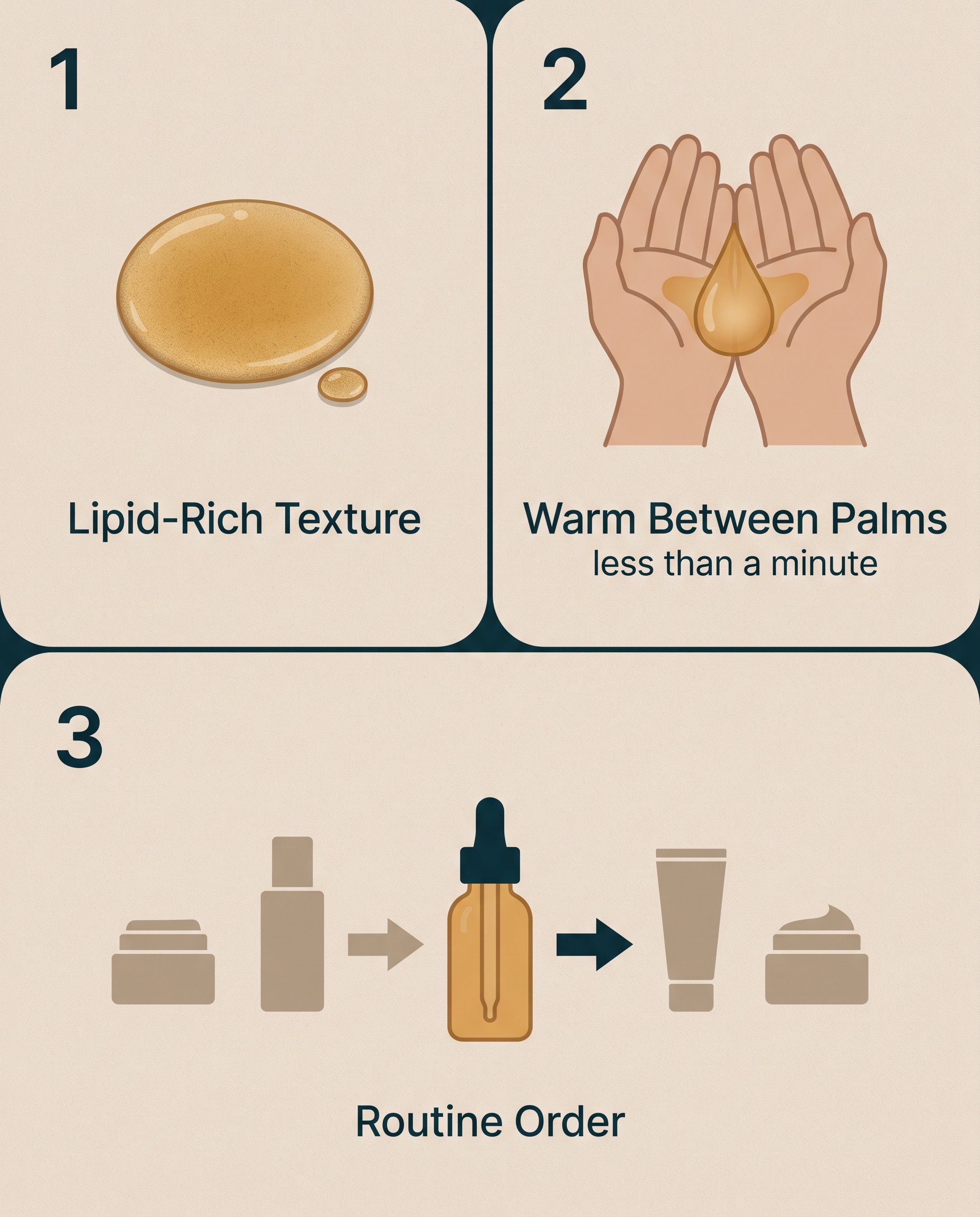
Stabilizing Repair Serum has a lipid-rich texture. That means it's built from fats and oils designed to sit closely with your skin's own structure, rather than a thin, watery gel. Formulas like this are sometimes called lamellar. That just means they're built in layers, similar to your skin's own outer layer.
Layered, lipid-rich textures can feel thicker straight from the bottle. Body heat changes that. Rubbing the serum between your palms for a few seconds warms it slightly, which helps the layers loosen and spread more evenly. A thin, even layer covers your face and neck properly, instead of sitting in patches where you first pressed it on.
Think of it the same way you'd warm honey to make it easier to pour. The serum itself doesn't change, but it becomes easier to work with. If you want to understand more about how different serum textures behave, our guide on serums and how to use them covers the basics.
How do you apply Dermalogica Stabilizing Repair Serum?
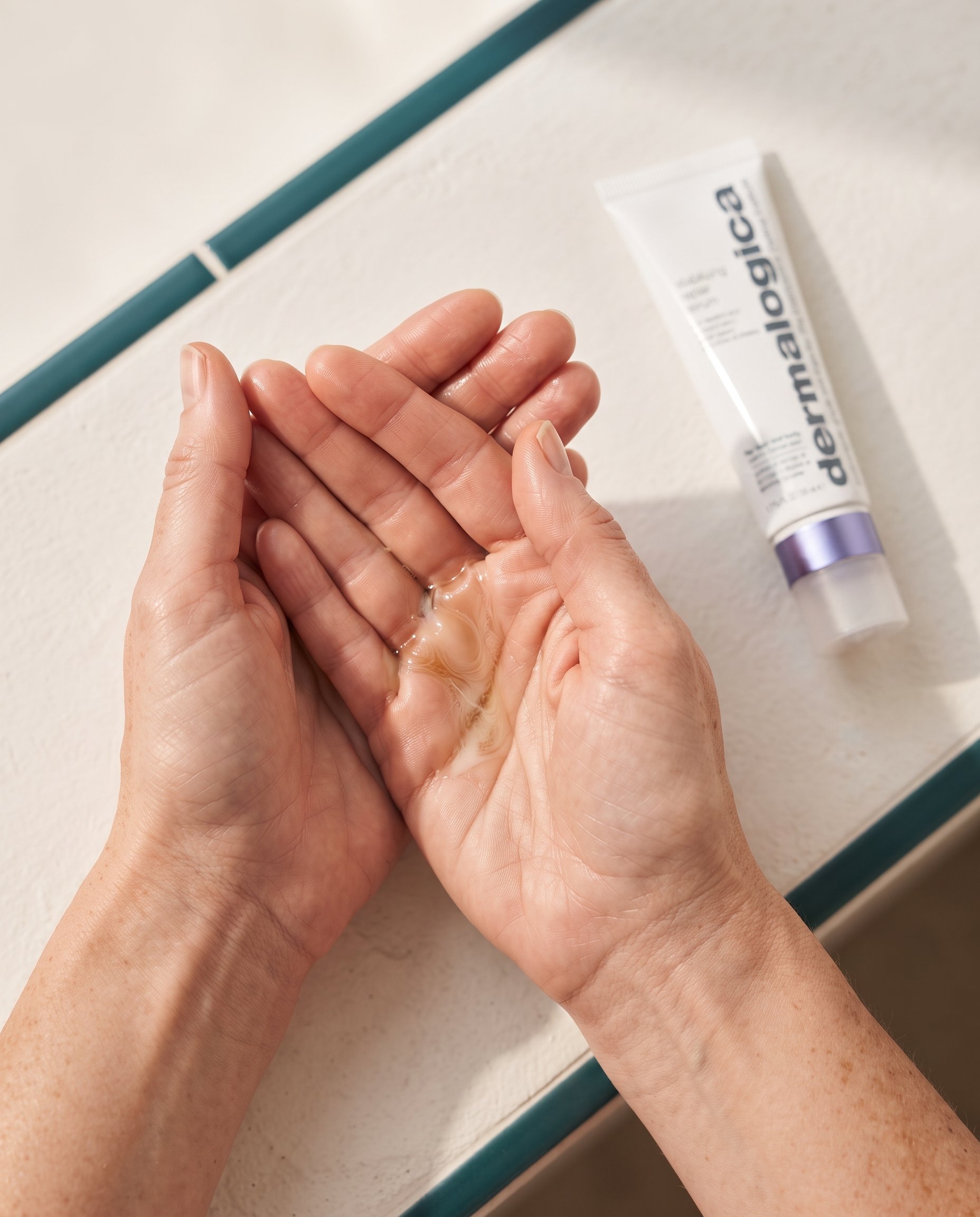
The steps are simple, and they take less than a minute. Squeeze a small amount into the palm of one hand. You don't need much. This serum is concentrated, so a small amount goes a long way across your face and neck.
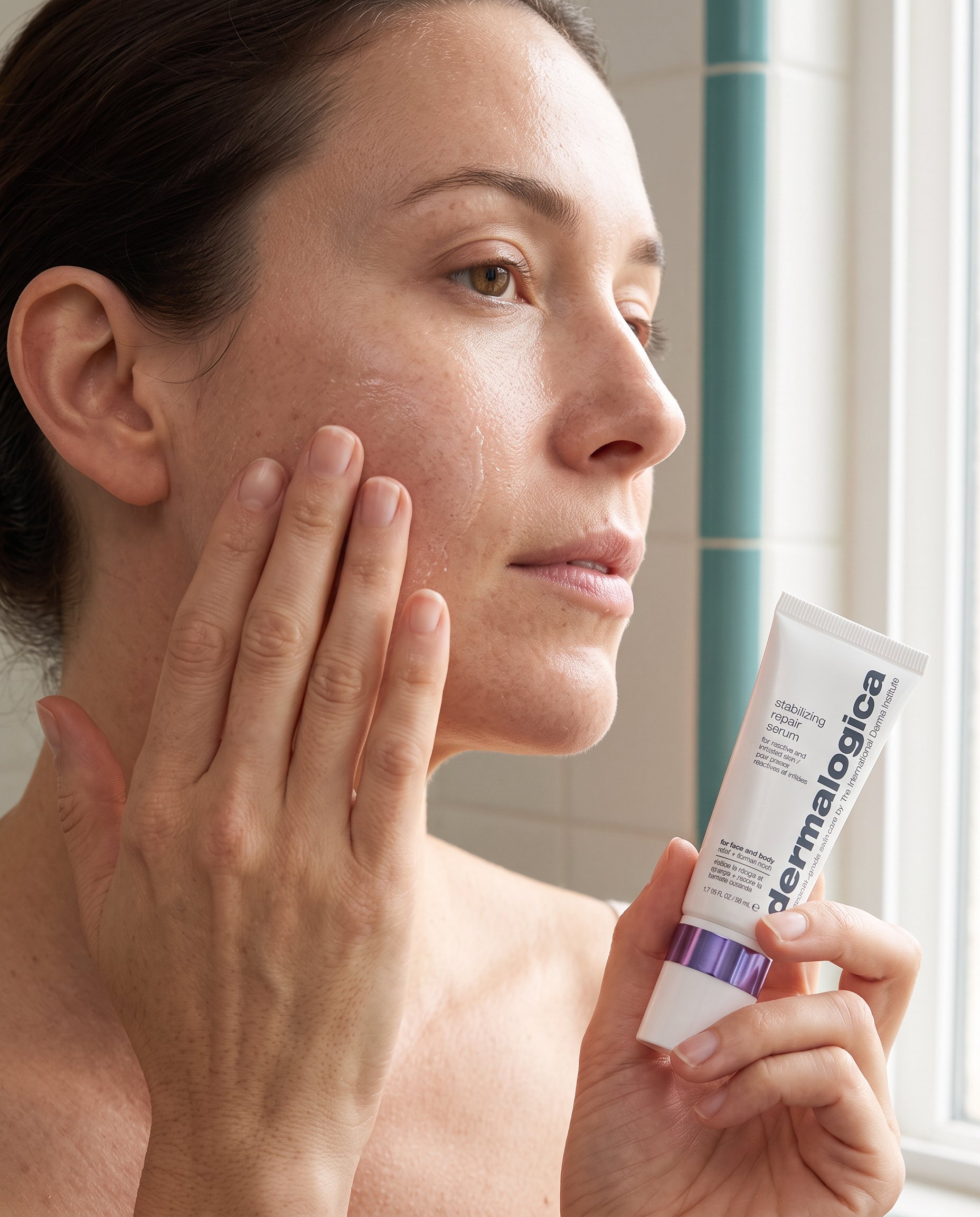
Rub your palms together for about five seconds. This warms the serum and starts to loosen its texture, exactly as described above. Pat, don't rub, the serum onto your face and neck. Patting presses the product into skin gently, without dragging or pulling. This matters more for skin that reacts easily to friction or heat, where rubbing can feel like too much.
You can use Stabilizing Repair Serum once a day or twice, morning and night, depending on what your skin needs that day. It's formulated with colloidal oatmeal, a finely ground oat that's long been used to help skin feel more comfortable. It also contains a biomimetic lipid complex, meaning fats built to work like your skin's own, plus soothing botanical extracts. Together, these ingredients help your skin hold onto water. That support can help easily reactive skin feel steadier against whatever it meets next.
Where does this serum sit in your routine?
Order matters more than people think, and it's worth getting right. If you're not sure whether you're applying your other products in the correct order, our piece on product order is a useful read.
For Stabilizing Repair Serum, the order looks like this. Cleanse first, ideally with something gentle like UltraCalming Cleanser. Apply the serum next, using the warming and patting method above.
If you use UltraCalming Mist, you can apply it before or after the serum, whichever feels better on the day. At night, follow with Stabilizing Repair Cream to seal everything in. In the morning, finish with SPF.
That's the whole sequence. No 10-step routine required, just the right order for the products you're already reaching for.
Key Takeaways
- To apply Dermalogica Stabilizing Repair Serum, squeeze a small amount into your palm.
- Rub your hands together for about five seconds to warm it, then pat, don't rub, onto your face and neck.
- Use it after cleansing and before your moisturiser, morning or night.
- Warming helps the lipid-rich texture spread evenly and settle into skin faster.
- This small step...
What can you expect to feel, in the first minutes and over the weeks?
In the first few minutes, most people notice their skin feels calmer and less tight. That's a fair expectation, not an overpromise. Skin that's easily reactive often responds well to the mix of oatmeal, lipids, and botanical extracts. That comfort can show up almost straight away.
Over the following weeks, regular use often brings more day-to-day comfort. The look of redness can also settle with continued use. This isn't instant. Skin that reacts easily didn't get that way overnight, and it won't change character overnight either. Give it a few weeks of consistent use before deciding whether it's right for you.
Sensitivity and redness aren't signs that something is wrong with your skin. They're a natural variation, and plenty of skin behaves this way. If you want to understand what drives reactive skin day to day, our article on stress and the skin looks at some everyday triggers.
What small mistakes make any serum feel like it isn't working?
Sometimes a serum gets blamed when the real issue is how it's being applied. Here are three easy ones to check.
Using too much. More product doesn't mean more benefit. A small amount, warmed and patted on properly, covers your face and neck evenly. Extra product just sits on the surface without doing anything more.
Rubbing instead of patting. Rubbing creates friction, and skin that's easily reactive can feel that friction as heat or tightness. Patting is gentler and still gets the product where it needs to go.
Layering an exfoliant in the same application. Using an acid or scrub straight before or after this serum can undo some of the comfort it's designed to bring. If you're building out a fuller routine, our guide on dry versus dehydrated skin can help. It's worth working out what your skin actually needs before adding more steps.
Five seconds between your palms isn't a lot to ask. It changes how well a lipid-rich serum like Stabilizing Repair Serum spreads and settles into your skin. Warm it, pat it on, and give it a few weeks to show you what it can do.
If you'd like to understand how this serum fits alongside the rest of your routine, our team is happy to help. Learn more about building a routine around reactive skin on the Skinmart knowledge hub.


