
If you've dealt with melasma, you know how frustrating it can be. This patchy, brownish pigmentation often shows up on your cheeks, forehead, or upper lip. You try serum after serum, but the marks keep returning, especially after sun exposure.
Tranexamic acid skincare takes a different approach to melasma. Instead of only working on pigment you can already see, it targets the trigger that makes your skin produce excess melanin in the first place. This is why more dermal therapists and skin clinics now use it as a first-line pigmentation treatment.
In this guide, we'll explore how tranexamic acid works, why it's earning this reputation, and which professional products include it.
What Is Tranexamic Acid and How Does It Work on Pigmentation?
Tranexamic acid started out as a medicine. Doctors have used it for decades to help control heavy bleeding, because it calms a process in your blood called fibrinolysis. Skin scientists later noticed something interesting: this same calming action also helps quiet down pigmentation.
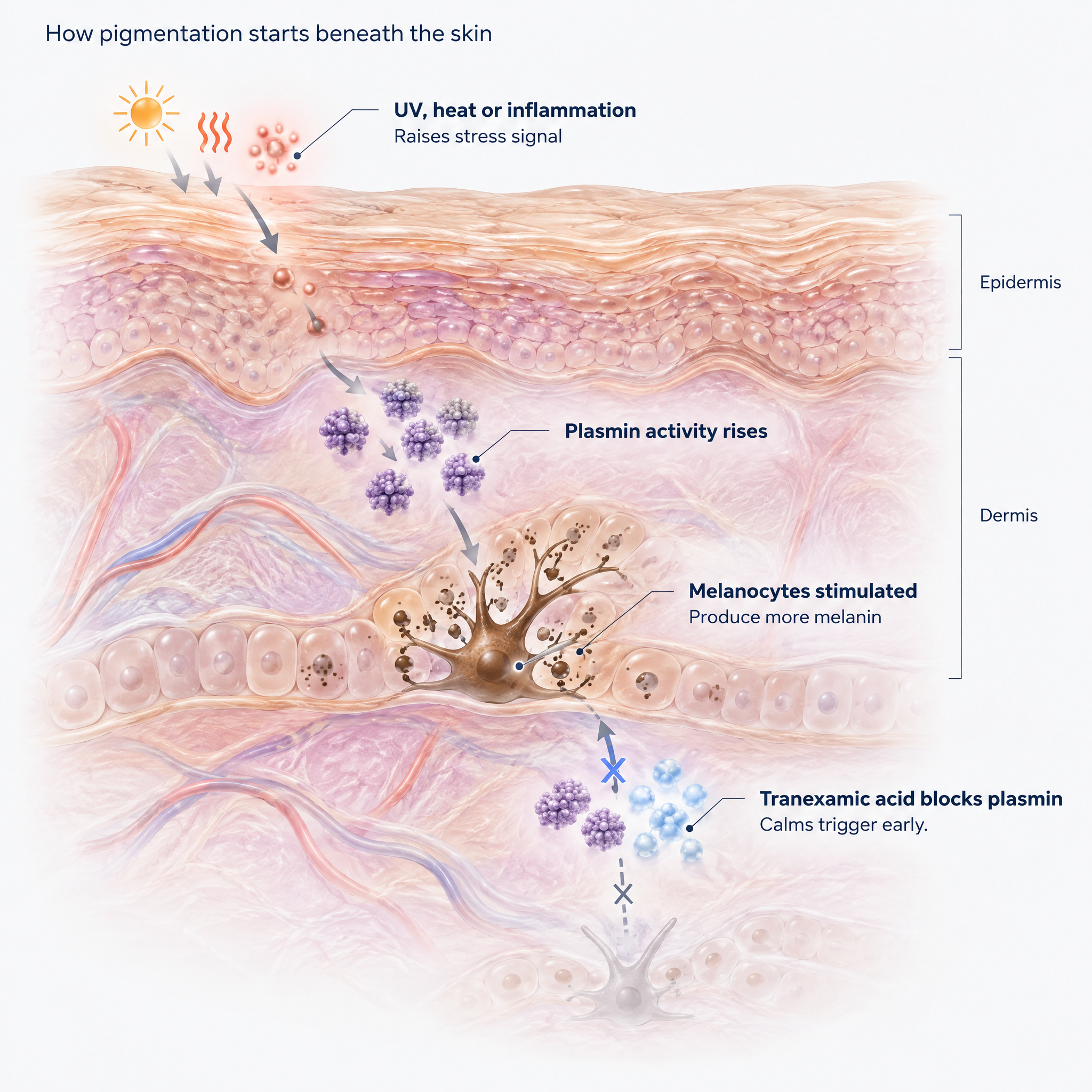
Here's the connection. Your melanocytes (the cells that produce your skin's pigment, called melanin) respond to a signal called plasmin. When your skin faces stress like UV light, heat, or inflammation, plasmin activity rises. This tells your melanocytes to ramp up melanin production, which is what creates melasma's dark, uneven patches.
Tranexamic acid works by blocking plasmin activity. This is called plasmin inhibition. By calming this signal, tranexamic acid reduces melanocyte stimulation before excess pigment even forms. It addresses the trigger, not just the result.
Key Takeaways
- Tranexamic acid is a skincare ingredient that calms a signal called plasmin, which normally tells your melanocytes (pigment-making skin cells) to produce more melanin.
- Unlike ingredients that only work on pigment after it forms, tranexamic acid works earlier, on the trigger itself.
- This is why dermal therapists increasingly use it as a first-line topical for melasma, often alongside daily SPF and complementary actives like vitamin C or niacinamide.
- Clinical research on topical and oral tranex...
Why Is Tranexamic Acid Becoming a First-Line Treatment for Melasma?
Melasma is notoriously hard to treat. It's driven by several triggers at once: UV exposure, heat, hormone shifts, and inflammation. Many older pigmentation ingredients only work on melanin after it's already been made.

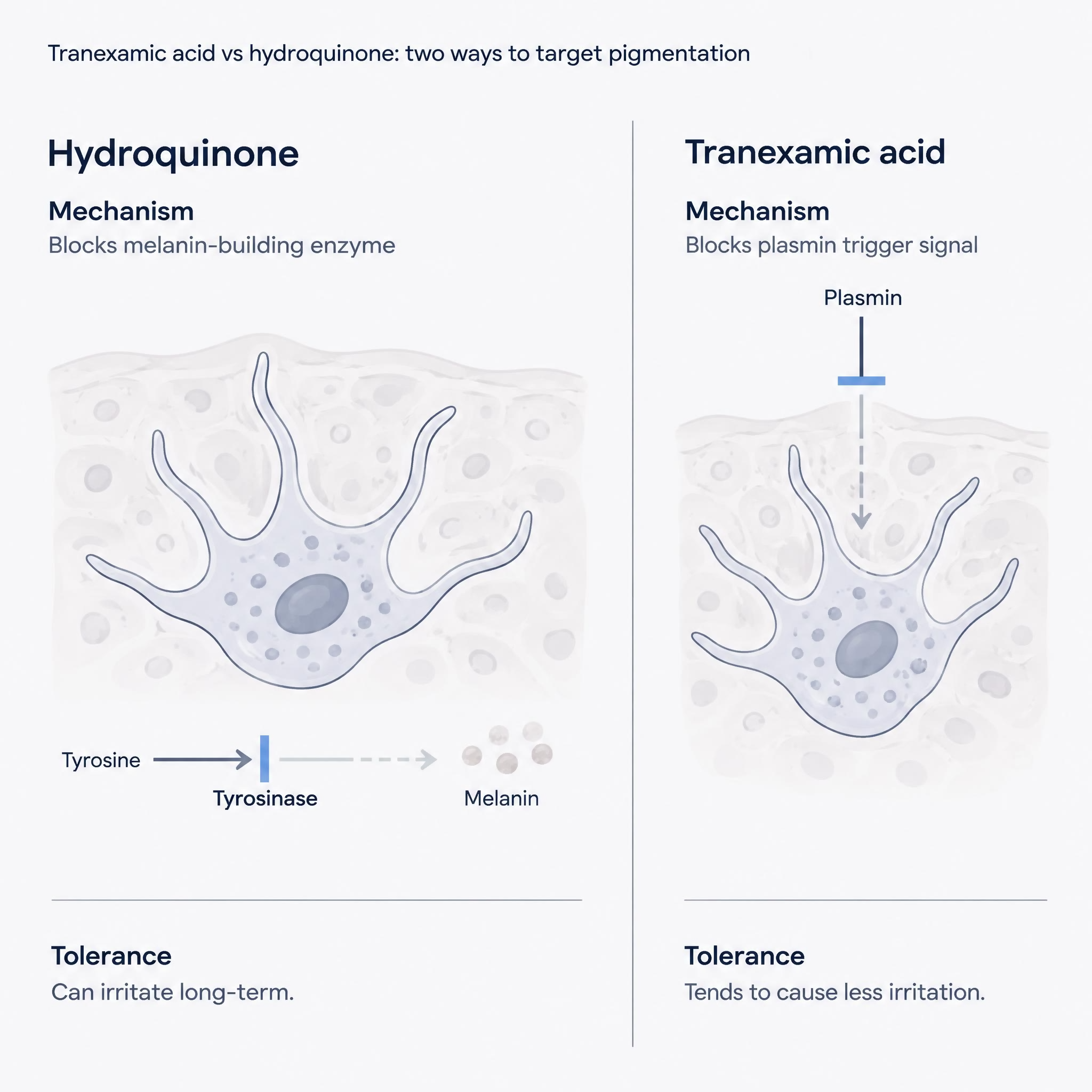
Hydroquinone, for example, blocks the enzyme that helps build melanin. It works well for many people, but it can cause irritation with long-term use, and some regions restrict its strength. This has pushed skin experts to look for options that work just as well but are gentler for daily use.
Tranexamic acid fits that gap. It works upstream, calming the plasmin signal before pigment production ramps up. Because of this, it tends to cause less irritation than some traditional options, and clinical research on topical and oral tranexamic acid shows real reductions in melasma severity, especially when paired with daily SPF.
This is also why tranexamic acid works well for people with recurring melasma. If you want to understand more about what drives ongoing pigmentation, our guide on saying goodbye to pigmentation breaks down the common triggers in more depth.
How Does Tranexamic Acid Compare to Other Pigmentation Ingredients?
You don't have to choose just one pigmentation ingredient. Tranexamic acid works differently to ingredients like vitamin C, niacinamide, and kojic acid, which is why they're often used together rather than as competitors.
Vitamin C is an antioxidant that helps interrupt melanin formation and protects against future UV damage. You can read more in our guide on why you need vitamin C in your skincare routine. Niacinamide slows the transfer of pigment to your skin's surface cells, while kojic acid interferes with the enzyme that builds melanin.
Tranexamic acid's advantage is that it steps in earlier, calming the trigger signal itself. Many professional routines layer tranexamic acid with one or two of these ingredients for a fuller approach. Our article on the skin brightening ingredient your routine needs looks at how these actives can work as a team.
Which Professional Skincare Products Contain Tranexamic Acid?
Tranexamic acid is showing up across a growing number of professional skincare ranges, not just one brand. You'll find it in targeted serums, boosters, and structured pigmentation programs built by skin therapists.

Mesoestetic is one clinic-grade brand known for its structured approach to pigmentation. Their pigmentation-focused protocols often combine tranexamic acid with other complementary depigmenting agents, layered in a specific order to calm melanocyte activity from multiple angles. This kind of layered protocol shows why tranexamic acid works best as part of a bigger plan, not a stand-alone fix.
Other professional brands are also formulating tranexamic acid into everyday serums and boosters, often at concentrations between 2% and 5%. If you'd like to explore serum options that include actives like this, our serums and boosters collection is a good place to start learning about what's available.
How Do You Add Tranexamic Acid to Your Routine?
Tranexamic acid is generally gentle enough for daily use, morning or evening, once your skin is used to it. Most people start with a lower concentration and build up gradually, watching how their skin responds.
Because melasma is so sensitive to UV light, sunscreen isn't optional here. Even the best tranexamic acid serum won't do its job if daily sun exposure keeps re-triggering pigment production. Pairing your serum with a broad-spectrum SPF matters just as much as the active ingredient itself.
Patience matters too. Most people need eight to twelve weeks of consistent use before they notice a real shift in tone. This isn't a fast fix, but for many people dealing with stubborn melasma, it's proving to be one of the more reliable long-term options.
Tranexamic acid has earned its place as a serious pigmentation ingredient, not just a trend. By working on the plasmin signal that triggers excess melanin, it addresses melasma closer to its root cause than many older ingredients can.
If you're exploring options for stubborn pigmentation, understanding how an ingredient works is the first step to using it well. From here, you might want to look at how tranexamic acid pairs with other actives in your current routine, or explore professional formulations built specifically for melasma.


