
If you've noticed your skin behaving differently in your late twenties or early thirties, breakouts appearing where they never did before, or that persistent chin acne that won't respond to your usual treatments, your gut might be sending signals your skin is receiving loud and clear.
The connection between your digestive system and your skin isn't just wellness marketing speak. It's a documented biological pathway where swelling in your gut can directly trigger causing swelling responses in your skin. For women in their mid-twenties to mid-thirties, this connection becomes especially relevant as hormonal shifts, career stress, and lifestyle factors converge to affect both gut health and skin clarity. Here's what's actually happening beneath the surface, and more key point:, what you can do about it.
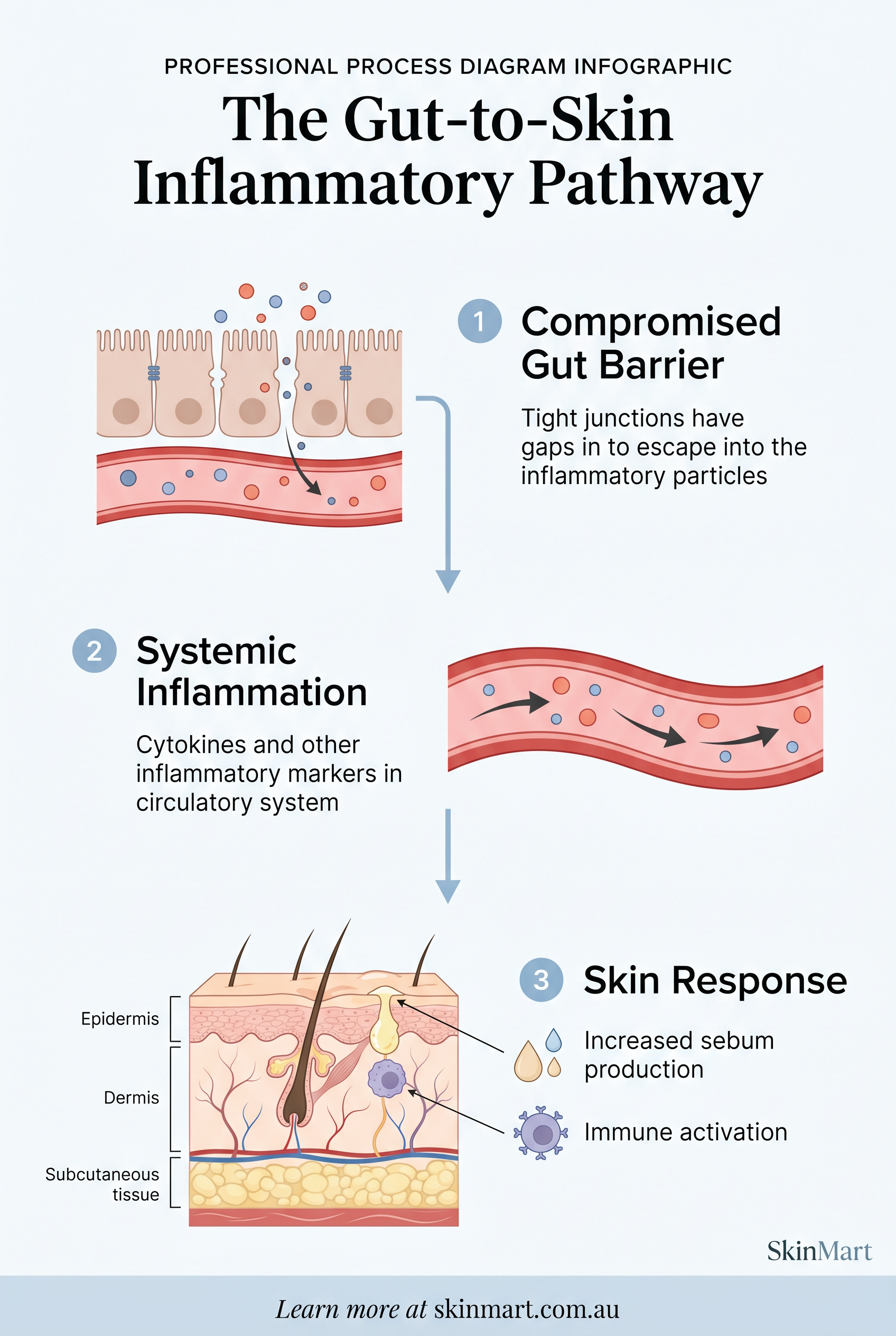
What Are causing swelling Pathways Between Your Gut and Skin?
Think of your gut and skin as two organs in constant conversation, connected by your bloodstream and immune system. When your gut lining becomes compromised, a condition researchers call increased intestinal permeability, partially digested food particles, bacteria, and toxins can slip through into your bloodstream.
Your immune system recognizes these as threats and responds by releasing causing swelling cytokines, chemical messengers that travel throughout your body, including to your skin. These cytokines trigger a cascade of responses: increased sebum production, altered skin cell turnover, and heightened immune activity in your hair follicles. The result? Breakouts that seem to appear from nowhere, often concentrated around your jawline, chin, and lower cheeks.
What makes this especially frustrating for women in their late twenties and thirties is that these causing swelling pathways intensify during times of hormonal fluctuation. Your menstrual cycle, stress levels, and even sleep quality all influence both gut barrier integrity and causing swelling signaling. This explains why your skin might be perfectly clear one week and breaking out the next, following patterns that seem disconnected from your skincare routine.
Why Does Gut swelling Increase in Your Late 20s and 30s?
Your gut doesn't exist in isolation, it responds to everything from the food you eat to the stress you carry. For women between 25 and 35, several factors converge to make gut swelling more likely during this life stage.
Stress and cortisol play a major role. Career pressures, relationship dynamics, and the general demands of this life phase keep cortisol elevated. Chronic cortisol exposure directly damages your gut lining, reducing the tight junctions between intestinal cells and allowing causing swelling particles to escape into circulation. Studies show that psychological stress can increase intestinal permeability within just two hours of a stressful event.
Dietary patterns often shift during these years. You might be eating out more often, relying on convenient processed foods, or consuming more alcohol in social settings. These dietary changes can disrupt your gut microbiome, the community of bacteria living in your intestines that help regulate swelling. A diet high in refined sugars and low in fiber reduces helpful bacteria while allowing causing swelling species to flourish.
Hormonal fluctuations add another layer of complexity. Your menstrual cycle affects gut motility, barrier function, and microbiome composition. Many women notice their digestion changes throughout their cycle, this isn't coincidental. Estrogen and progesterone directly influence gut permeability and causing swelling signaling, which is why breakouts often cluster around specific cycle phases.
Key Takeaways
- Your gut and skin communicate through causing swelling pathways that can trigger breakouts, especially in women aged 25-35.
- When your gut barrier becomes compromised, often from stress, diet, or hormonal changes, causing swelling molecules called cytokines enter your bloodstream and signal your skin to produce more sebum and trigger immune responses.
- This creates the perfect environment for acne.
- Understanding this connection means you can address breakouts at their source, not just treat sur...
How Do You Know If Gut swelling Is Causing Your Breakouts?
Not all breakouts stem from gut issues, but certain patterns suggest an causing swelling connection worth investigating. Your skin is giving you clues, you just need to know how to read them.
Location matters. Breakouts concentrated along your jawline, chin, and lower cheeks often indicate hormonal and causing swelling influences rather than simple congestion. If you're also having breakouts on your chest or upper back, this suggests systemic swelling rather than localized skin issues.
Timing provides information. Do your breakouts correlate with digestive symptoms, bloating, irregular bowel movements, or food sensitivities? Do they worsen during high-stress periods or after specific foods? These patterns suggest your gut and skin are responding to the same causing swelling triggers.
Treatment resistance is telling. If you've tried multiple topical treatments without lasting improvement, or if your skin responds for now but breakouts keep returning, you might be treating symptoms while the underlying causing swelling cycle continues. This is especially common when gut swelling is involved, no amount of topical treatment will resolve swelling originating from your digestive system.
Physical symptoms beyond your skin also provide clues: persistent fatigue, brain fog, food sensitivities that seem to multiply, or digestive discomfort that comes and goes. These suggest systemic swelling that's affecting multiple body systems, including your skin.
What Foods and Lifestyle Factors Trigger Gut swelling?
Understanding your personal triggers gives you control over the causing swelling cycle. While individual responses vary, certain foods and lifestyle factors consistently promote gut swelling in prone to individuals.

High-sugar and refined carbohydrate diets feed causing swelling bacteria while starving helpful species. Sugar also triggers insulin spikes that increase sebum production, a double impact on your skin. This doesn't mean you need to eliminate all carbohydrates, but being mindful of refined sugars and processed grains can greatly reduce causing swelling signaling.
Dairy products affect many women differently than they did in their teens and early twenties. Lactose intolerance can develop in adulthood, and even without full intolerance, dairy proteins can trigger causing swelling responses in sensitive individuals. The hormones naturally present in dairy can also influence your own hormonal balance, especially affecting androgens that drive sebum production.
Alcohol consumption directly damages gut barrier integrity while promoting causing swelling bacteria growth. Even moderate drinking, a few glasses of wine weekly, can increase intestinal permeability in prone to individuals. If you notice your skin consistently breaks out after drinking, this suggests your gut barrier is responding to alcohol's causing swelling effects.
Chronic stress might be the most major factor because it affects everything else. Stress reduces digestive enzyme production, slows gut motility, damages barrier function, and shifts your microbiome toward causing swelling species. It also increases cortisol, which directly promotes sebum production and causing swelling responses in your skin.
Inadequate sleep compounds these effects. Your gut lining repairs itself during sleep, and sleep deprivation impairs this repair process while increasing causing swelling cytokine production. Most women in their late twenties and thirties aren't getting the seven to nine hours needed for best gut barrier maintenance.
How Can You Reduce Gut swelling and Improve Your Skin?
Breaking the gut-skin causing swelling cycle requires addressing root causes rather than just managing symptoms. This means supporting your gut barrier, reducing causing swelling triggers, and giving your body the resources it needs to heal.
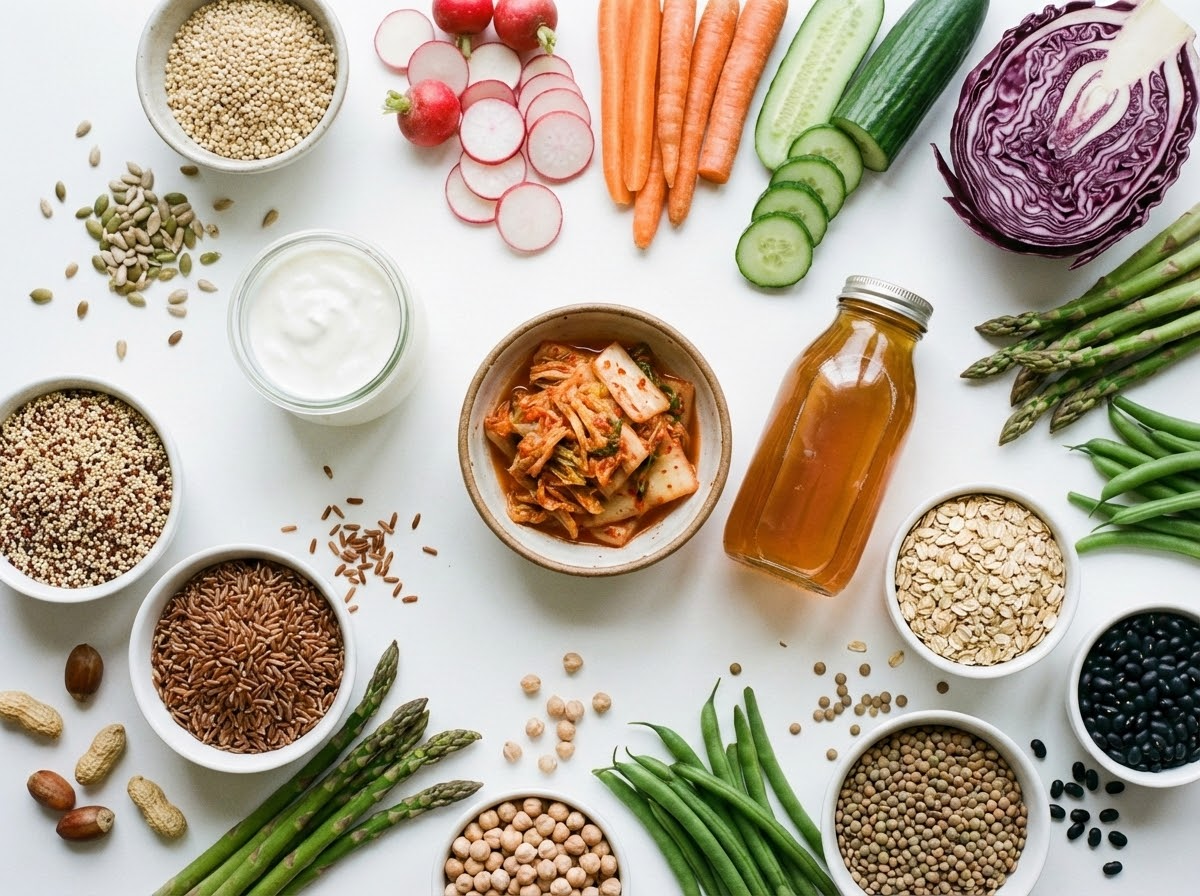
Prioritize fiber and diverse plant foods. helpful gut bacteria feed on fiber, producing short-chain fatty acids that reduce swelling and strengthen your gut barrier. Aim for 25-30 grams of fiber daily from varied sources, vegetables, fruits, whole grains, legumes, nuts, and seeds. Diversity matters as much as quantity; different fibers feed different bacterial species, so eating a wide variety of plant foods supports a more resilient microbiome.
Include fermented foods regularly. Foods like yogurt, kefir, sauerkraut, kimchi, and kombucha introduce helpful bacteria while providing compounds that support gut barrier function. Even small amounts, a few tablespoons of sauerkraut or half a cup of yogurt daily, can influence your microbiome composition over time.
Consider targeted supplementation. While food should be your foundation, certain supplements show evidence for reducing gut swelling and supporting skin health. Omega-3 fatty acids reduce causing swelling cytokine production throughout your body. Zinc supports both gut barrier integrity and skin healing. Probiotics containing specific strains like Lactobacillus and Bifidobacterium species can reduce causing swelling markers and improve skin outcomes in clinical studies.
Manage stress actively, not passively. This doesn't mean eliminating stress, an impossible goal, but rather developing consistent practices that help your nervous system recover. Even ten minutes of daily meditation, regular movement, or dedicated time in nature can greatly reduce cortisol levels and improve gut barrier function. The key is consistency; sporadic stress management doesn't provide the same benefits as daily practice.
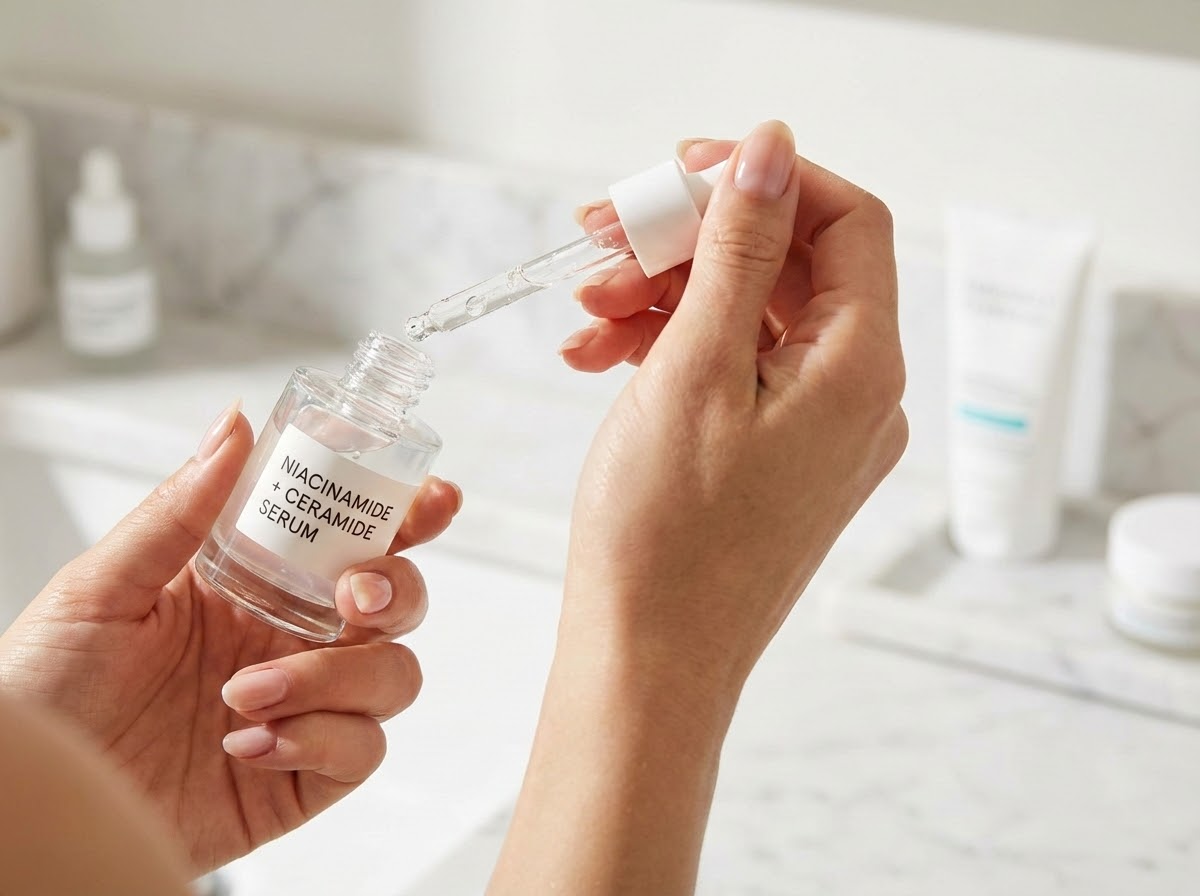
Support your skin barrier externally. While you're addressing internal swelling, supporting your skin's own barrier function helps break the causing swelling cycle from the outside. Look for products containing niacinamide, which reduces swelling and regulates sebum production, and ceramides, which strengthen your skin barrier and reduce sensitivity to causing swelling triggers.
How Long Does It Take to See Skin Improvements?
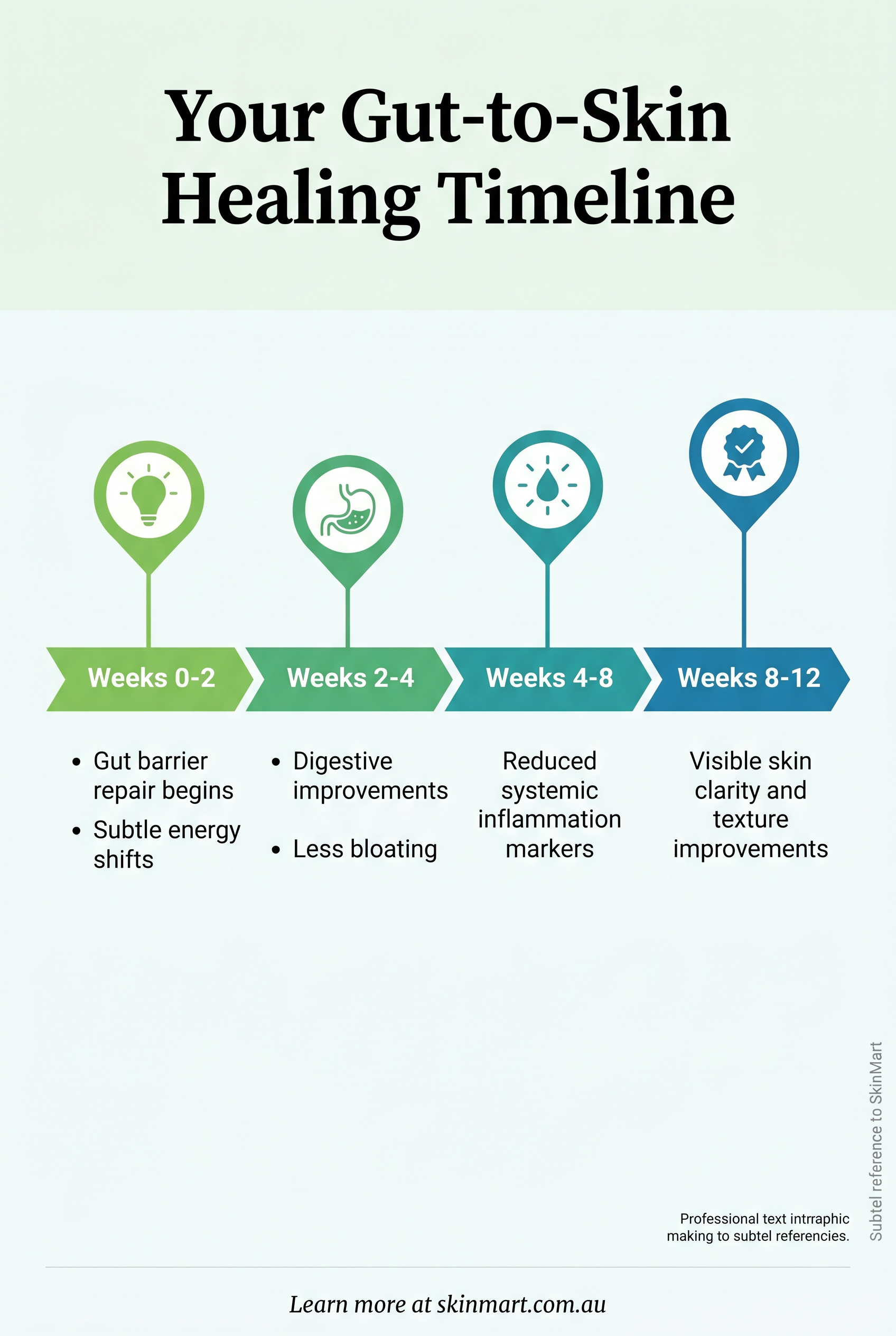
Here's where realistic expectations matter. Your gut lining renews itself every few days, but rebuilding a healthy microbiome and reducing systemic swelling takes time, typically 8-12 weeks before you see major skin improvements.
You might notice digestive changes first, less bloating, more regular bowel movements, improved energy, within 2-4 weeks. Skin changes usually lag behind because you're not just reducing new swelling; you're also waiting for existing causing swelling lesions to heal and for your skin's natural renewal cycle to show results.
This timeline explains why consistency matters more than perfection. Missing a few days of gut-supportive habits won't derail your progress, but expecting results after just two weeks will leave you frustrated. Track your progress through photos and notes rather than daily mirror scrutiny, the changes are gradual but cumulative.
Some women see dramatic improvements within 6-8 weeks, while others need 3-4 months of consistent effort. This variation reflects individual differences in gut damage severity, microbiome composition, and causing swelling load. The key is committing to the process long enough to see your personal response pattern emerge.
Understanding the gut-skin connection gives you a powerful tool for addressing breakouts that haven't responded to topical treatments alone. This isn't about perfection or restrictive elimination diets, it's about recognizing that your skin reflects your internal environment, and that supporting your gut health creates the foundation for lasting skin clarity.
The causing swelling pathways connecting your gut and skin respond to the cumulative effect of your daily choices: the foods you eat, how you manage stress, the sleep you prioritize, and the consistency of your supportive habits. Small, sustainable changes compound over weeks and months into major improvements you can see and feel. You're not just treating breakouts, you're building resilience in both your gut and your skin, creating the conditions for long-term health that extends far beyond clear skin.


