If you've ever bought an eye cream that promised the world and delivered very little, you're not alone. Many of us cycle through product after product, hoping the next one finally works. But here's what's often missed: no single eye product wins for every concern.
This complete eye care guide takes a different approach. Instead of starting with a product, we start with what your eyes are actually showing you. Once you recognise your sign, from shadow to puffiness, choosing the right match becomes much simpler.
Why do under-eye concerns need different solutions?
The skin under your eyes is different from anywhere else on your face. It's thinner, has fewer oil glands, and shows change faster than the rest of your skin. That's why one eye cream rarely covers everything.
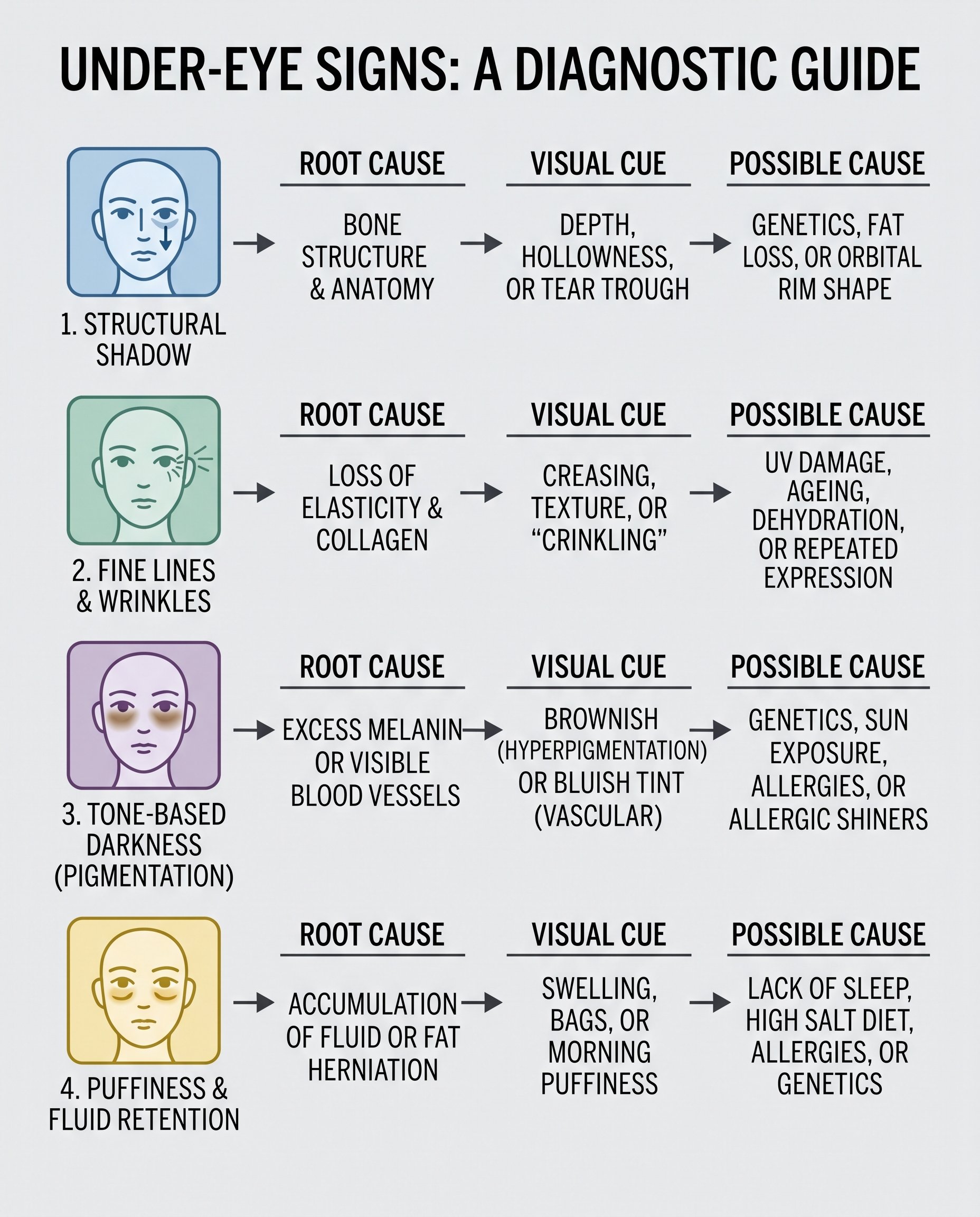
Some under-eye concerns come from lost density underneath the skin. Others come from repeated movement, like smiling, that creates fine lines over time. Darkness can come from pigment or tone changes, while puffiness often comes down to fluid and lifestyle factors.
Four different signs, four different causes. If you want to know how to choose the right eye cream, the first step is working out which sign matches what you're seeing.
Why won't the shadow under my eyes shift?
If the shadow under your eyes doesn't fade no matter how much sleep you get, it might not be about tone at all. This is often a structural sign. Over time, the area under the eye can lose density, and less volume underneath means more shadow on top.
This is different from pigment-based darkness. It's about what's happening beneath the surface, not on it.
For this sign, we'd reach for Dermalogica Smart Eye Density. It's built to help rebuild lost density under the eye, targeting the structural side of shadowing rather than tone.
Expert tip: Smart Eye Density plumps and helps rebuild density, but it works best alongside a retinol rather than replacing one.
Why do fine lines appear when I smile?
Fine lines that show up when you smile, then disappear once your face is still, usually come from repeated movement. The skin around your eyes is thin and has less support than the rest of your face, so it tends to show these lines earlier.
This is where a retinoid (a vitamin A derivative that helps speed up cell turnover) can help. If you're new to actives, our guide on starting the retinol journey is a good place to build understanding first.
For this sign, we'd reach for Medik8 Crystal Retinal Ceramide Eye. It pairs retinal, a fast-converting form of vitamin A, with ceramides (fats that help skin hold onto moisture) to support the delicate eye area while it works.
Expert tip: This is an active ingredient. Start a few nights a week and build up slowly as your skin adjusts.
Key Takeaways
- Eye care isn't one-size-fits-all.
- Under-eye concerns usually show up as one of four signs: a shadow that won't shift (structural, from lost density), fine lines that crease when you smile (from repeated movement and thin skin), darkness makeup can't cover (tone or pigment), or morning puffiness (fluid and lifestyle related).
- Each sign calls for a different approach.
- This guide walks through all four, matching each one to a product we'd reach for, such as Dermalogica Smart Eye Density for dens...
Why can't makeup cover my dark circles?
Some darkness sits in the tone of the skin itself, not just the surface. If concealer seems to fade fast or never fully hides the area, pigment or tone could be the sign to look at.
This is different from circles caused by genetics or blood vessels sitting close to the surface, which are a separate and trickier concern. Our guide on dark circles and puffy eyes breaks down these differences in more depth.
For tone-related darkness, we'd reach for Mesoestetic Age Element Brightening Eye Contour. It targets the pigment behind the darkness while also firming the contour of the eye area.
Expert tip: Brightening formulas can lift tone-based darkness well. Circles that are purely genetic or vascular are harder to shift with topical skincare alone.
Why do my eyes look puffy in the morning?
Puffiness is usually about fluid, not structure or tone. Sleep position, salt intake, allergies, and even how much water you drank the night before can all play a part.

For this sign, we'd reach for Dermalogica Awaken Peptide Eye Gel. It's a cooling gel with peptides (small proteins that support skin function) built to de-puff quickly.
Expert tip: This gel is a refresh, not a fix. If lines or density are the bigger story for you, pair it with the treatment that targets that sign directly.
Shadow, lines, darkness, puffiness: four different signs, four different causes, and four different products we'd reach for. None of them wins over the others. Each one simply suits the situation it's built for.
Not sure which one is you? That's normal, many people notice more than one sign at once. Read more on caring for the eye area, or chat to the Skinmart team. We range the brands, so we can help you match your sign to the right product, not just sell you the newest one.


