
You pack your carry-on, board the plane, and land looking like you aged five years in five hours. If that sounds familiar, you are not imagining it. Flying is genuinely tough on your skin, and the reasons are measurable. Cabin air humidity sits between 10 and 20 percent.
For context, your skin needs around 40 to 60 percent humidity to hold its moisture properly. At those low levels, your skin loses water faster than it can replace it. This process is called transepidermal water loss, or TEWL. It is simply the rate at which water evaporates through your skin barrier.
The good news is that this is not random or unpredictable. Once you understand what flying does to your skin, you can prepare for it. These five skincare travelling tips are built around the actual science of what happens at 35,000 feet. No gimmicks, no ten-step in-flight routines. Just clear, honest guidance on what your skin needs before, during, and after you fly.
Why Does Flying Affect Your Skin So Much?
Before we look at the five tips, it helps to understand what is actually happening. Aircraft cabins recirculate air that has been drawn from outside the plane. At cruising altitude, that air is extremely dry. The humidity level inside the cabin is often lower than the Sahara Desert. Your skin barrier, which is your outer skin layer, depends on moisture to stay intact and functional.
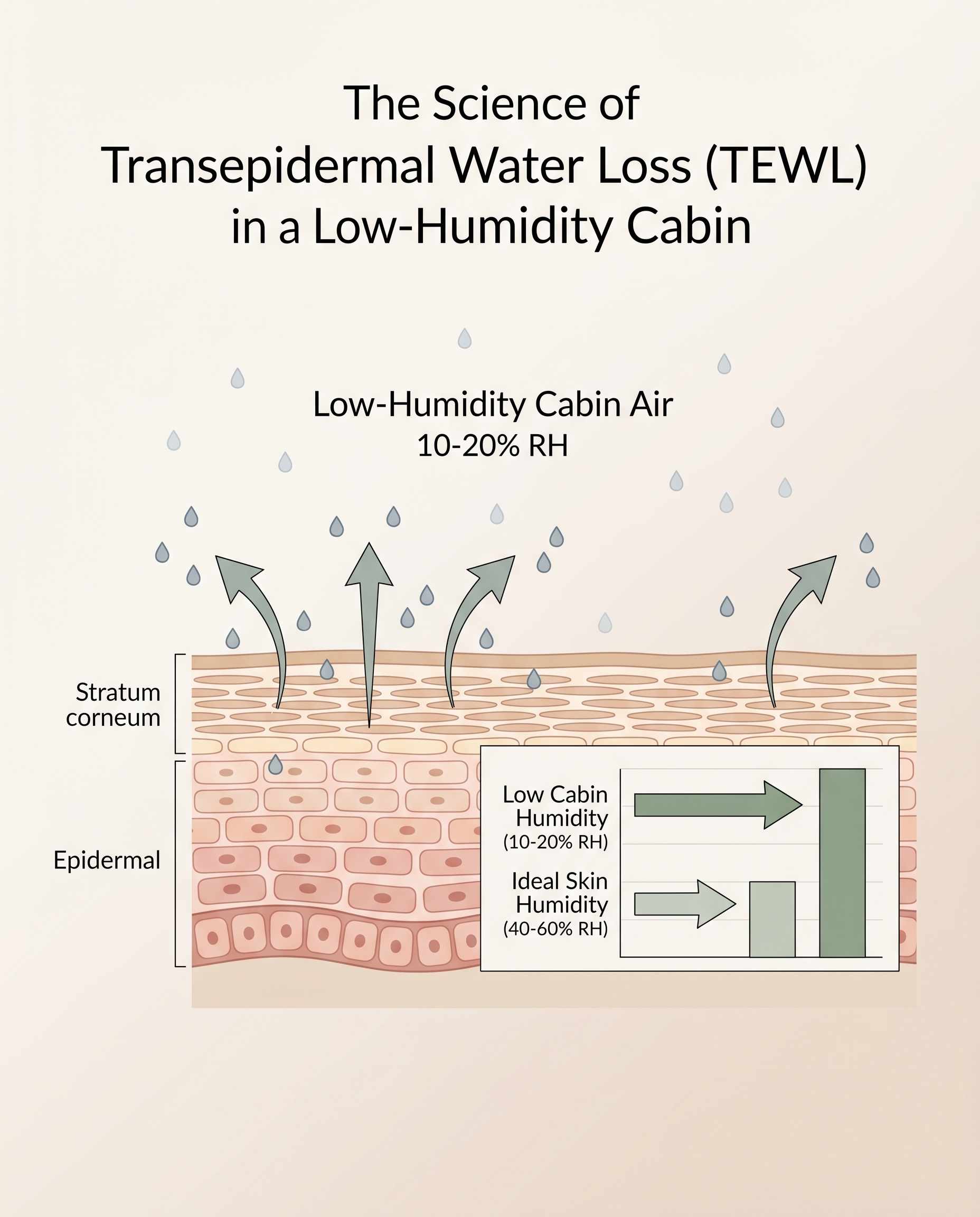
Your skin barrier is made up of cells held together by fats called ceramides (the natural lipids that act like mortar between skin cells). When humidity drops this low, ceramides are put under stress. TEWL increases. Your skin pulls moisture from its deeper layers to compensate. The result is tightness, dullness, and sometimes flaking or increased sensitivity after you land.
On top of that, flights disrupt your circadian rhythm, which is your body's internal 24-hour clock. Research shows that circadian disruption affects how your skin repairs itself overnight. If you want to understand more about how this works, this article on your circadian rhythm and skin explains it well. The combination of dry air, UV exposure through cabin windows, and disrupted sleep creates a real challenge for your skin. The five tips below address each of these stressors directly.
Tip 1: Layer a Humectant Serum Before You Board
Humectants are ingredients that attract water and hold it in your skin. Hyaluronic acid is the most well-known example. It can hold up to 1,000 times its own weight in water. This makes it highly effective at keeping your skin hydrated when the environment is working against you. Glycerin and sodium PCA are two other humectants that work in a similar way.

The key is to apply your humectant serum before you board, not after your skin is already feeling dry. Apply it to slightly damp skin so it has moisture to draw from. Then seal it with a moisturiser on top.
This layering approach creates a reservoir of hydration that your skin can draw on during the flight. A product like HydroPeptide AquaBoost works well here. It combines multiple forms of hyaluronic acid with barrier-supporting ingredients to help your skin hold moisture through extended dry-air exposure.
One important note: in very low humidity environments, a humectant used alone can actually pull moisture from your skin rather than the air. Always follow with a moisturiser or balm to seal the hydration in. This is the same principle that applies in dry climates on the ground, and cabin air is no different.
Key Takeaways
- Flying exposes your skin to extremely low humidity (as low as 10-20%), recycled air, and disrupted sleep cycles that weaken your skin barrier and cause dehydration.
- To protect your skin when you fly, focus on five key strategies: hydrate with a humectant serum before boarding, simplify your in-flight routine, apply SPF even on the plane, avoid heavy makeup during the flight, and repair your barrier immediately after landing.
- These steps address the specific environmental stressors of cabin ai...
Tip 2: Simplify Your In-Flight Routine Drastically
This one goes against the instinct to do more when your skin is stressed. But active ingredients like retinoids (vitamin A derivatives that speed up cell turnover), glycolic acid. And high-dose vitamin C can increase your skin's sensitivity to the already harsh cabin environment. Your barrier is already under pressure from low humidity. Adding strong actives mid-flight can push it further into irritation.
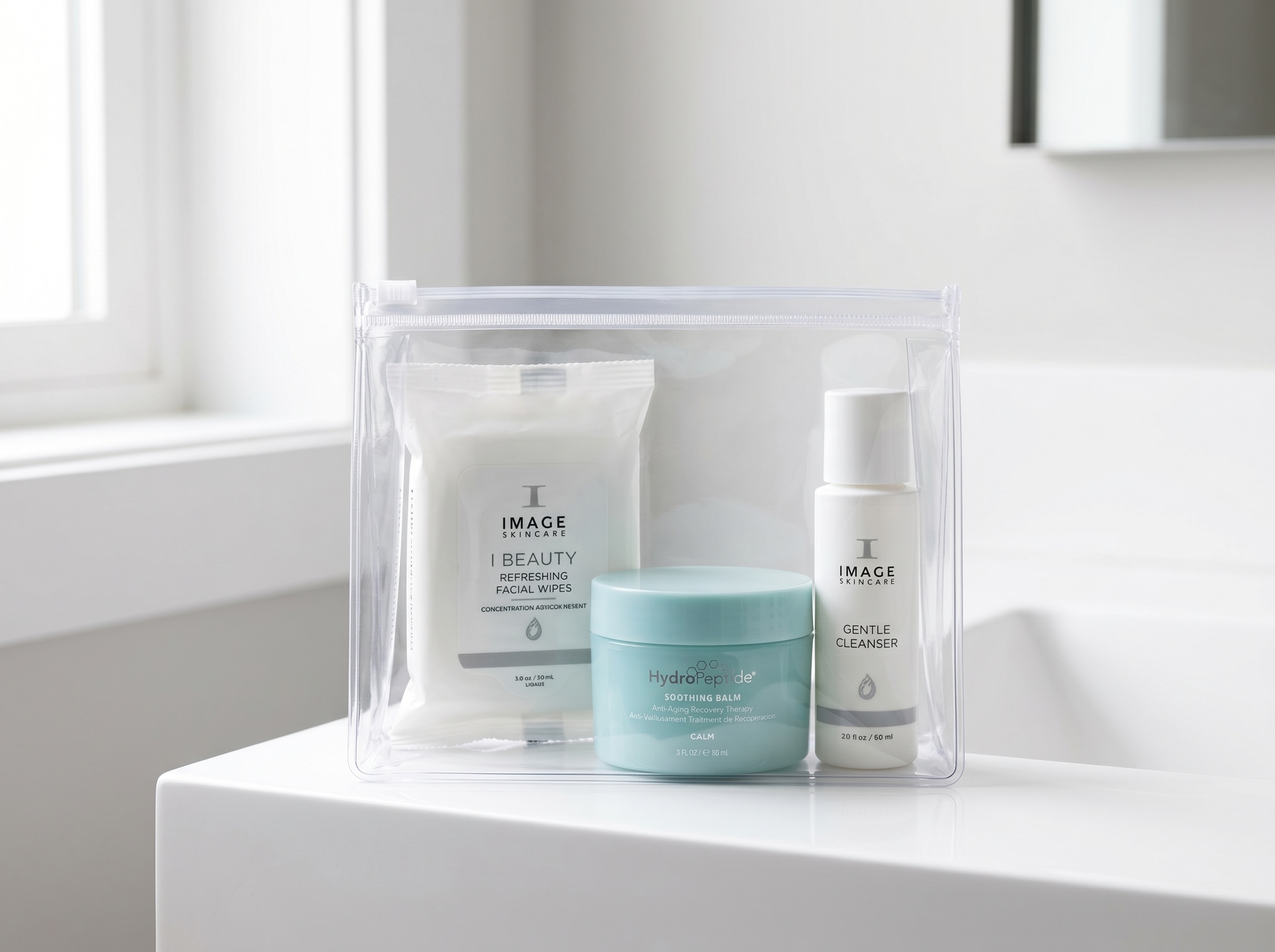
Your in-flight kit should focus on three things only: a gentle cleanser, a hydrating serum, and a barrier-supporting moisturiser. If your flight is long, a small pot of a soothing balm like HydroPeptide Soothing Balm is worth including. It is designed to calm reactive skin and reinforce the barrier without heavy fragrance or unnecessary actives. It works well as an overnight mask on very long flights too.
Save your retinoids and exfoliating acids for your regular home routine. On the plane, your only goal is to protect and maintain. Think of it as a holding pattern for your skin, not a treatment session.
Tip 3: Apply SPF Even on the Plane
This surprises many people. Sitting by a window seat feels low-risk for sun exposure. But at cruising altitude, you are above much of the atmosphere that normally filters UV radiation. UVA rays, which are the rays responsible for pigmentation and collagen breakdown, pass through aircraft windows. A study published in JAMA Dermatology found that pilots flying for one hour at altitude receive a similar UVA dose to around 20 minutes on a sunbed.
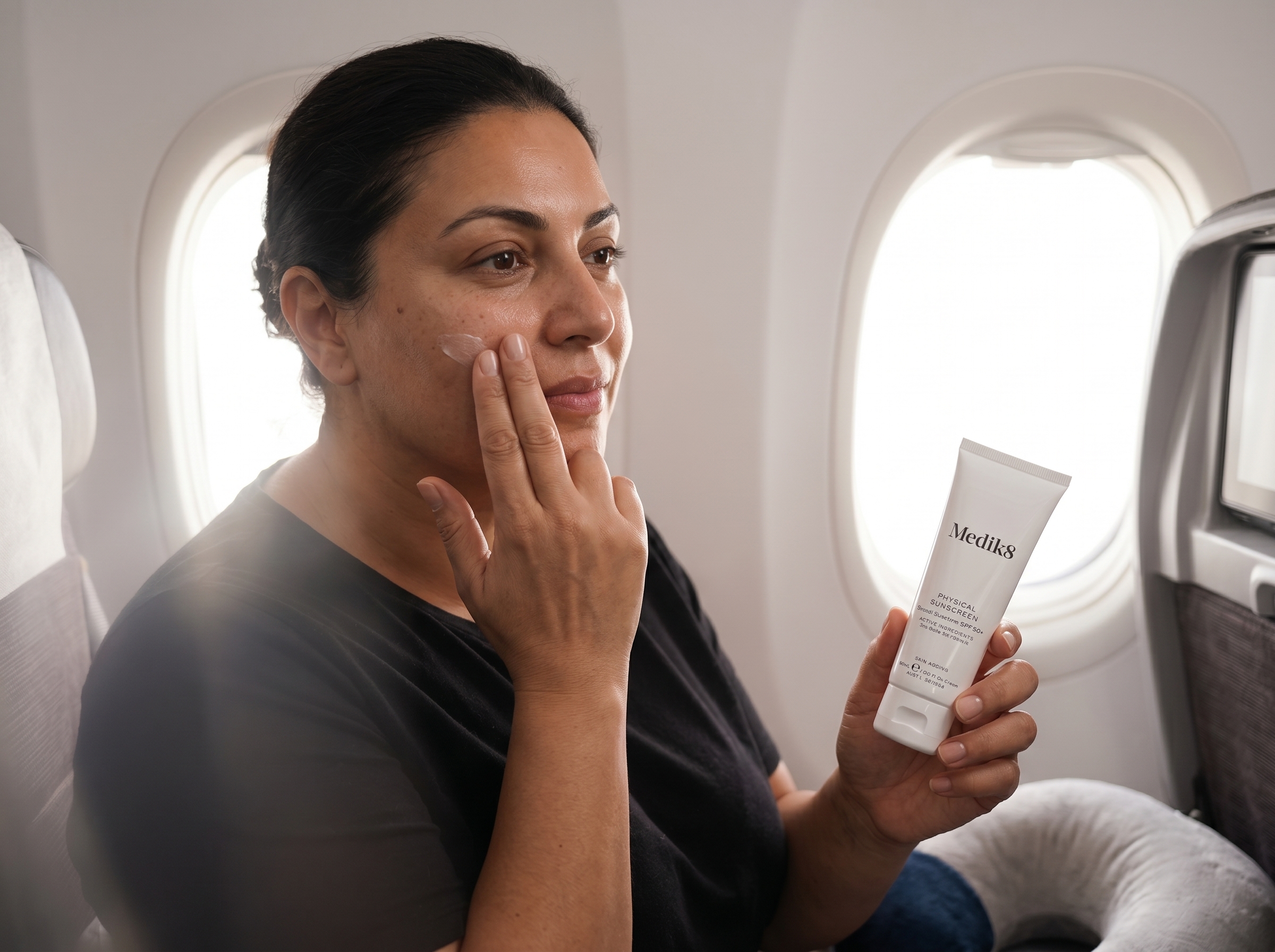
UVA rays do not cause sunburn, so you will not feel them working. But they penetrate deeply into the skin and contribute to long-term pigmentation changes and collagen loss over time. If you are already managing uneven skin tone or pigmentation concerns, this matters even more. You can read more about how to approach pigmentation in this guide on treating pigmentation.
Apply a broad-spectrum SPF 50+ before boarding and reapply if you are on a long-haul flight. A mineral SPF like Medik8 Physical Sunscreen SPF50 is a good choice for travel. It sits on top of the skin rather than being absorbed into it. This makes it gentler for skin that is already stressed from dry cabin air. It also layers well over a hydrating serum without pilling.
Tip 4: Skip Heavy Makeup During the Flight
Full coverage foundation and setting powder during a long flight creates a real problem. Your skin is already losing moisture faster than normal. Adding a layer of makeup on top traps that dehydration against your skin and can make it worse. Powder products in particular absorb moisture from the surface of your skin, which is the last thing you want at 20 percent humidity.

If you want to feel put-together when you board, a tinted SPF or a light BB cream is a much better option than a full foundation. These give some coverage without blocking your skin's ability to breathe and absorb the hydrating products underneath. If you do wear makeup on the flight, a gentle cleanse mid-flight on longer journeys allows you to reapply your hydrating serum and SPF fresh.
For removing makeup before or during a long flight, facial wipes can be a practical carry-on option. Image Skincare I Beauty Refreshing Facial Wipes are gentle enough for sensitive skin and do not leave a residue that would interfere with the products you apply after. Keep them in your carry-on for easy access without needing to use the small basin in the aircraft bathroom.
Tip 5: Repair Your Barrier Immediately After Landing
What you do in the first hour after landing matters more than most people realise. Your skin has been under sustained environmental stress. Your barrier is depleted.
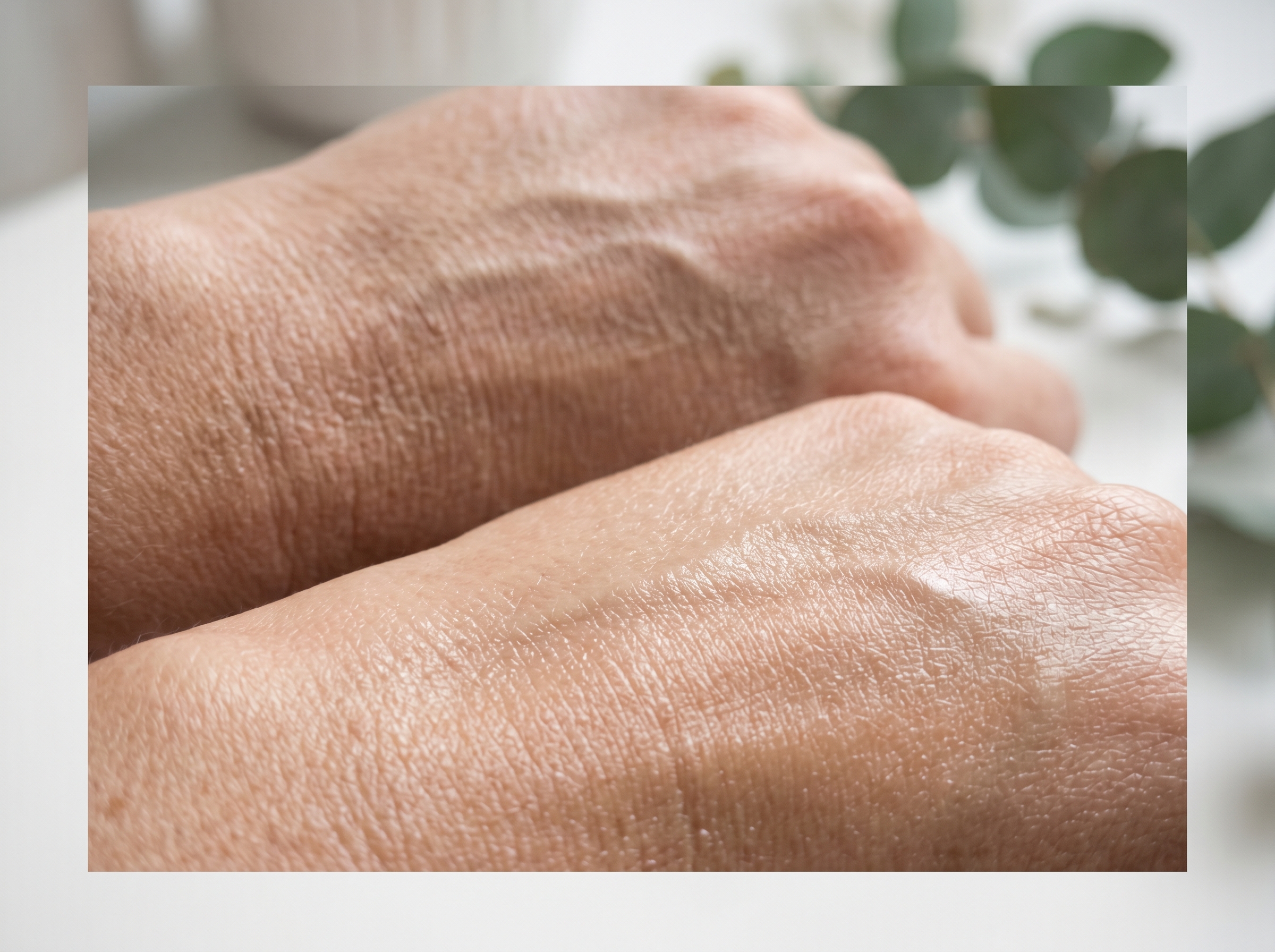
This is the moment to focus on repair, not treatment. Ceramide-rich moisturisers are your best tool here. Ceramides help rebuild the lipid structure of your barrier and reduce TEWL back to normal levels.
If you are staying in a hotel, the air conditioning often continues the same low-humidity problem the cabin started. Run a hot shower and let the bathroom steam up before you apply your products. Applying to slightly damp skin helps humectants work more effectively. Follow with a richer moisturiser than you would normally use at home to account for the cumulative dehydration from the flight.
Keep your actives gentle for the first night after a long-haul flight. Your skin's barrier recovery time after sustained TEWL elevation is roughly 24 to 48 hours. Give it that time before reintroducing retinoids or exfoliating acids.
A product like Medik8 Ultimate Recovery is designed specifically for barrier repair situations. It contains ceramides, fatty acids, and cholesterol in a ratio that mirrors your skin's natural lipid structure. It is a strong choice for the night you land after a long flight.
For more guidance on building a travel-ready routine, our traveller's guide to healthy skin covers a broader range of travel skin concerns beyond flying.
Flying does not have to leave your skin looking or feeling depleted. The five tips above work because they address the actual science of what cabin air does to your skin barrier. Hydrate before you board. Keep your in-flight routine simple. Wear SPF even at altitude.
Skip heavy makeup. And repair your barrier as soon as you land. These are not complicated steps. They are just the right ones, applied at the right time.
If you are unsure which products suit your skin specifically for travel, that is exactly what the Skin Blueprint is designed to help with. Your skin has its own needs, and a travel routine should reflect those, not just follow generic advice. Start your Skin Blueprint to get recommendations built around your skin, not around what is easiest to sell you.


