
You've built a solid routine. You're using a retinoid. You've added peptides. You apply SPF every morning without fail. But somewhere in your late 30s or 40s, something shifts.
The results that used to come reliably start to slow. Your skin looks a little less responsive. A little more tired. And you're left wondering whether your products are still working.
Here's what's likely happening beneath the surface. It's not that your routine is wrong. It's that your skin cells may not have enough energy to respond the way they once did. That energy depends on a molecule called NAD+ (nicotinamide adenine dinucleotide).
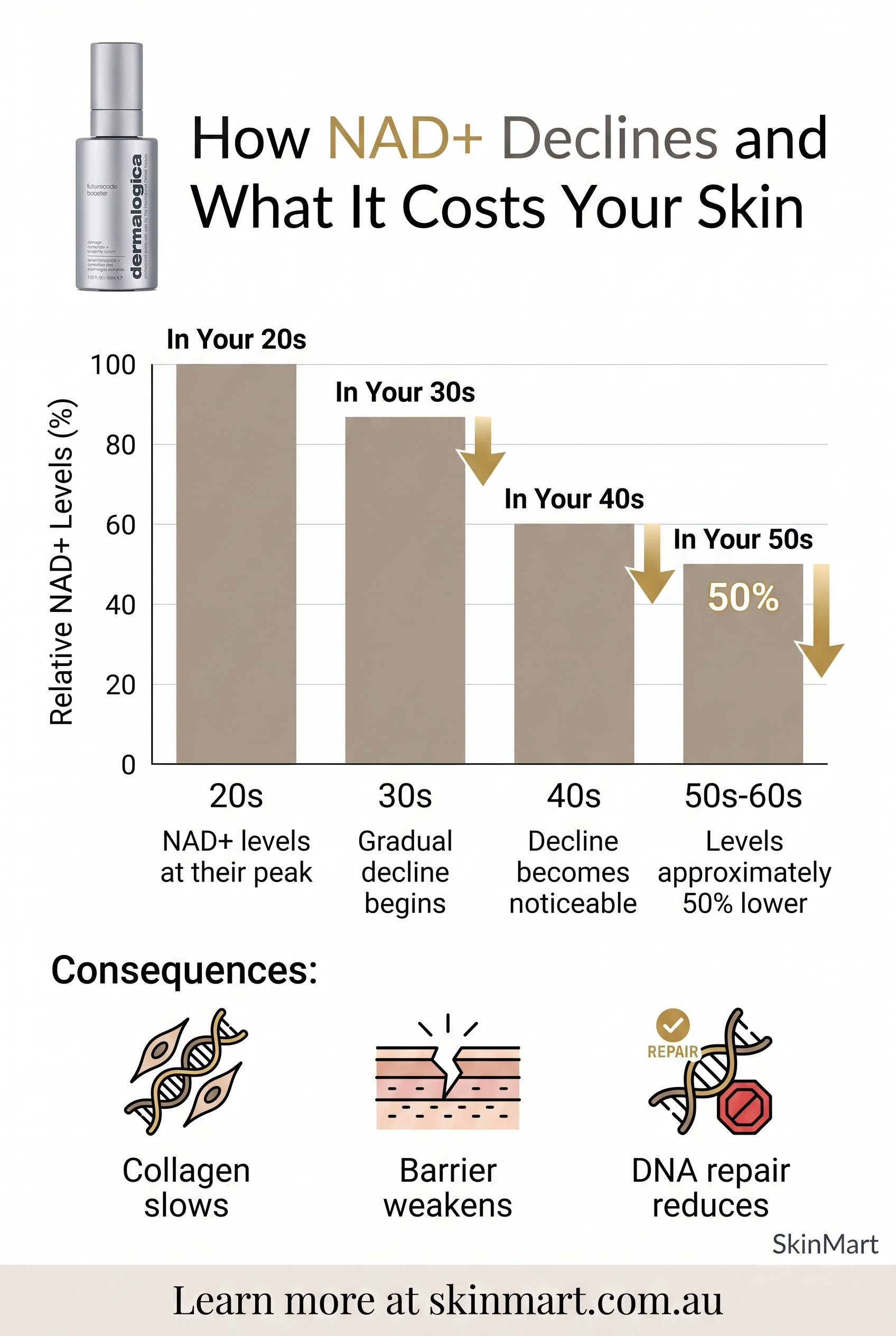
It powers hundreds of cellular processes your skin relies on every day. And after 30, it starts to decline. By your 40s and 50s, levels can drop by around 50%. Understanding this changes how you think about your skin, and what it actually needs.
What Is NAD+ and Why Does Your Skin Need It?
NAD+ is a coenzyme found in every living cell. Think of it as the cellular currency your skin uses to get work done. It plays a role in more than 500 enzymatic reactions. That includes producing ATP (the energy your cells run on), repairing DNA damage, building collagen and elastin, and maintaining your skin barrier.
Your skin is one of the most metabolically active organs in your body. Fibroblasts (the cells that make collagen) need major energy to do their job. Keratinocytes (the cells that form your outer skin layer) need energy to complete their maturation cycle and shed properly.
Even the processes that regulate pigment and swelling require NAD+. When levels are high, your skin has the capacity to repair, renew, and respond. When levels fall, that capacity shrinks.
NAD+ also activates a group of proteins called sirtuins. These proteins help regulate how cells age, how they respond to stress, and how efficiently they repair damage. Lower NAD+ means less sirtuin activity, which means your skin ages faster at a cellular level than it might otherwise.
Why Does NAD+ Decline After 30?
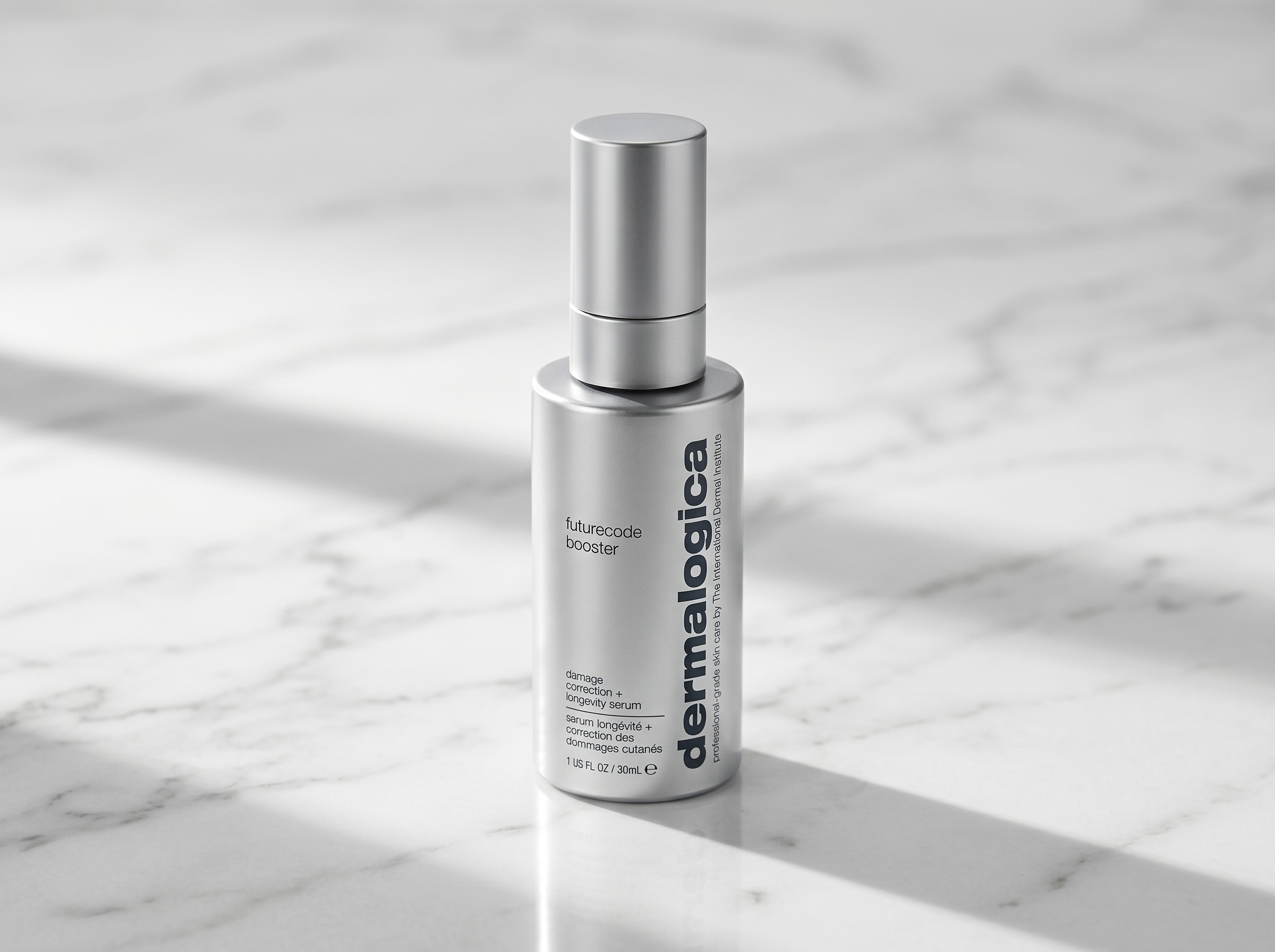
NAD+ decline is a natural part of ageing. Your body makes NAD+ through several pathways, but the most important one in skin is called the salvage pathway. This pathway recycles a form of vitamin B3 called nicotinamide back into NAD+. The key enzyme in this process, NAMPT, becomes less active as you age. So your cells produce less NAD+ even when the raw materials are available.
At the same time, demand for NAD+ goes up as you get older. UV exposure in Australia's high-UV environment depletes NAD+ quickly. Every time your skin absorbs UV radiation, it triggers DNA repair enzymes called PARPs.
These enzymes consume large amounts of NAD+ to fix the damage. The more sun exposure, the faster your NAD+ gets used up. This is one reason understanding UV damage matters so much for long-term skin health.
swelling also depletes NAD+. Chronic low-grade skin swelling, which becomes more common with age, keeps repair processes running constantly. That steady demand drains your cellular reserves. The result is a system that's always running low on fuel, even when you're doing everything right on the surface.
Key Takeaways
- NAD+ is a molecule your skin cells use to produce energy, repair DNA, and build collagen.
- After age 30, NAD+ levels begin to fall.
- By your 40s and 50s, levels can drop by about 50%.
- When this happens, your skin cells lack the energy to respond fully to treatments like retinoids and peptides.
- Supporting NAD+ levels with ingredients like niacinamide can help restore your skin's ability to repair and renew itself.
What Happens to Your Skin When NAD+ Drops?
The effects of NAD+ decline show up in ways that feel familiar but are hard to pin down. Your skin takes longer to recover from sun exposure. Texture improvements from exfoliation don't last as long. Fine lines deepen gradually despite consistent retinoid use.
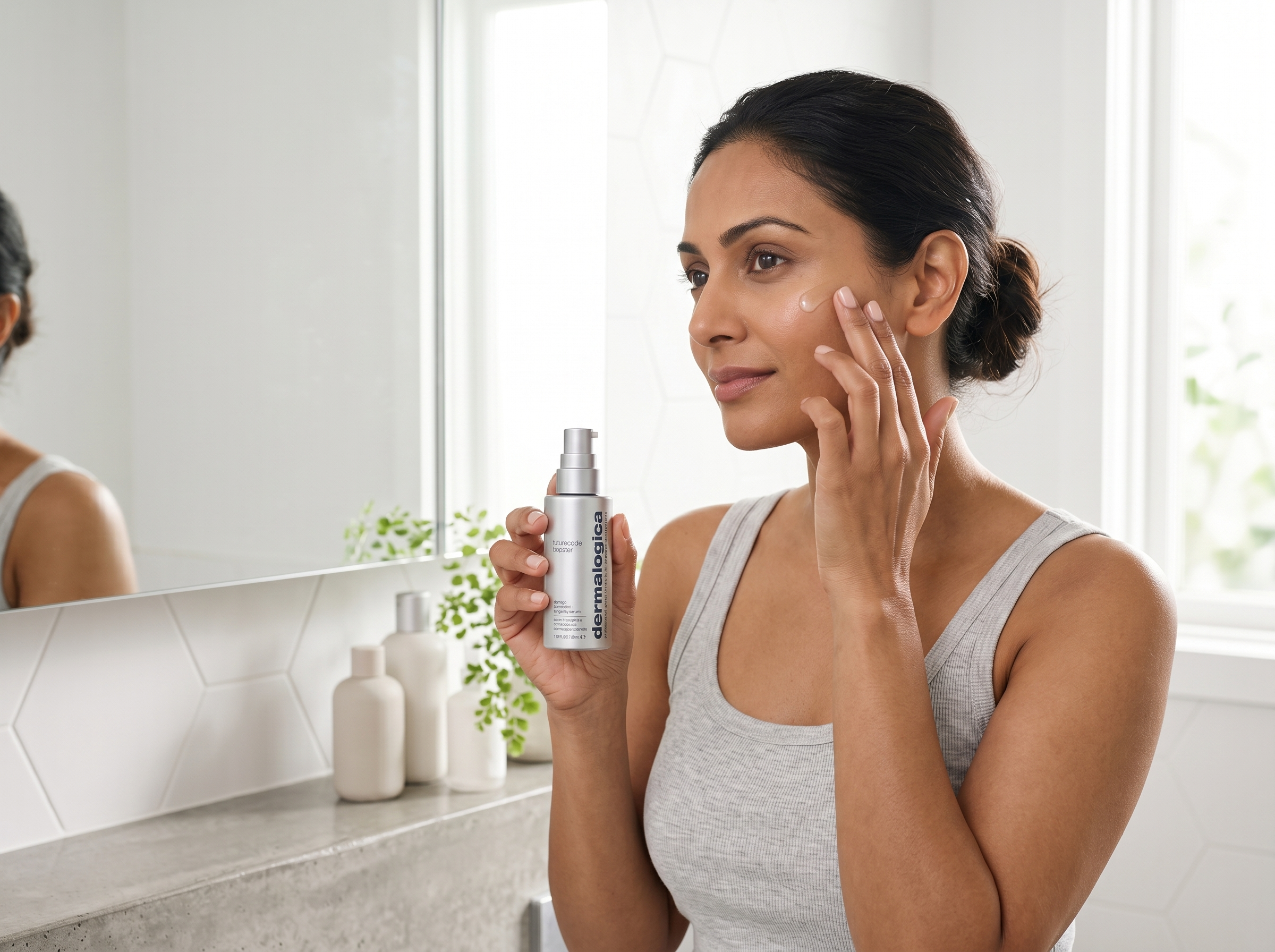
Your barrier feels less resilient. Healing slows. These aren't signs that your products have stopped working. They're signs that your cells have less energy to act on them.
Here's the specific chain of events. When NAD+ falls, your fibroblasts produce less collagen and elastin. Not because they've forgotten how, but because they lack the ATP to do it efficiently. Your keratinocytes struggle to complete their full maturation cycle, so skin texture becomes uneven.
Ceramide production (which keeps your barrier strong) slows down. DNA repair becomes less thorough, so UV damage builds up faster. If you've noticed your skin looking less resilient over time, this is likely part of the reason. You can also explore the genetic side of skin ageing to understand how these factors interact.
Mitochondria, the tiny structures inside cells that produce energy, also age over time. They build up damage and become less efficient. This compounds the NAD+ problem.
Less NAD+ means less mitochondrial function. Less mitochondrial function means less ATP. Less ATP means less capacity for everything your skin needs to do.
How NAD+ Decline Limits Your Existing Treatments
This is the part that surprises most people. Your retinoid works by signalling skin cells to speed up turnover and produce more collagen. But that signalling only works if your cells have enough energy to respond.
When NAD+ is low, fibroblasts and keratinocytes can receive the signal but lack the metabolic capacity to act on it fully. You get a partial response instead of the full benefit your retinoid is capable of delivering. If you're starting or refining your retinol routine, understanding this context helps you get more from it.
Peptides work similarly. They send messages to your skin cells, encouraging collagen synthesis and barrier repair. But those messages require energy to execute. A cell running low on NAD+ is like a factory with reduced power.
The orders come in, but output is limited. Supporting NAD+ doesn't replace your peptides or retinoid. It gives your cells the capacity to respond to them more fully.
This is why NAD+ support is best understood as a foundational layer, not a replacement for your existing routine. It addresses what limits your treatments from the inside out.

Featured: FutureCode Booster
Advanced booster that helps extend the longevity of healthy-looking skin by supporting natural skin repair and reducing visible signs of DNA-relate...
Shop Now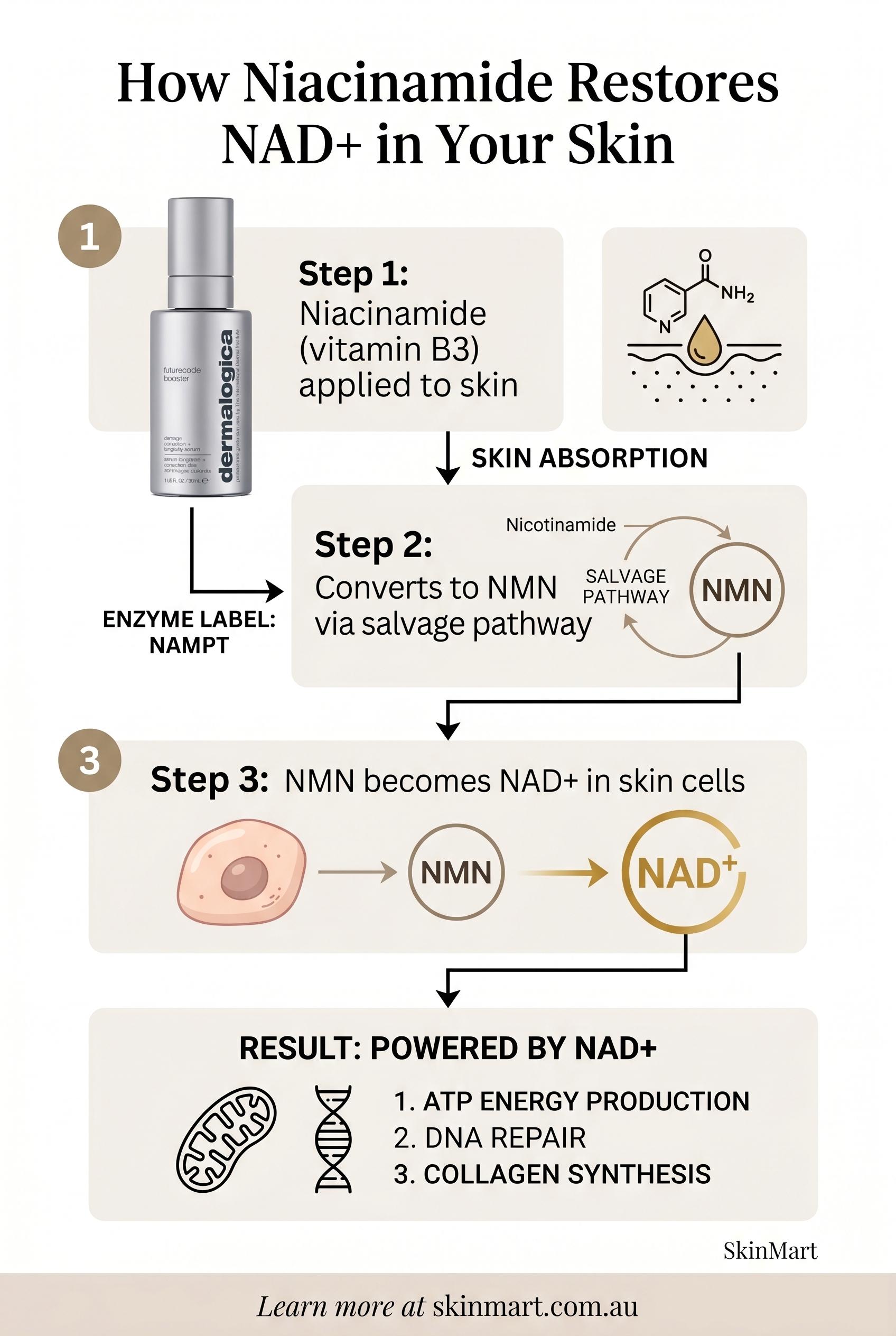
How to Support NAD+ in Your Skin
The most evidence-backed approach starts with niacinamide. Niacinamide is a form of vitamin B3 that works through the salvage pathway to support NAD+ levels in skin cells. At 5% amount, it has strong clinical evidence behind it. A study by Gehring (2004) showed improvements in fine lines, skin tone, and elasticity over 12 weeks.
Bissett et al. (2005) found reduced skin yellowing and improved texture. Kawada et al. (2008) documented better barrier function and lower water loss. These aren't subtle effects. They reflect real improvements in how skin cells are functioning.
Niacinamide is also stable, well-tolerated by most skin types, and works well alongside other actives. It's a practical starting point for anyone who wants to address cellular energy decline without a complex overhaul of their routine. Apply it twice daily after cleansing, before heavier treatments. Expect initial improvements in texture and radiance within 3 to 4 weeks. Structural changes in firmness and fine lines build over 8 to 12 weeks.
Beyond niacinamide, CoQ10 (coenzyme Q10) supports the mitochondria directly. It helps the electron transport chain (the process inside mitochondria that produces ATP) run more efficiently. Knott et al. (2015) showed 27% wrinkle reduction after 6 months of consistent topical CoQ10 use. Alpha-lipoic acid, which is both water and fat-soluble, can reach multiple cellular compartments and helps renew vitamins C and E. These ingredients work on different parts of the same problem, which is why combining them can deliver more than any single ingredient alone.
What to Look for in a NAD+ Support Product
Not all products that mention NAD+ or niacinamide are built the same way. The key is whether the formula is designed to support cellular energy at a meaningful level, with ingredients at evidence-based amounts. A 5% niacinamide serum is your foundation. Products that combine niacinamide with mitochondrial support ingredients like CoQ10 or plant-based cellular energy compounds offer a more complete approach.
Stability matters too. Some NAD+ precursor compounds are unstable in standard formulas. Look for products that use encapsulation technology or stabilised forms of active ingredients. This ensures the ingredient is still active when it reaches your skin cells, not broken down before it gets there.
Product Spotlight: Dermalogica FutureCode Booster
The FutureCode Booster is formulated to support your skin's natural repair processes at a cellular level. It combines teprenone (a cellular longevity compound), niacinamide (your evidence-based NAD+ precursor), sunflower sprout extract, acetyl zingerone, and rosehip oil. This makes it one of the few serums designed just to address cellular energy decline rather than just surface symptoms. It works as a foundational booster alongside your existing routine, not as a replacement for it. Shop now
The texture of your product also matters for delivery. Most NAD+ support ingredients have historically appeared in heavier creams. A serum format allows for better layering within your routine and more targeted delivery to the skin cells that need it most.
Building Your Cellular Energy Protocol
Supporting NAD+ doesn't require rebuilding your routine from scratch. It requires adding a foundational layer that addresses what's limiting your existing treatments. Start with a niacinamide-based serum or booster applied twice daily. Layer it under your retinoid in the evening and under your SPF in the morning. This order ensures your NAD+ support is in place before your actives signal your cells to act.
SPF is non-negotiable in this protocol. UV exposure is one of the fastest ways to deplete NAD+. Every time UV radiation hits unprotected skin, DNA repair processes consume your cellular NAD+ reserves.
In Australia's UV environment, skipping SPF actively works against the cellular energy support you're building. Think of SPF as part of your NAD+ strategy, not separate from it. You can also explore how to layer your routine for maximum benefit.
Set realistic expectations. Cellular metabolic changes are gradual. You may notice improved radiance and texture within 3 to 4 weeks. These early changes reflect better keratinocyte function and barrier improvement.
Structural changes, including firmer skin and softer fine lines, build over 8 to 12 weeks. The most meaningful benefits build up over 3 to 4 months of consistent use. This is how real cellular change works. Steady, cumulative, and lasting.
Your skin hasn't stopped responding to your treatments. It may simply not have enough cellular energy to respond fully. NAD+ decline is a real, measurable part of how skin ages, and it's one that's largely been overlooked in mainstream skincare conversations. Understanding it doesn't mean starting over. It means adding a foundational layer that gives your existing routine the cellular support it needs to deliver its full potential.
Start with evidence-based NAD+ support, protect your investment with daily SPF, and give the process the time it needs to work. If you'd like to understand exactly which approach suits your skin, start your Skin Blueprint and get tips built around what your skin actually needs, not what's trending. Explore the FutureCode Booster as your first step toward supporting your skin's cellular energy from within.


