
You have the products. You have the routine. But if you're not seeing the results you expected, the order you apply everything could be the reason why. Knowing how to layer skincare correctly is the difference between products working together and products working against each other.
We're going to walk you through the exact order for morning and night, and the three rules behind it. Once you understand the logic, you won't need to memorise a list. You'll just know.
Why Does Layering Order Actually Matter?
Your skin can only absorb so much at once. When you apply products in the wrong order, heavier formulas sit on top of your skin and block lighter ones from getting through. Think of it like trying to absorb water through a plastic wrap. The water is good. The barrier is the problem.
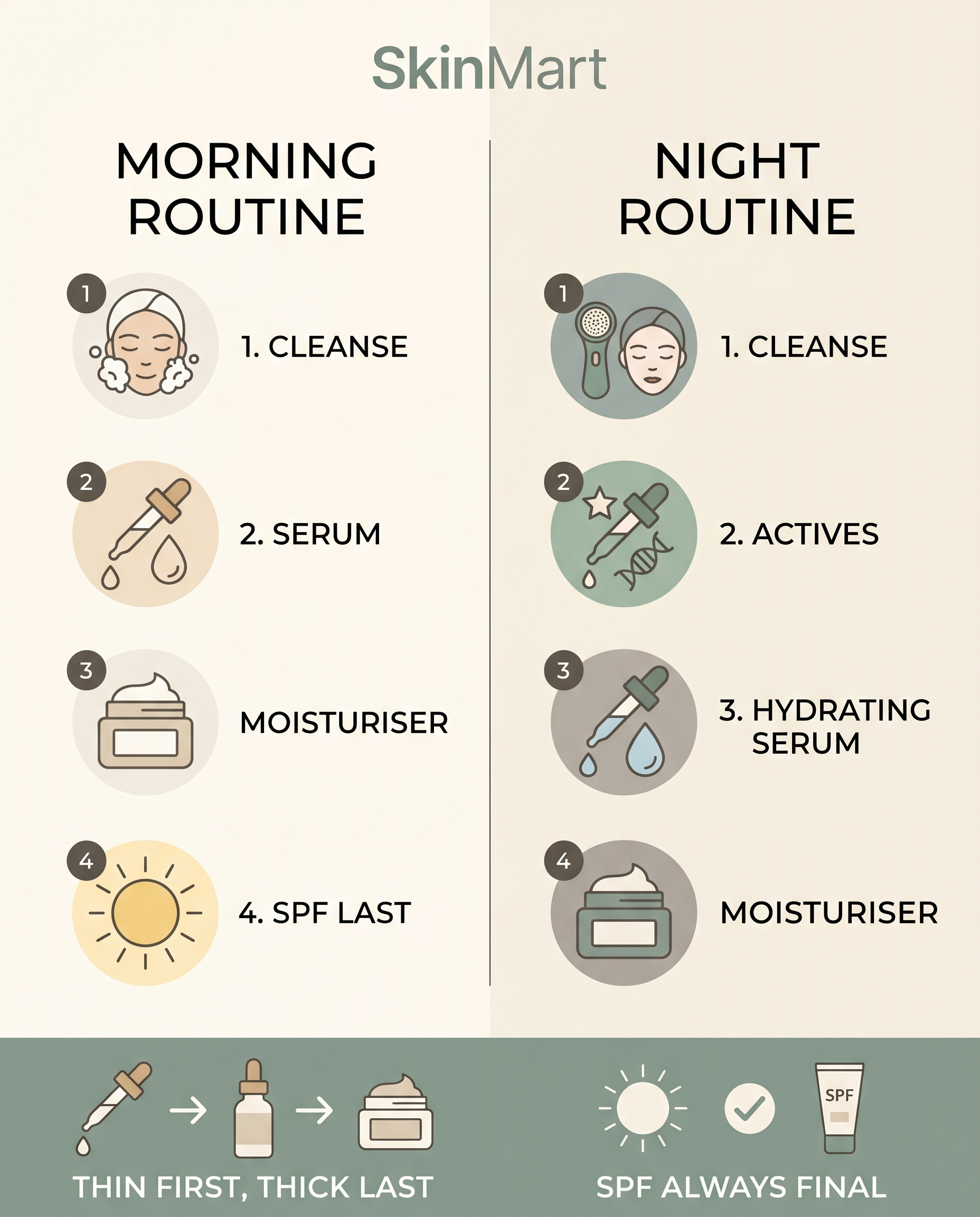
Every product in your routine has a job. A vitamin C serum (an antioxidant that protects skin from environmental damage) needs direct contact with clean skin to work properly. A moisturiser is designed to seal in what came before it. Apply them in reverse, and neither one performs at its best.
The good news is that the logic behind layering is simple. Once you know the three rules, your routine clicks into place.
The Three Rules That Govern Every Routine
Rule one: Thinnest to thickest. Water-based products go before oil-based ones. Lightweight serums go before creams. This follows how your skin absorbs. Thin, watery textures penetrate easily. Rich creams and oils are designed to sit on top and lock everything in.
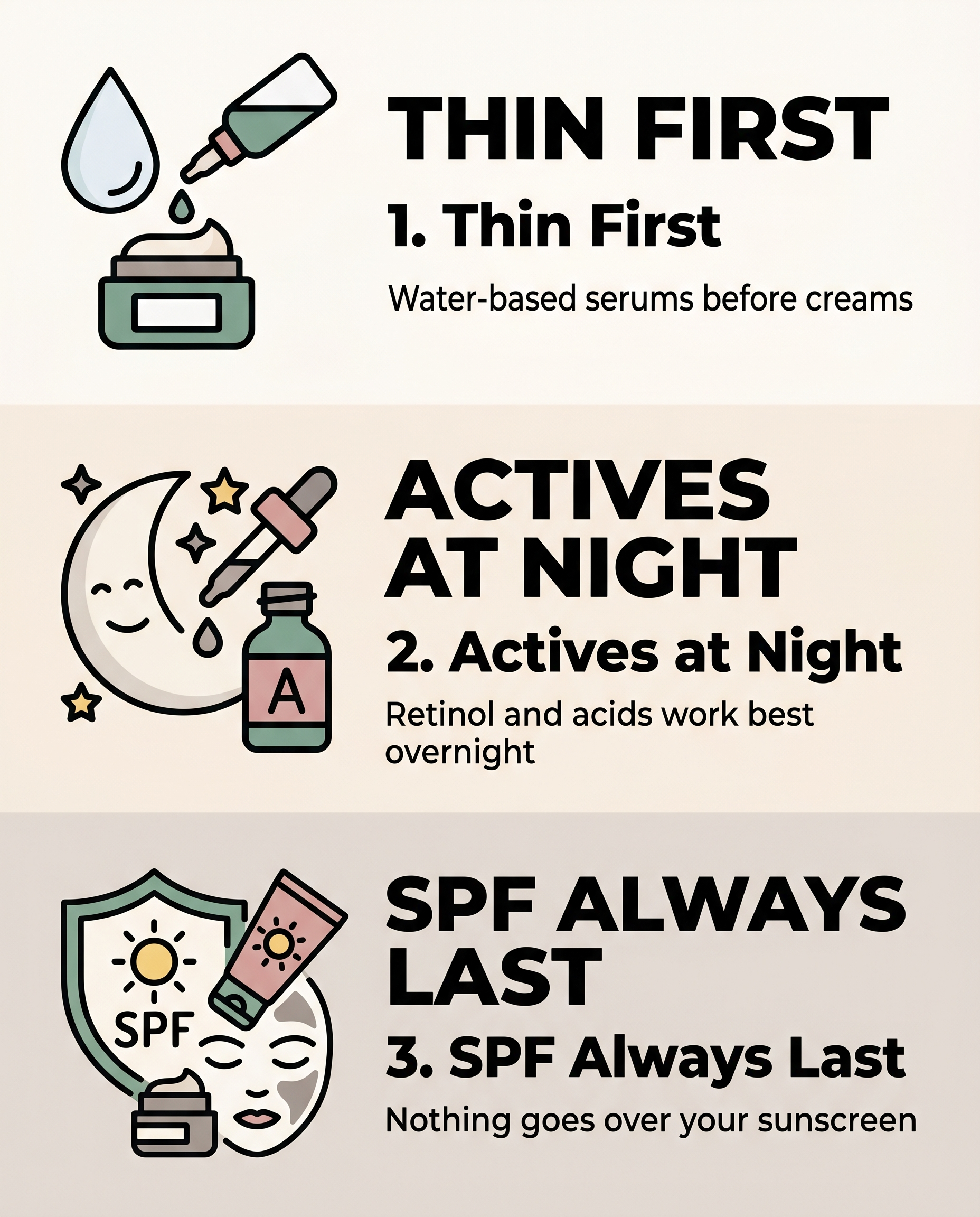
Rule two: Actives belong at night. Active ingredients, like retinol (a vitamin A derivative that speeds up skin cell turnover) and acids like glycolic or salicylic acid (exfoliants that help shed dead skin cells), are most effective on clean skin with nothing competing for absorption. Evening also removes the sun exposure risk that some actives carry.
Rule three: SPF is always the last step in the morning. Sunscreen forms a protective layer on the skin's surface. If you apply anything on top of it, you break that layer and reduce its protection. Nothing goes over SPF. Not your makeup setting spray, not a facial mist. SPF is the final step, every single morning.
Your Morning Routine: Step by Step
Your morning routine has one main goal: protect your skin for the day ahead. You're building a shield against UV rays, pollution, and environmental stress. Every step serves that purpose.
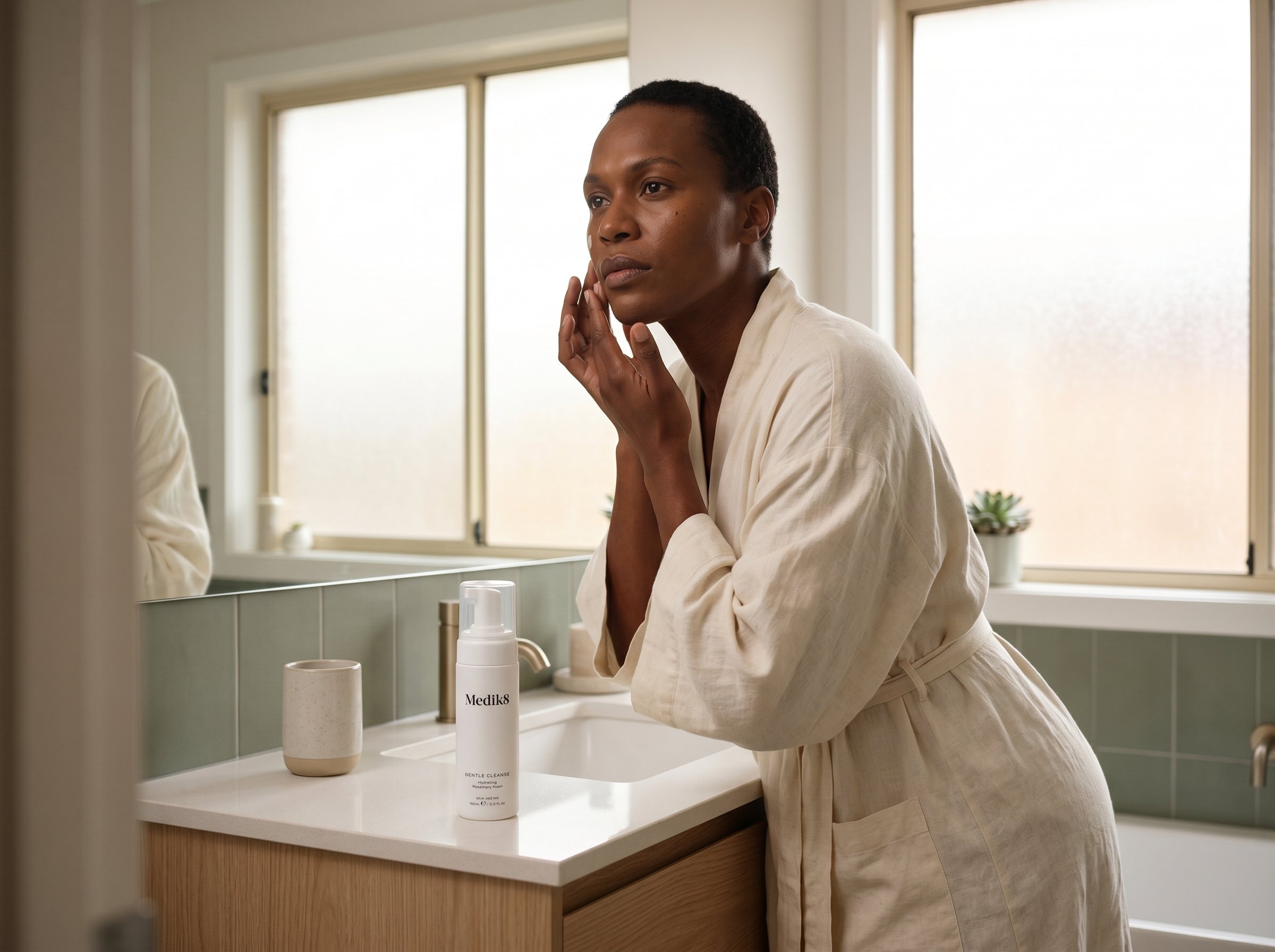
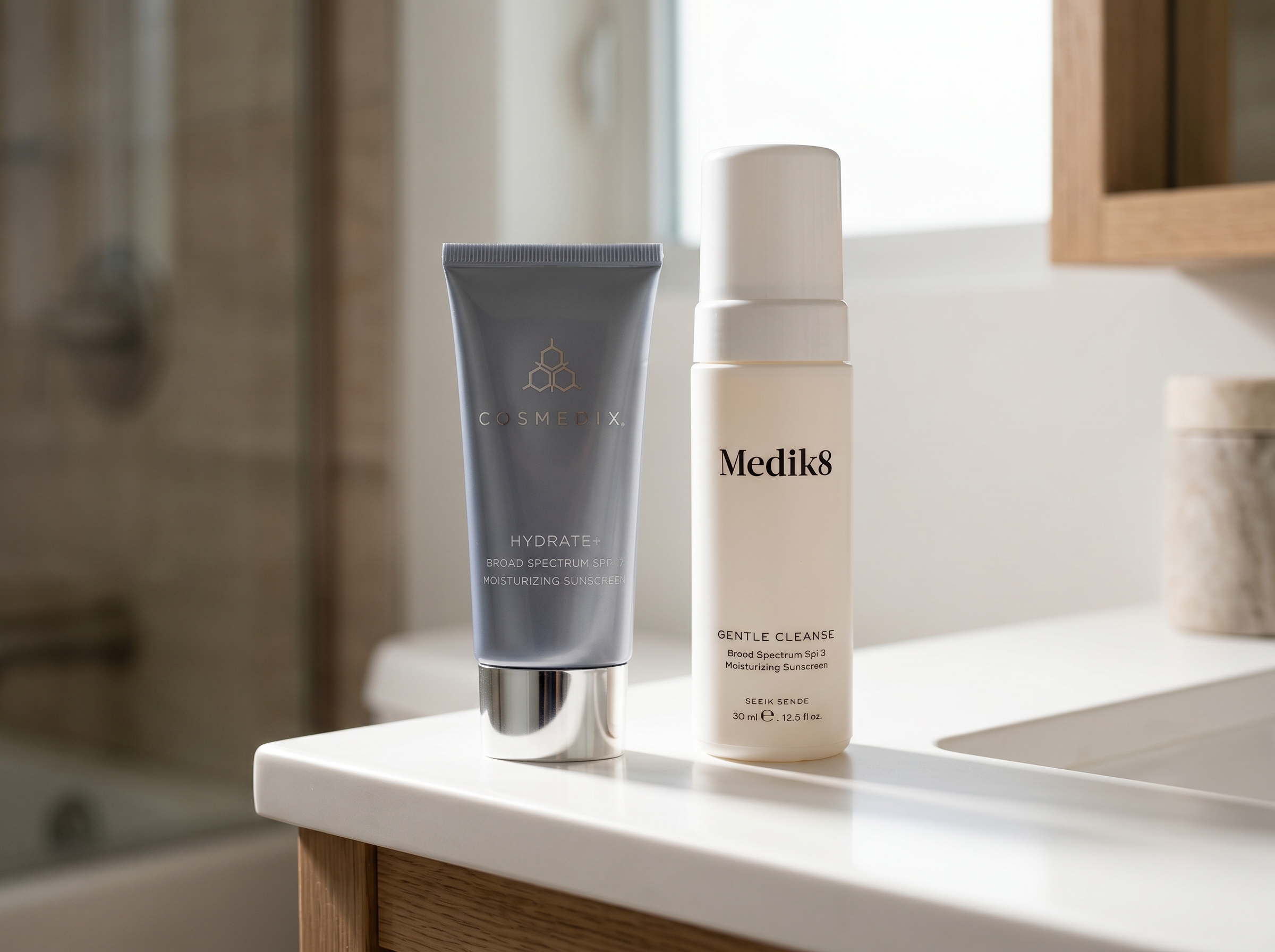
Step 1: Cleanse. Start with a gentle cleanser to remove anything that built up overnight. You don't need to strip your skin in the morning. A mild, low-lather formula does the job without disturbing your skin's natural moisture balance. We reach for Medik8 Gentle Cleanse here. It contains glycerin (a humectant, meaning it draws water into the skin) and gentle surfactants that clean without compromising your skin's barrier.
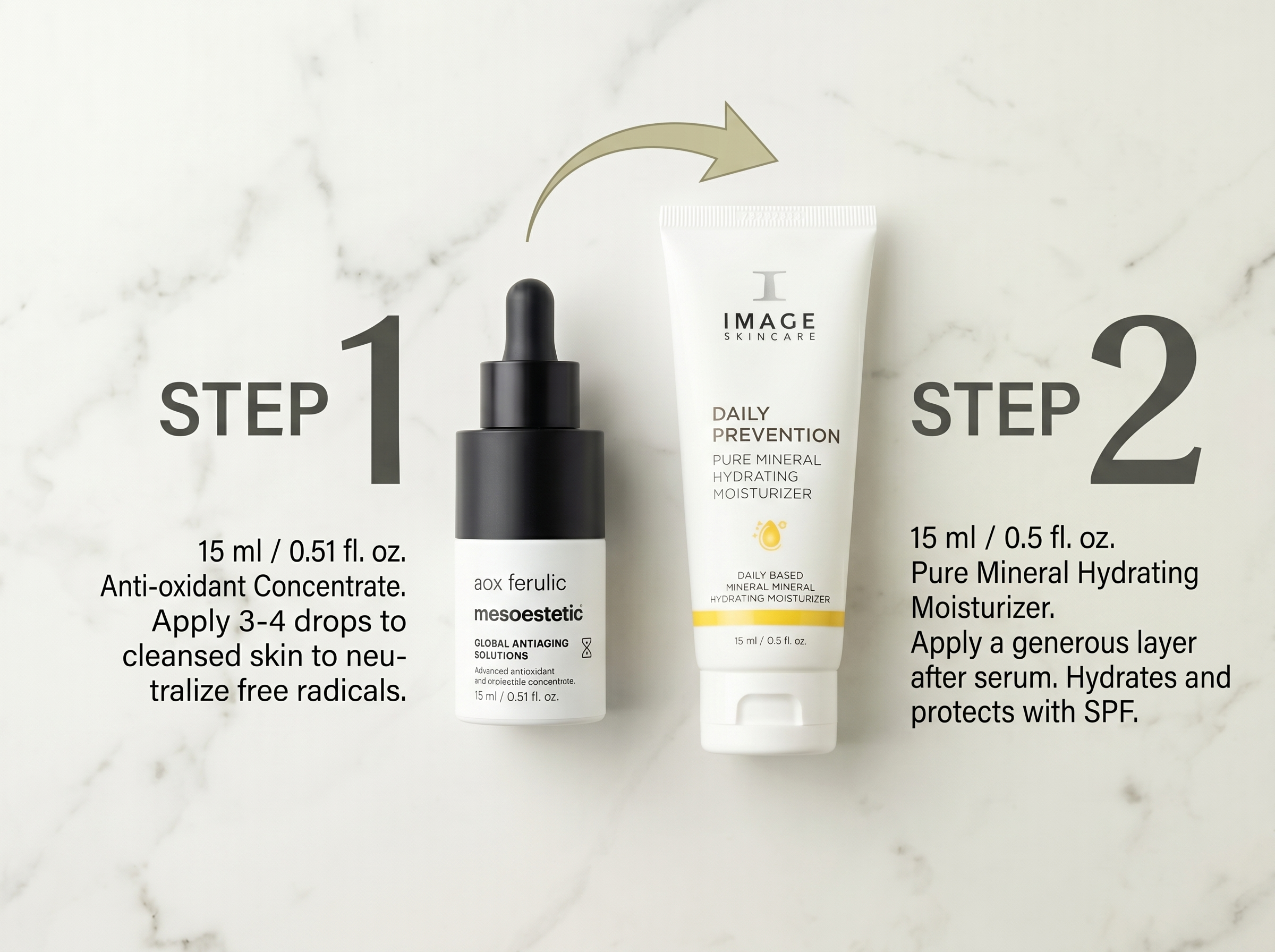
Step 2: Antioxidant serum. This is where we apply our vitamin C or antioxidant serum directly onto clean, dry skin. Antioxidants are ingredients that neutralise free radicals, which are unstable molecules from UV and pollution that damage skin cells. Applying them early means they absorb fully before anything else goes on. We love the Mesoestetic Aox Ferulic for this step.
It combines ascorbic acid (the most active form of vitamin C), ferulic acid, and tocopherol (vitamin E). These three ingredients work together to boost each other's protective effect. Apply it, then wait about 60 seconds before moving on.
Step 3: Moisturiser. Once your serum has absorbed, apply your moisturiser. This step hydrates and helps prepare your skin for SPF. Keep it lightweight in the morning so it absorbs quickly and doesn't create a heavy base under your sunscreen.
Step 4: SPF, always last. Sunscreen is non-negotiable. It goes on last in your morning routine, and nothing goes over it. We keep coming back to the Image Skincare Daily Prevention Pure Mineral Hydrating Moisturizer as a two-in-one option for those who want to combine this step. It contains zinc oxide and titanium dioxide (mineral UV filters that sit on the skin's surface and reflect UV rays) plus hyaluronic acid (a molecule that holds moisture in the skin). It handles steps three and four in one go without compromising on protection.
Your Night Routine: Step by Step
Your evening routine has a different purpose. At night, your skin shifts into repair mode. Cell turnover increases. Blood flow to the skin rises. This is the best time to use your most active ingredients because your skin is primed to respond to them.
Step 1: Cleanse. A thorough cleanse at night matters more than the morning one. You're removing SPF, pollution, sebum (your skin's natural oil), and any makeup. Use the same gentle cleanser, or double cleanse if you wear heavy SPF or makeup. Start with a cleansing oil or balm, then follow with your water-based cleanser.
Step 2: Active treatment. This is where retinol, glycolic acid, salicylic acid, or other treatment serums go. Apply them to clean, dry skin. If you're new to retinol, start two to three nights a week and build up slowly. Your skin needs time to adjust. If you're using an acid toner or exfoliant, apply it first, wait 10 to 15 minutes, then continue with the rest of your routine.
Step 3: Hydrating serum. After your active treatment has absorbed, layer a hydrating serum on top. Hyaluronic acid serums work well here. They draw water into the skin and help offset any dryness that actives can cause. Apply to slightly damp skin for the best result.
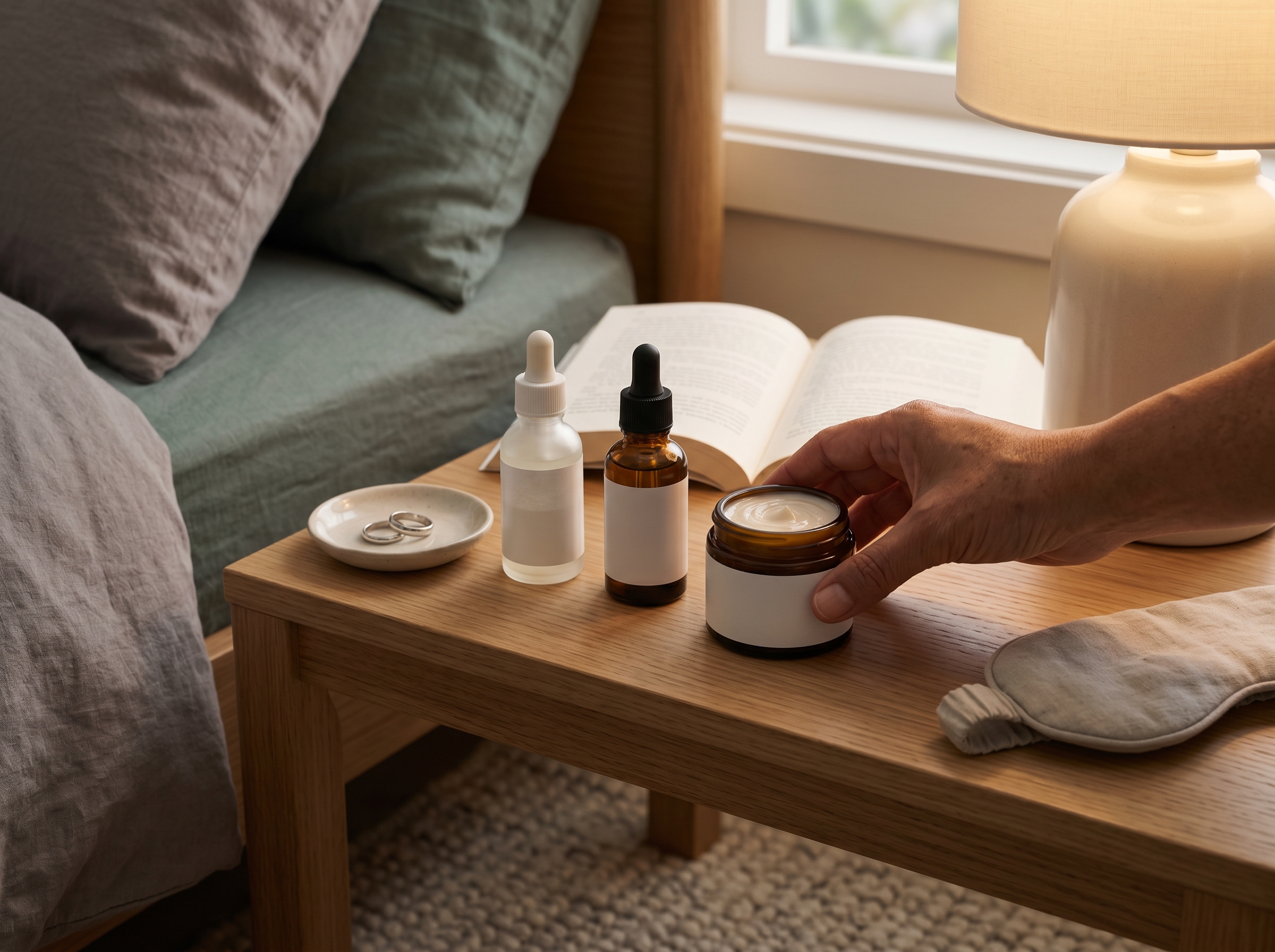
Step 4: Moisturiser. Seal everything in with your night moisturiser. Evening moisturisers tend to be richer than morning ones. They support your skin's overnight repair and lock in the hydration from the layers underneath. If your skin is very dry, you can add a few drops of a face oil on top of your moisturiser as the final step.

Featured: CosMedix Hydrate+
Zinc oxide provides immediate broad-spectrum UV protection across UVA and UVB wavelengths without a chemical activation period.
Shop NowKey Takeaways
- Layer skincare from thinnest to thickest texture.
- In the morning: cleanse, antioxidant serum, moisturiser, then SPF last.
- At night: cleanse, active treatments like retinol or acids, hydrating serum, then moisturiser.
- Keep actives like retinol and acids for your evening routine.
- Always finish your morning routine with SPF.
Common Layering Mistakes Worth Knowing
The most common mistake we see is applying SPF and then adding more products on top. Even a light mist or serum applied over sunscreen disrupts the protective film it forms. Once SPF is on, your morning routine is done.
The second most common issue is rushing between steps. You don't need to wait long, but giving each product 30 to 60 seconds to absorb makes a real difference. Applying moisturiser over a still-wet serum can dilute it and reduce how well it penetrates.
Mixing actives without knowing how they interact is another area worth paying attention to. Retinol and acids can both irritate skin when used together, especially if you're new to either one. Alternating nights is a safe way to get the benefit of both without pushing your skin t to answer.
How the Skin Blueprint Fits Into Your Layering Routine
Generic layering guides give you the rules. Your Skin Blueprint gives you the sequence for your specific products, your skin type, and your concerns. There's a real difference between knowing that actives go at night and knowing whether your particular retinol should go before or after your niacinamide (a form of vitamin B3 that supports the skin barrier and helps regulate oil).
We built the Skin Blueprint because the right order depends on what you're actually using. Two people with the same skin type can have very different optimal routines based on their products, their tolerance to actives, and what they're trying to address. The assessment maps that out for you so you're not guessing.
Start your Skin Blueprint to get a layering sequence built around your routine, not a generic chart.

Featured: Mesoestetic Aox Ferulic
Discover how Mesoestetic Aox Ferulic can help with your skincare routine.
Shop NowThe right layering order isn't about following a strict set of rules. It's about understanding why each step exists so you can make it work for your routine. Thinnest to thickest.
Actives at night. SPF always last in the morning. Three rules, and your routine starts making sense.
If you want a sequence built around your specific products and skin concerns, reach out and one of our Skin Therapist can help. We'll map out your morning and night routine step by step, based on what you're actually using and what your skin actually needs.
Step-by-Step Guide
-
1
Your Morning Routine: Step by Step
Your morning routine has one main goal: protect your skin for the day ahead. You're building a shield against UV rays, pollution, and environmental stress. Every step serves that purpose.
Step 1: Cleanse. Start with a gentle cleanser to remove anything that built up overnight. You don't need to strip your skin in the morning. A mild, low-lather formula does the job without disturbing your skin's natural moisture balance. We reach for Medik8 Gentle Cleanse here. It contains glycerin (a humectant, meaning it draws water into the skin) and gentle surfactants that clean without compromising your skin's barrier.
Step 2: Antioxidant serum. This is where we apply our vitamin C or antioxidant serum directly onto clean, dry skin. Antioxidants are ingredients that neutralise free radicals, which are unstable molecules from UV and pollution that damage skin cells. Applying them early means they absorb fully before anything else goes on. We love the Mesoestetic Aox Ferulic for this step.
It combines ascorbic acid (the most active form of vitamin C), ferulic acid, and tocopherol (vitamin E). These three ingredients work together to boost each other's protective effect. Apply it, then wait about 60 seconds before moving on.
Step 3: Moisturiser. Once your serum has absorbed, apply your moisturiser. This step hydrates and helps prepare your skin for SPF. Keep it lightweight in the morning so it absorbs quickly and doesn't create a heavy base under your sunscreen.
Step 4: SPF, always last. Sunscreen is non-negotiable. It goes on last in your morning routine, and nothing goes over it. We keep coming back to the Image Skincare Daily Prevention Pure Mineral Hydrating Moisturizer as a two-in-one option for those who want to combine this step. It contains zinc oxide and titanium dioxide (mineral UV filters that sit on the skin's surface and reflect UV rays) plus hyaluronic acid (a molecule that holds moisture in the skin). It handles steps three and four in one go without compromising on protection.
-
2
Your Night Routine: Step by Step
Your evening routine has a different purpose. At night, your skin shifts into repair mode. Cell turnover increases. Blood flow to the skin rises. This is the best time to use your most active ingredients because your skin is primed to respond to them.
Step 1: Cleanse. A thorough cleanse at night matters more than the morning one. You're removing SPF, pollution, sebum (your skin's natural oil), and any makeup. Use the same gentle cleanser, or double cleanse if you wear heavy SPF or makeup. Start with a cleansing oil or balm, then follow with your water-based cleanser.
Step 2: Active treatment. This is where retinol, glycolic acid, salicylic acid, or other treatment serums go. Apply them to clean, dry skin. If you're new to retinol, start two to three nights a week and build up slowly. Your skin needs time to adjust. If you're using an acid toner or exfoliant, apply it first, wait 10 to 15 minutes, then continue with the rest of your routine.
Step 3: Hydrating serum. After your active treatment has absorbed, layer a hydrating serum on top. Hyaluronic acid serums work well here. They draw water into the skin and help offset any dryness that actives can cause. Apply to slightly damp skin for the best result.
Step 4: Moisturiser. Seal everything in with your night moisturiser. Evening moisturisers tend to be richer than morning ones. They support your skin's overnight repair and lock in the hydration from the layers underneath. If your skin is very dry, you can add a few drops of a face oil on top of your moisturiser as the final step.


