
Acne heals. But what it leaves behind is a separate challenge. Post-inflammatory hyperpigmentation (PIH), the dark or red marks left after breakouts, and a weakened skin barrier can linger long after the original blemish is gone. Many people focus so much on treating active acne that they miss the recovery phase entirely.
That is where Exo-PDRN Prismatic+ fits in. This serum is not an acne treatment. It is a recovery tool. It works during the healing phase, after breakouts have cleared, to help your skin rebuild properly. Understanding how it works, and why that matters for post-acne skin, is the focus of this article.
What Happens to Your Skin After a Breakout Clears?
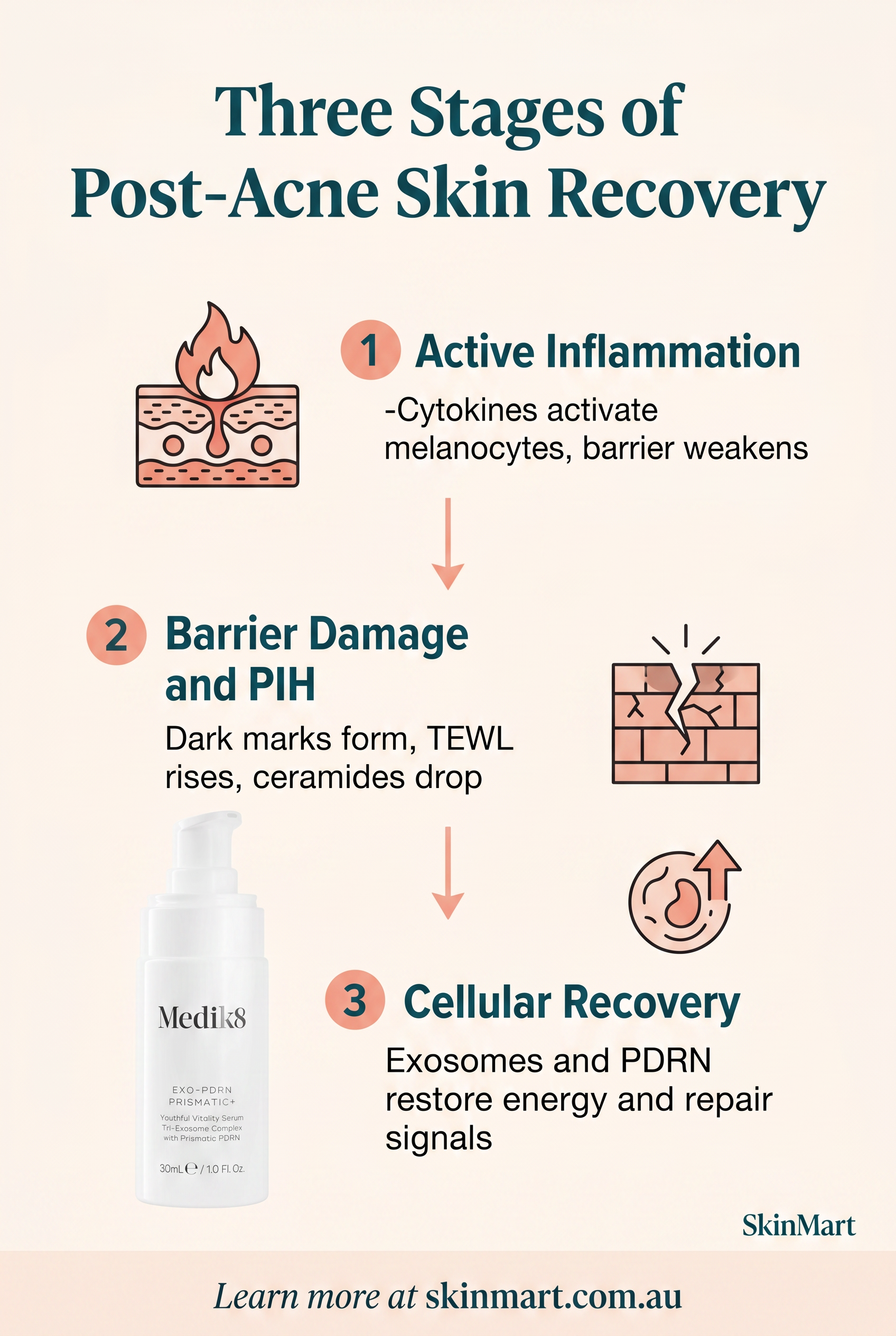
When a pimple heals, the visible lesion disappears. But the damage underneath often stays. During active acne, your skin triggers an inflammatory cascade.
This cascade releases cytokines (chemical messengers that drive inflammation) like IL-1α, IL-6, and TNF-α. These signals activate melanocytes (the cells that produce pigment), which is why dark marks appear after breakouts. This response is called post-inflammatory hyperpigmentation, or PIH.
At the same time, your skin barrier takes a hit. The stratum corneum (your skin's outermost protective layer, think of it as a brick wall) loses ceramides (natural fats that hold the wall together). Transepidermal water loss, or TEWL, increases. This means moisture escapes more easily, and irritants get in more easily. Your skin becomes more reactive, more sensitive, and slower to heal.
Most acne treatments focus on stopping breakouts. Very few address what comes after. That gap is where post-acne recovery becomes its own skin concern. Acne markings require their own targeted approach, separate from the products that cleared the breakout in the first place.
What Makes Exo-PDRN Prismatic+ Different From Standard Recovery Products?
Most post-acne products focus on one thing: reducing pigment. They use tyrosinase inhibitors (ingredients that block the enzyme that makes melanin) like niacinamide or azelaic acid. These are useful. But they only address one part of the recovery picture. They do not restore cellular energy, rebuild barrier function at the structural level, or speed up the skin's own repair systems.
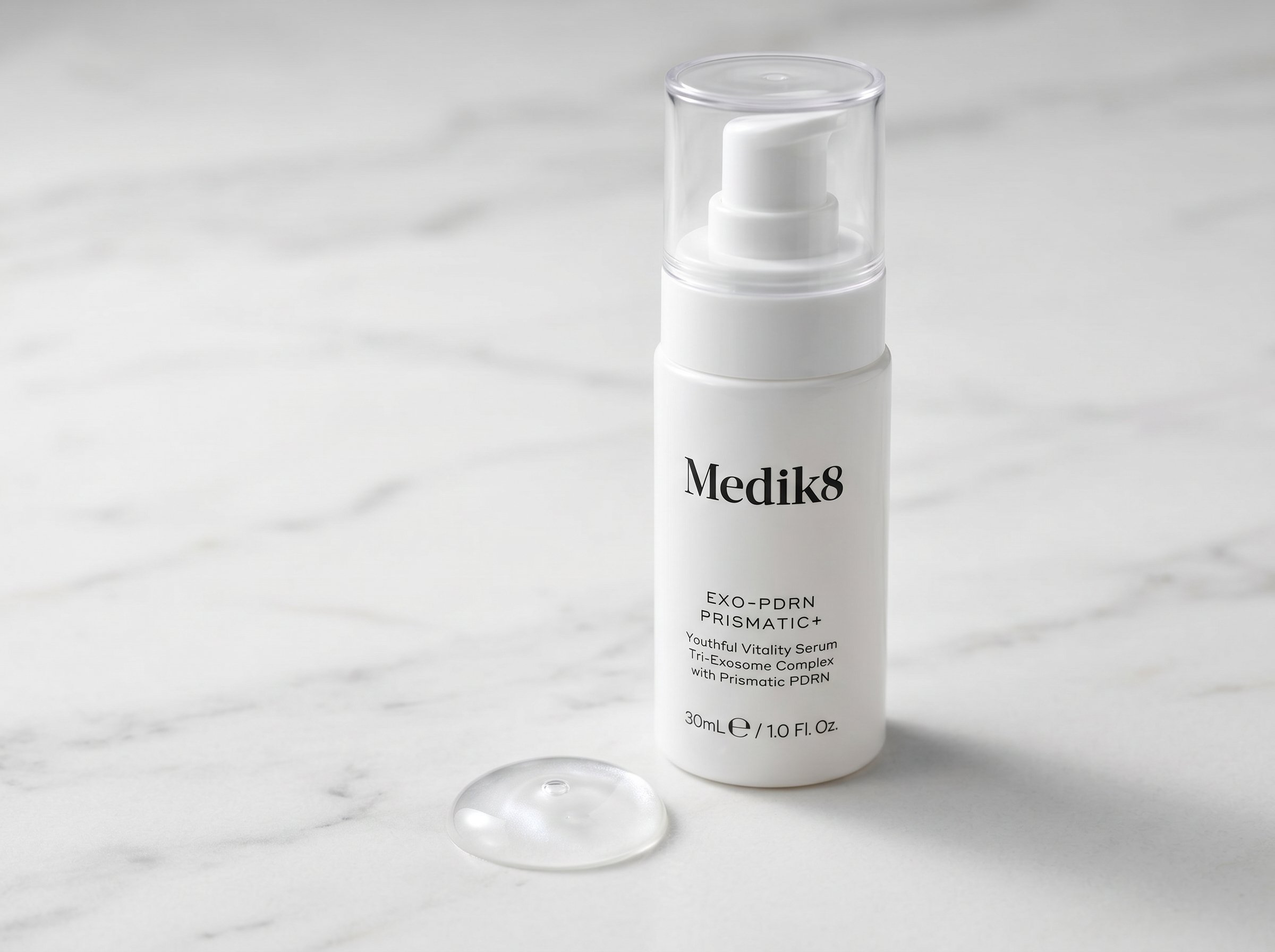
Exo-PDRN Prismatic+ works differently. It combines two active technologies: a Triple Exosome Complex and Prismatic PDRN. Each targets a different part of the recovery process.
Exosomes are tiny vesicles (small delivery packages) released by cells. They carry growth factors, proteins, and signalling molecules that tell nearby cells how to behave. In post-acne skin, where normal cell communication has been disrupted by inflammation, exosomes help restore proper signalling. They prompt fibroblasts (the cells that make collagen and support skin structure) to work more efficiently.
PDRN, or polydeoxyribonucleotide, is a DNA-derived ingredient originally used in post-procedure skin recovery. It activates adenosine A2A receptors in the skin. These receptors play a key role in tissue repair and reducing inflammation. PDRN also supports ATP production.
ATP is the energy currency your cells use to do their work. When cells are low on energy after an inflammatory event, repair slows down. PDRN helps restore that energy supply, giving your skin the fuel it needs to recover properly.
Key Takeaways
- Exo-PDRN Prismatic+ supports post-acne healing by delivering exosomes and PDRN (polydeoxyribonucleotide, a DNA-derived regeneration signal) to boost cell repair by over 50%.
- It works alongside your existing acne treatment without disrupting it.
- The formula helps rebuild your skin barrier, reduce post-inflammatory marks, and restore healthy cell function.
- Clinical data shows improvements in skin health and barrier strength within 7 days.
- It is designed for use after active breakouts have clear...
How Does It Support Post-Acne Recovery Without Interfering With Your Routine?
One of the most common concerns with adding a new product to an acne routine is interference. Will it clog pores? Will it conflict with salicylic acid or niacinamide? Will it trigger a reaction on already-sensitised skin? These are fair questions, and the answers matter.
Exo-PDRN Prismatic+ is formulated for post-procedure use. In clinical settings, 98% of users agreed it was suitable after skin procedures. This matters for post-acne skin because the barrier state after a breakout is similar to post-procedure skin: compromised, reactive. And in need of support rather than stimulation.
The formula does not contain actives that compete with standard acne treatments. It does not include retinoids, strong acids, or ingredients that would increase purging or sensitivity. Instead, it works at the cellular level to support what your skin is already trying to do: repair, rebuild, and restore.
It also supports ceramide synthesis at the genetic level. The formula upregulates SPTLC1 and SPTLC2, the enzymes your skin uses to produce its own ceramides. It also upregulates claudin-1 and occludin, the proteins that form tight junctions (the seals between skin cells that keep your barrier intact). This is not just adding ceramides from the outside.
It is teaching your skin to make more of its own. For post-acne skin dealing with barrier damage, this is a meaningful distinction. You can read more about why barrier rebuild matters differently from barrier support in our guide to what to look for in your skincare when dealing with breakouts.
What Does the Clinical Evidence Show?
The clinical data behind Exo-PDRN Prismatic+ is specific and measurable. Within 7 days, users showed improvements in skin health, luminosity, tone, and barrier function. Within 14 days, improvements in skin volume and the appearance of fine lines were also recorded. Ex vivo testing (laboratory testing on real skin tissue) showed a 50% or greater boost in cell proliferation, meaning skin cells were reproducing more actively after treatment.

For post-acne skin, the most relevant of these findings are the 7-day barrier improvements and the cell proliferation data. A faster-repairing barrier means fewer reactive episodes, less sensitivity to your acne treatments, and a more stable foundation for pigment-fading ingredients to work on. More active cell turnover means pigmented cells move to the surface and shed more quickly, which supports faster fading of post-inflammatory marks.
This is not a product that replaces your brightening serum or your barrier repair moisturiser. It works with them. Think of it as upgrading the infrastructure your other products rely on. Supercharging your routine is less about adding more products and more about choosing ones that work at a deeper level.

Featured: Exo-PDRN Prismatic+
A full-spectrum face serum that boosts skin's natural rejuvenation by over 50%.
Shop Now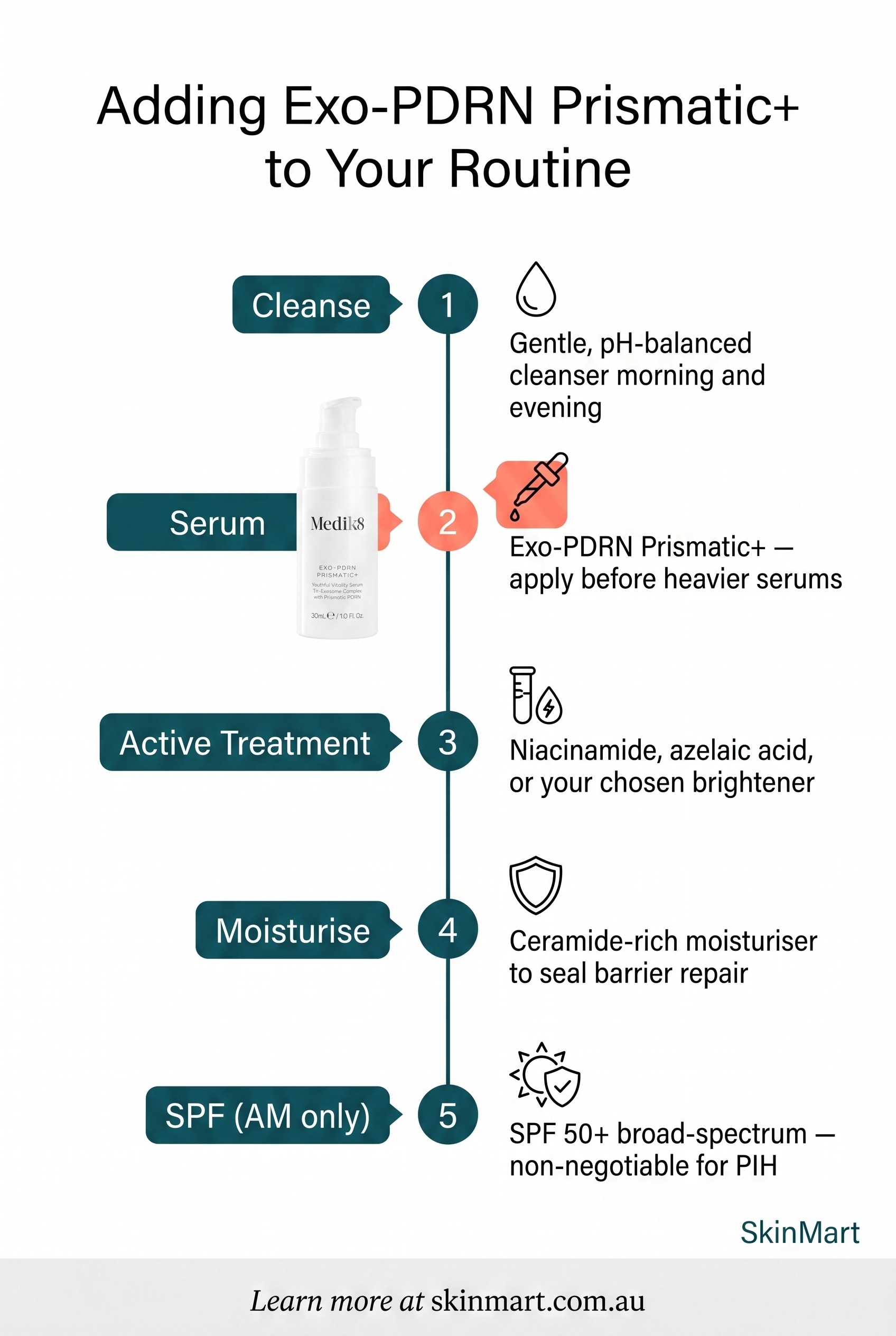
Who Is This Product Right For?
Exo-PDRN Prismatic+ is best suited to people who are past the active breakout phase. If you are still experiencing frequent new pimples, your priority should be managing active acne first. This product is designed for the recovery phase, not the treatment phase.
It is a good fit if you have cleared or mostly cleared breakouts but are dealing with lingering PIH or PIE (post-inflammatory erythema, the red or pink marks that appear after inflamed pimples). It also suits people whose skin feels reactive or sensitised after acne treatment, particularly after using stronger actives like benzoyl peroxide or salicylic acid over a long period.
It is not recommended for people with active, widespread acne, severely compromised barriers, or known sensitivity to nucleotides. If you are unsure whether your skin is ready for a regeneration-focused product, booking your skin consultation will help to clarify where your skin sits in the recovery process before you add anything new.
How Do You Add It to Your Post-Acne Routine?
Exo-PDRN Prismatic+ sits in the serum step of your routine. Apply it after cleansing and toning, before heavier serums or moisturisers. In the morning, follow with SPF 50+ broad-spectrum sunscreen.
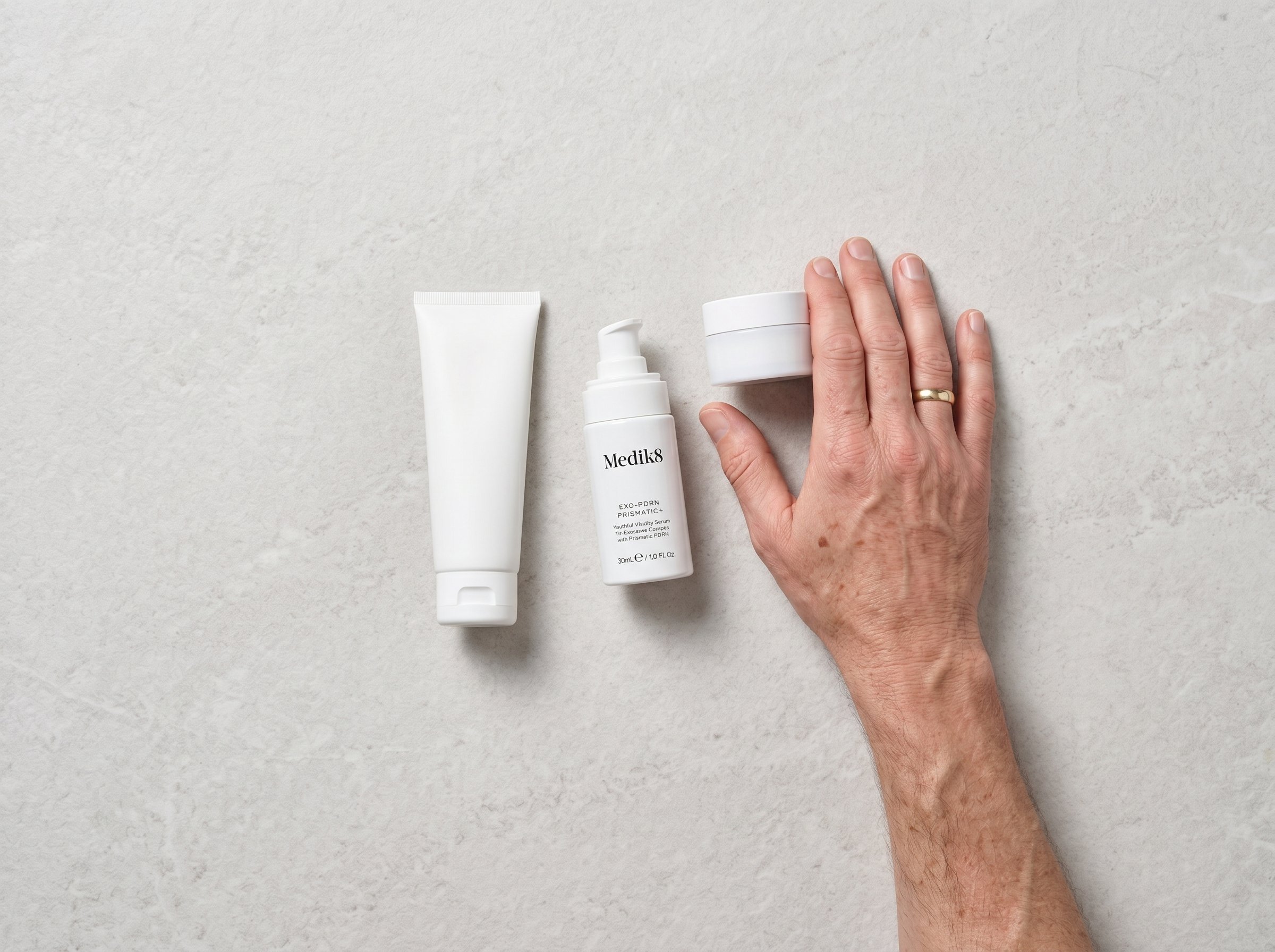
This step is not optional for post-acne skin. UV exposure activates melanocyte-stimulating pathways that worsen PIH. In Australia, where the UV index regularly reaches 11 to 14 in summer, photoprotection is the single most important thing you can do to protect recovery progress.
In the evening, you can layer it under your barrier repair moisturiser. If you use a retinoid or an exfoliating acid in your evening routine, apply Exo-PDRN Prismatic+ first. Its barrier-supporting action helps buffer the skin against irritation from actives, which is particularly useful during the recovery phase when your barrier is still rebuilding.
Consistency matters more than frequency here. Using it daily for at least 4 to 6 weeks gives your skin enough time to show measurable barrier improvement and visible changes in tone and luminosity. The 7-day clinical data reflects early improvements, but sustained use builds on those early gains.
Post-acne recovery is its own phase of skin health. The breakout clearing is one step. What happens after, the barrier rebuilding, the pigment fading, the restoration of healthy cell function, is a different challenge that needs its own support.
Exo-PDRN Prismatic+ is built for that phase. It works without interfering with your acne treatment, supports your skin's own repair systems at the cellular level. And delivers measurable improvements in barrier strength and skin tone within the first week of use.
If your skin has cleared but the marks and sensitivity remain, this is where targeted recovery support makes a real difference. Shop Exo-PDRN Prismatic+ at Skinmart and take the next step in your post-acne skin journey. Not sure where your skin sits in the recovery process? Book your skin consultation to get honest guidance built around your skin, not a product to sell.


