If your skin reacts to almost everything, stinging after serums, flushing after cleansing, redness that lingers for hours, you've probably tried the standard advice. Simplify your routine. Use gentler products. Avoid actives. And while those steps help, they don't actually fix what's happening beneath the surface.
Reactive skin isn't just sensitive. It's skin that's stuck in a low-grade inflammatory state, with a barrier that can't defend itself and nerve receptors that fire too easily. The problem with most calming products is that they manage symptoms.
They don't address the underlying biology. Exo-PDRN Prismatic+ takes a different approach, active regeneration without the damage phase that usually comes with it. Here's what that means, and why it matters for reactive skin specifically.
Why Does Reactive Skin Keep Getting Worse?
Reactive skin has a cycle that's hard to break. Your barrier, the stratum corneum (your skin's outermost protective layer), is compromised. It loses water too quickly, a process called transepidermal water loss (TEWL).

When TEWL is elevated, irritants and environmental triggers penetrate more easily. Your TRPV1 channels (heat and chemical sensors in your skin's nerve fibres) are already overexpressed, meaning they fire with minimal provocation. This creates what researchers call neurogenic inflammation, your own nervous system triggering redness, burning, and swelling.
At the same time, your inflammatory cytokines (signalling proteins like IL-1α, IL-6, and TNF-α) are chronically elevated. These aren't responding to a real threat. They're just stuck in the 'on' position. Every product you apply, every temperature change, every stress response adds fuel to a fire that never quite goes out.
Most calming products work by avoiding the fire. Fragrance-free, minimal ingredients, gentle formulas, all sensible. But they don't put the fire out. They just stop adding wood. Stress and chronic inflammation are deeply linked in skin biology, and breaking the cycle requires something more targeted than avoidance alone.
Key Takeaways
- Exo-PDRN Prismatic+ calms reactive skin by triggering active regeneration without causing the barrier disruption that most actives create.
- Its Triple Exosome Complex delivers cell-signalling molecules that reduce inflammatory cascades, while Prismatic PDRN restores cellular energy (ATP) so skin can repair itself.
- Clinical data shows 98% of post-procedure users agreed it supported their skin.
- It rebuilds the barrier from within by upregulating ceramide synthesis genes, rather than simply layer...
What Makes Exo-PDRN Prismatic+ Different for Sensitive Skin?
Most actives that regenerate skin, retinoids, acids, high-strength peptides, work by creating a controlled injury. They push your skin to repair itself by first disrupting it. For reactive skin, this is the problem. The disruption phase triggers exactly the inflammatory cascade your skin is already struggling to manage. You get the damage without the recovery.
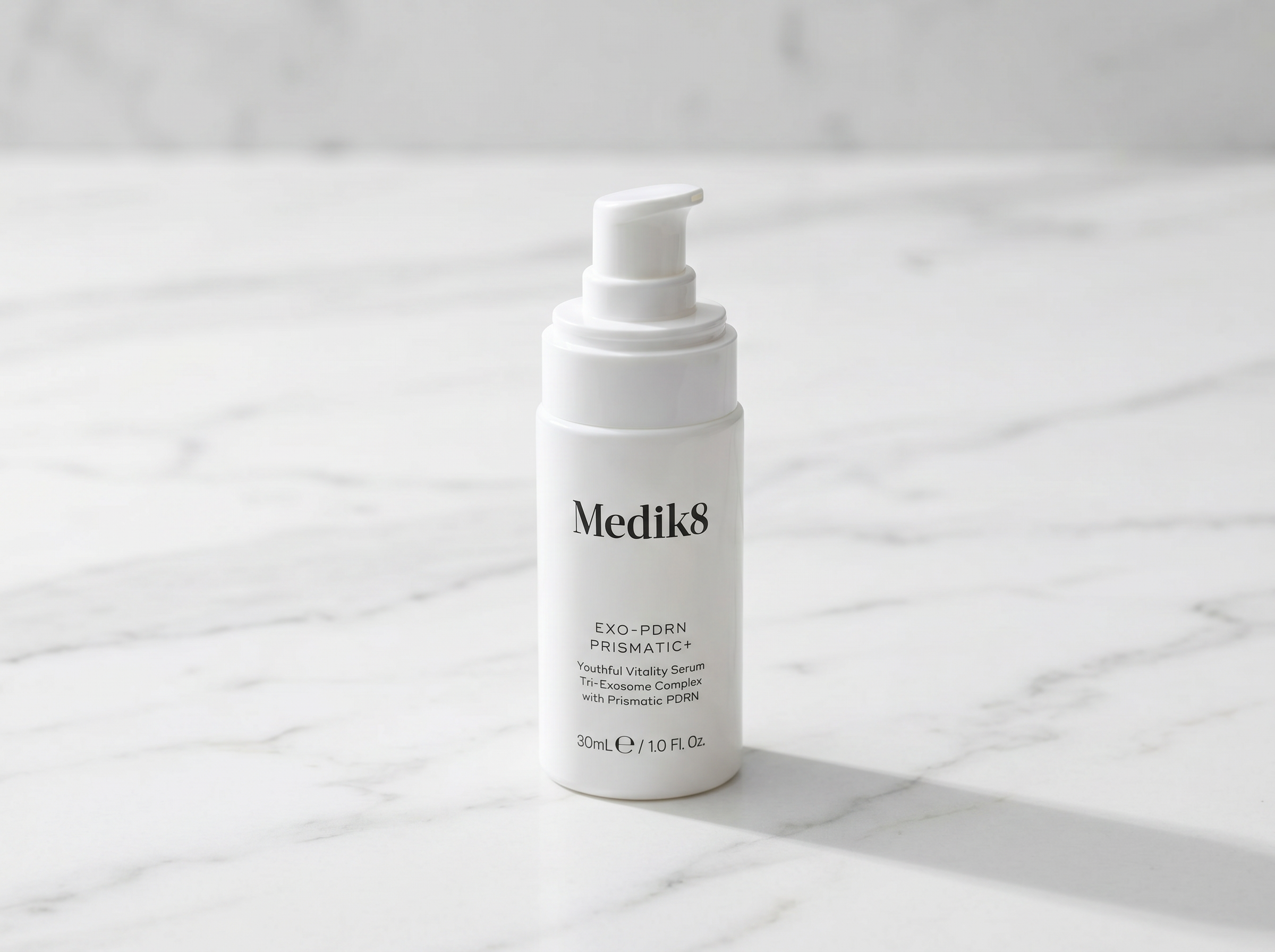
Exo-PDRN Prismatic+ is built around a different idea: regeneration without the damage phase. It uses two core technologies working together. The first is a Triple Exosome Complex.
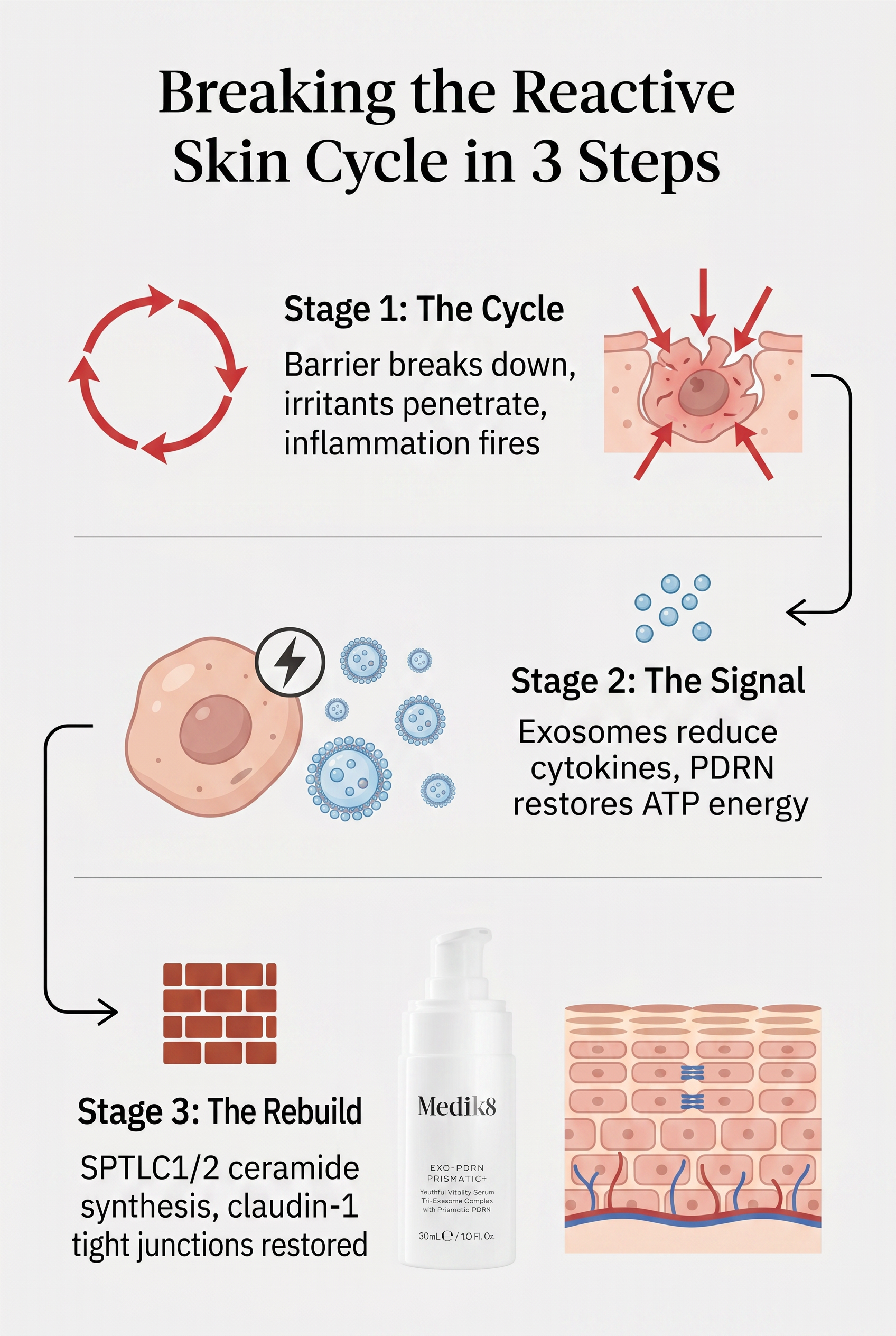
Exosomes are tiny vesicles (small bubble-like structures) that cells use to communicate. They carry growth factors, proteins, and micro-RNA signals that tell surrounding cells what to do. In this formula, exosomes deliver anti-inflammatory signals directly to skin cells, reducing cytokine activity and helping calm the overactive immune response driving your reactivity.
The second technology is Prismatic PDRN (Polydeoxyribonucleotide, a purified DNA fragment derived from salmon). PDRN works by activating adenosine A2A receptors in your skin cells. This does two things. It reduces NF-κB activity, NF-κB is the master switch for inflammatory gene expression in your skin.
And it stimulates ATP production. ATP (adenosine triphosphate) is your cells' energy currency. Without adequate ATP, cells can't repair damage, synthesise proteins, or maintain barrier integrity. PDRN essentially recharges the cellular engine that reactive skin has been running on empty.
Ex vivo studies (laboratory tests using human skin tissue) show a 50%+ boost in cell proliferation with this combination. That's not a surface effect. That's biological activity at the cellular level, without the barrier disruption that conventional actives require.
How Does It Actually Rebuild the Barrier, Not Just Support It?
There's an important difference between barrier support and barrier rebuild. Most moisturisers support your barrier by adding ceramides (natural fats that hold your skin cells together) and occlusives (ingredients that slow water loss) from the outside. This helps. But it doesn't teach your skin to make its own ceramides again.

Exo-PDRN Prismatic+ works at the gene expression level. The exosome signals in the formula upregulate SPTLC1 and SPTLC2, the enzymes responsible for ceramide synthesis inside your skin cells. They also upregulate claudin-1 and occludin, the proteins that form tight junctions (the molecular seals between skin cells). When these proteins are expressed properly, your barrier doesn't just feel better. It functions better, holding moisture in and keeping irritants out.
This is why the product is validated for post-procedure use, where the barrier is at its most vulnerable. In consumer trials, 98% of participants agreed it supported their skin after procedures. That's not a mild calming effect. That's active regeneration in a context where most products would cause further irritation. If you're curious about how active ingredients work in compromised skin, the distinction between surface support and gene-level repair is exactly what separates this approach.

Featured: Exo-PDRN Prismatic+
A full-spectrum face serum that boosts skin's natural rejuvenation by over 50%.
Shop Now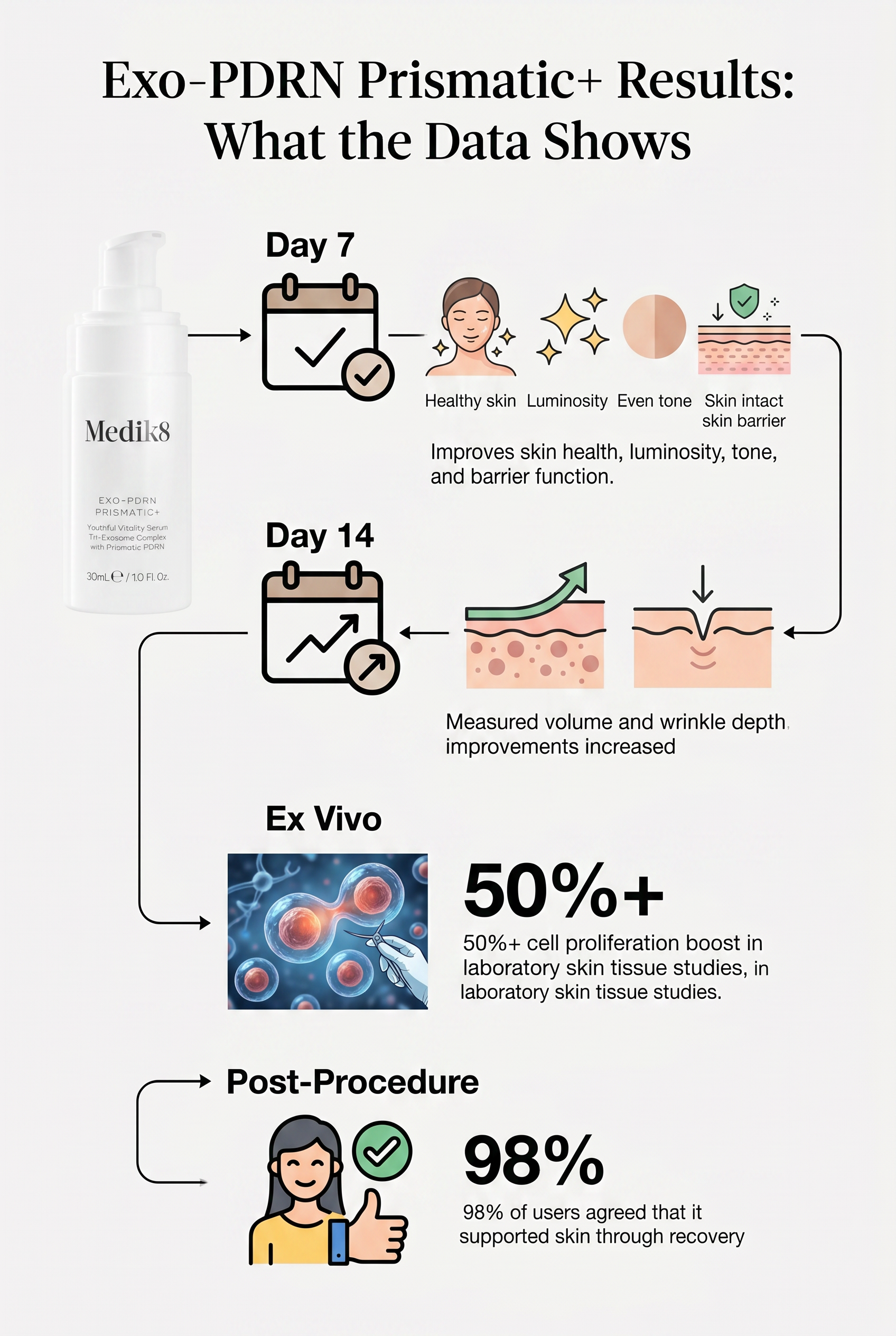
What Can You Expect, and When?
Clinical data for Exo-PDRN Prismatic+ shows measurable improvements across multiple markers within seven days: skin health, luminosity, tone, and barrier function. Volume and wrinkle depth improvements appear by day 14. These are not marketing claims, they reflect the biological timeline of cellular repair.
Ceramide synthesis takes time. Tight junction protein upregulation takes time. Real barrier rebuild is measured in weeks, not hours.
For reactive skin specifically, the early changes you're likely to notice are a reduction in reactivity, fewer stinging episodes, less prolonged redness, better tolerance for other products in your routine. This happens as the inflammatory cascade calms and the barrier begins to strengthen. It's not dramatic at first. But it's meaningful, because it's the cycle breaking rather than just being managed.
It's worth being clear about who this product suits. It's designed for skin that is reactive, sensitised, or recovering, not for severely compromised barriers in an acute flare. And not for anyone with known nucleotide sensitivities.
If you're in an active flare, the priority is stabilisation first. Once your skin is calm enough to tolerate a serum, this is where Exo-PDRN Prismatic+ becomes genuinely useful. If you've been unsure about product layering order, it fits best after cleansing and before moisturiser, morning or evening.
Is This the Right Step for Your Skin Right Now?
The consideration stage for reactive skin is often about trust. You've tried things that promised calm and delivered irritation. You're cautious, rightly so. The question worth asking isn't just 'will this work?' but 'does this approach make sense for what's actually happening in my skin?'
Our analysis suggests that for skin stuck in a low-grade inflammatory cycle, reactive to products, slow to recover, never quite comfortable, the limiting factor isn't usually the wrong cleanser or the wrong moisturiser. It's the absence of a regenerative signal. Your skin isn't getting the cellular instruction to repair. It's managing, not healing.
What if the missing piece isn't another calming cream, but a signal that tells your skin cells to start rebuilding? That's the question Exo-PDRN Prismatic+ is designed to answer. It's not a replacement for your barrier support products. It works alongside them, giving your skin the biological tools to do what calming products alone cannot. Understanding where serums fit in your routine helps you get the most from this kind of targeted treatment, layered correctly, it amplifies everything else you're already doing.
Reactive skin doesn't need more avoidance. It needs a reason to repair. The difference between managing sensitivity and actually reducing it comes down to whether your skin is receiving the signals and the energy to rebuild, not just being protected from further damage.
Exo-PDRN Prismatic+ is built on that distinction. Active regeneration, without the disruption phase. Barrier rebuild, not just barrier support. If your skin has been stuck in a reactive cycle and you're ready to try an approach grounded in cellular biology rather than ingredient avoidance, this is a meaningful place to start. Shop Exo-PDRN Prismatic+ now, or book your skin consultation to understand exactly where it fits in a plan built around your skin.
Step-by-Step Guide
-
1
Is This the Right Step for Your Skin Right Now?
The consideration stage for reactive skin is often about trust. You've tried things that promised calm and delivered irritation. You're cautious, rightly so. The question worth asking isn't just 'will this work?' but 'does this approach make sense for what's actually happening in my skin?'
Our analysis suggests that for skin stuck in a low-grade inflammatory cycle, reactive to products, slow to recover, never quite comfortable, the limiting factor isn't usually the wrong cleanser or the wrong moisturiser. It's the absence of a regenerative signal. Your skin isn't getting the cellular instruction to repair. It's managing, not healing.
What if the missing piece isn't another calming cream, but a signal that tells your skin cells to start rebuilding? That's the question Exo-PDRN Prismatic+ is designed to answer. It's not a replacement for your barrier support products. It works alongside them, giving your skin the biological tools to do what calming products alone cannot. Understanding where serums fit in your routine helps you get the most from this kind of targeted treatment, layered correctly, it amplifies everything else you're already doing.


