
You've looked in the mirror and noticed them. Fine lines under your eyes that seem deeper in some lights than others. You move to a brighter room and they're less obvious.
You catch yourself in a harsh bathroom light and suddenly they look much worse. That's not your imagination. That's physics, and it tells you something important about what's actually happening to your skin.
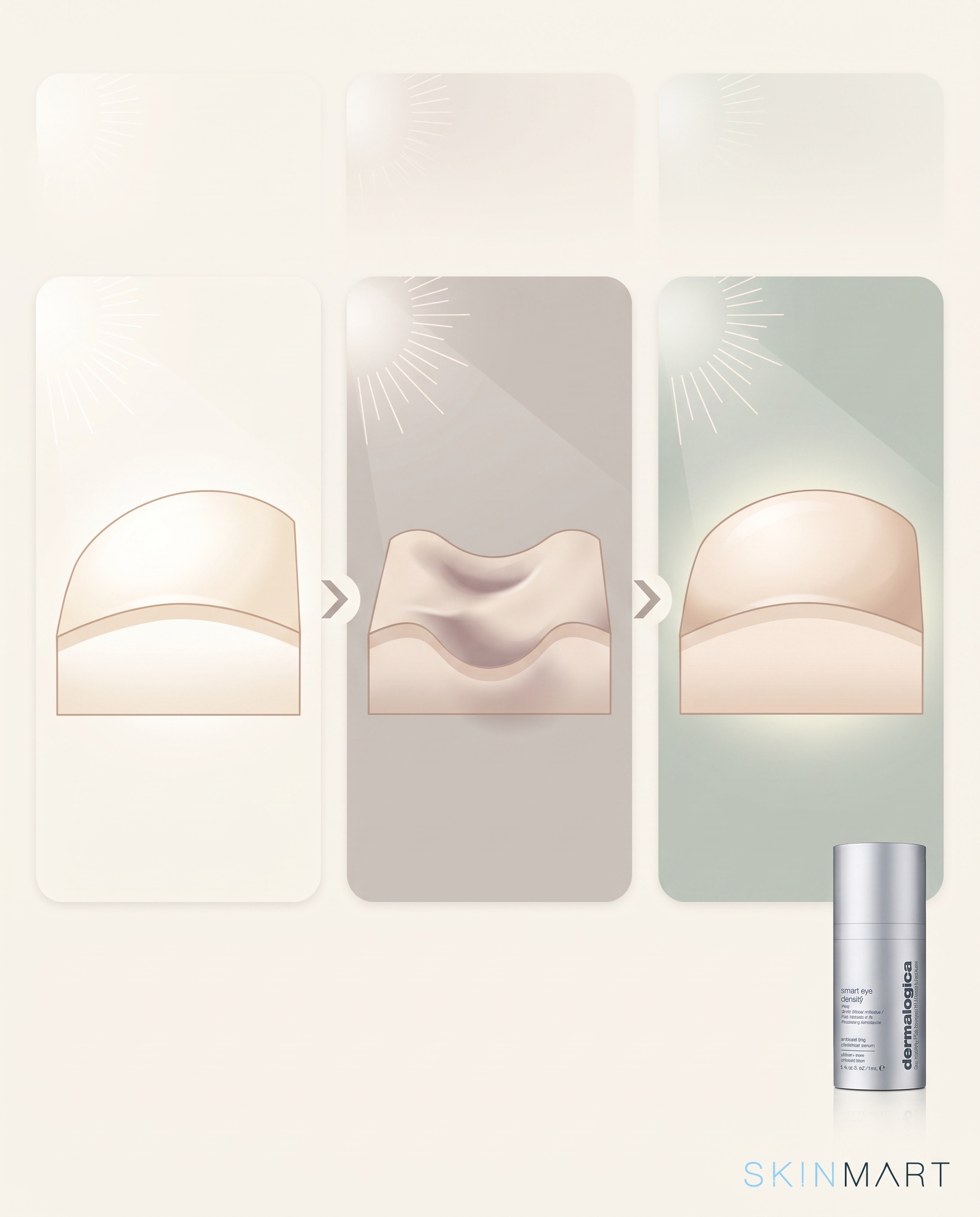
Fine lines around the eyes aren't just lines on the surface. They're shadows. When the skin beneath your eyes loses density, the thickness and structural support that keeps it firm, it starts to hollow slightly. Light hits those hollows and creates shadow.
That shadow is what your eye reads as a deep line. Understanding this changes everything about how you approach fine lines. Because the real question isn't how to smooth the surface. It's how to rebuild what's underneath it.
What Does Skin Density Actually Mean?
Density refers to the thickness and firmness of your skin tissue. Think of it like the padding under a carpet. When the padding is full and even, the surface looks smooth. When it thins out in patches, the surface above it dips and creases. Your skin works the same way.
The skin around your eyes is the thinnest on your face, about 0.5mm compared to 2mm on your cheeks. It has very little fat tissue beneath it and fewer oil glands to keep it supple. That makes it the first place to show density loss. And density loss starts earlier than most people expect.
After age 25, your skin produces roughly 1% less collagen (the protein that gives skin its structure) each year. Collagen is the main building block of skin density. As it declines, the tissue thins. The skin above it starts to sit differently. Fine lines that were once just surface creases begin to look deeper, not because they've grown, but because the support beneath them has shrunk.
Why Light and Shadow Make Fine Lines Look Worse
Here's the science behind what you see in the mirror. Smooth, dense skin reflects light evenly. That even reflection makes your skin look bright and full.
When skin loses density and develops small hollows or creases, light no longer bounces back evenly. Instead, it falls into those dips and creates shadow. Your eye reads that shadow as depth, as a wrinkle.
This is why fine lines look so different depending on where you're standing. Soft, diffused light (like overcast daylight) spreads evenly and fills in shadows. Harsh, directional light (like a downward bathroom light or a phone torch) hits at an angle and deepens every shadow. The lines haven't changed. The light has.
This also explains why makeup can sometimes make fine lines look worse. Powder and foundation settle into low-density skin and emphasise the shadows rather than hide them. The surface isn't the problem. The structure beneath it is.
Key Takeaways
- Fine lines around the eyes often look worse than they are because of how light hits hollow, low-density skin.
- When the tissue beneath your skin thins out, it creates shadows that make lines appear deeper.
- The fix isn't always about smoothing the surface.
- Rebuilding density, the thickness and firmness of the skin itself, changes how light reflects and makes lines look softer.
- The Dermalogica Smart Eye Density Booster is designed to support this process, improving skin density and reducing the...
Is This Different From a Normal Wrinkle?
Yes, and the difference matters for how you treat it. There are two main types of lines around the eye area. Dynamic lines form from repeated muscle movement, squinting, smiling, blinking.
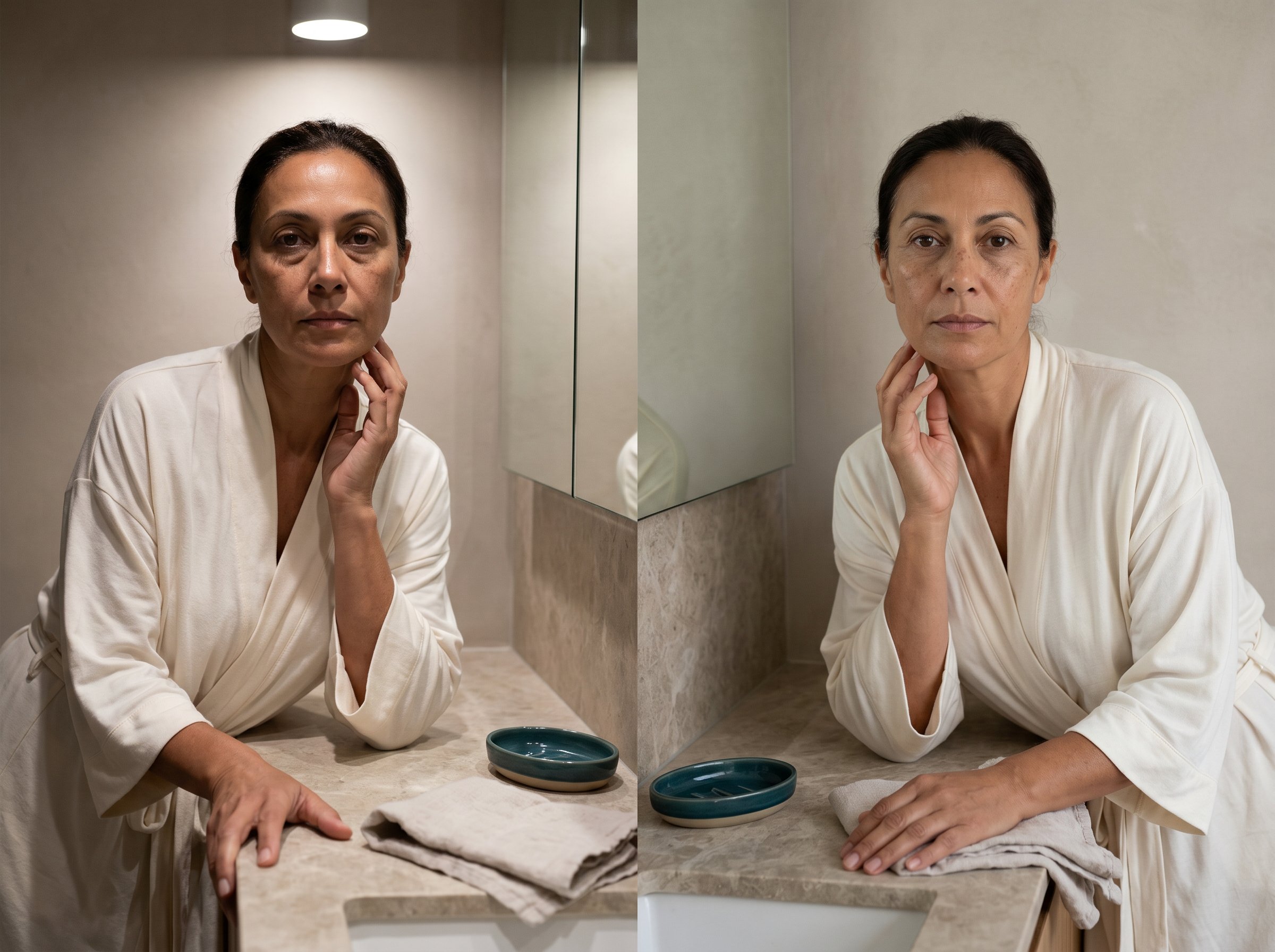
These are the lines you see when your face is moving. Static lines are present even when your face is still. They form when collagen breaks down and the skin no longer has the structure to spring back.
Density-related fine lines are a third layer on top of both. They're not caused by muscle movement alone, and they're not deep structural wrinkles. They're the result of thinning tissue that changes how the skin sits. Retinoids (vitamin A derivatives that boost cell turnover) are excellent for dynamic and early static lines, you can read more about starting a retinol routine here. But for the hollow, shadowed look caused by density loss, you need ingredients that specifically rebuild tissue thickness and support the skin's structural proteins.
That's a different job. And it needs different tools.
What Ingredients Actually Rebuild Skin Density?
Three ingredient categories have strong evidence behind them for rebuilding skin density around the eyes.
Peptides are short chains of amino acids, the building blocks of protein. Certain peptides signal your skin to produce more collagen and elastin (the protein that gives skin its bounce). They don't just sit on the surface. They communicate with the cells beneath it. Studies show that specific peptide combinations can improve skin firmness and thickness with consistent use over 8 to 12 weeks.
Hyaluronic acid is a naturally occurring molecule in your skin that holds water. It can hold up to 1,000 times its own weight in moisture, which is why it's so effective at plumping skin from within. In the eye area, hyaluronic acid helps restore volume to thinning tissue. This reduces the hollow effect that creates shadow. It doesn't erase lines, it lifts the skin around them so they appear softer.
Growth factors are proteins that support your skin's natural repair processes. They help stimulate cell renewal and collagen production. They're particularly useful in the eye area because they work gently, no irritation, no peeling, no adjustment period. For more on how active ingredients work in your routine, this guide to active ingredients is a good place to start.
Why the Eye Area Needs Its Own Product
The skin around your eyes doesn't behave like the rest of your face. It's thinner, more delicate, and it moves constantly, you blink around 15,000 times a day. Products designed for your cheeks or forehead are often too heavy, too active, or the wrong texture for this area. Applying a strong retinoid too close to the eye can cause irritation, dryness, and sensitivity.
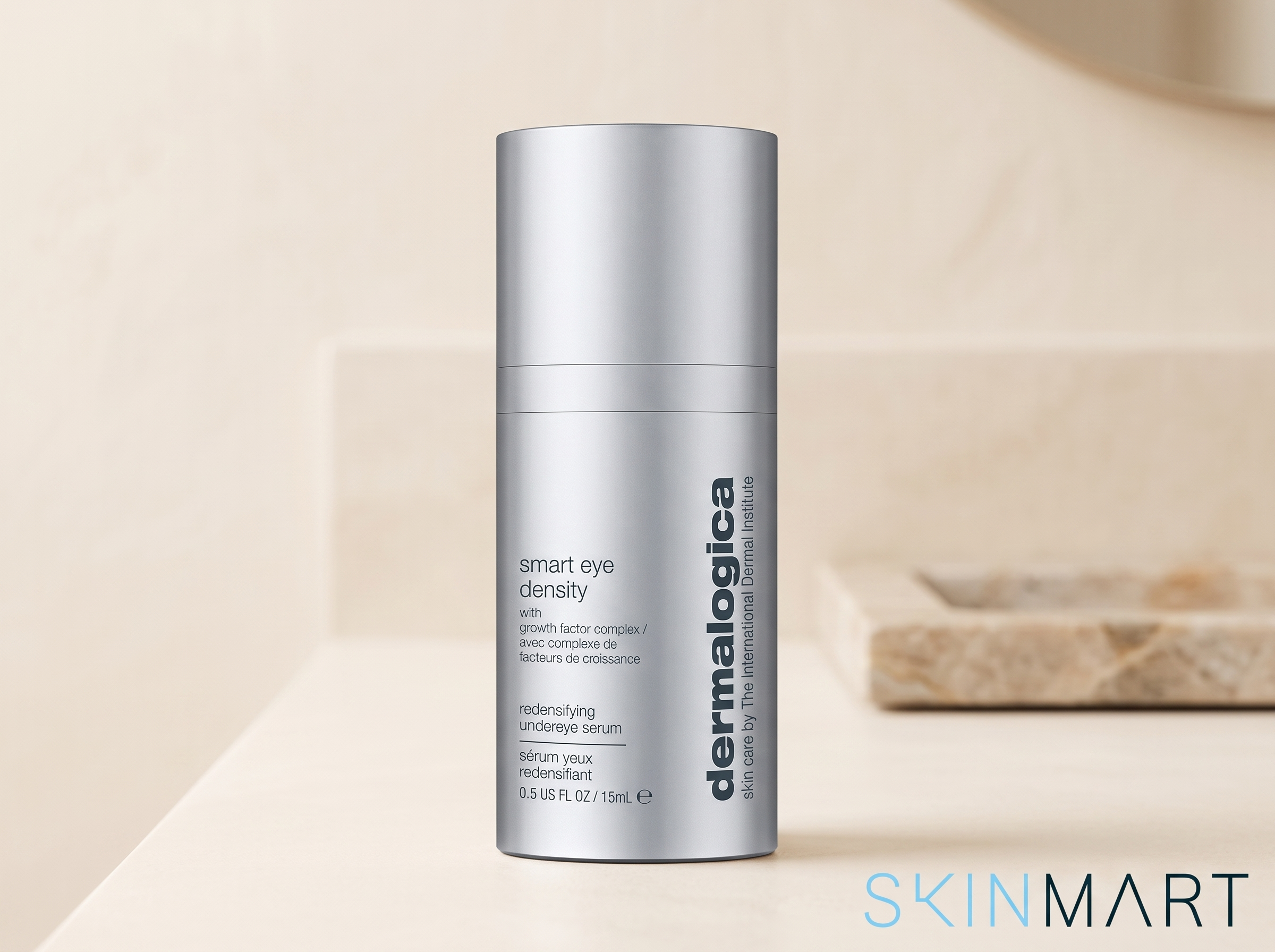
Eye-specific formulas are built to work within those limits. They use lower concentrations of actives, gentler delivery systems, and textures that absorb without tugging at delicate tissue. The Dermalogica Smart Eye Density Booster is formulated specifically for this zone. It combines peptides, hyaluronic acid, and a cellular energy complex to target density loss directly. In clinical testing, it showed a 129% improvement in skin density with consistent use.
That number matters because density is the root cause of the shadowed, hollow look. Fix the structure, and the surface follows. This isn't a retinol replacement or a deep-wrinkle eraser. It's a targeted density tool, and that's exactly what the eye area needs. You can also explore how to choose the right eye cream for your specific concerns.
When Should You Start Thinking About Eye Area Density?
Earlier than you'd expect. Most people wait until fine lines are well established before they start treating the eye area. But density loss begins in your late 20s and progresses slowly through your 30s and 40s. By the time lines are clearly visible, you've already lost a meaningful amount of tissue thickness.

The good news is that early intervention works well. Skin in the early stages of density loss responds faster to rebuilding ingredients than skin that has been thinning for decades. If you're in your 30s and noticing the first fine lines under your eyes, this is the ideal time to start supporting density. You're not treating a problem, you're getting ahead of one.
If you're in your 40s or 50s and the lines are more established, density-building ingredients still make a real difference. Results take longer, expect 8 to 12 weeks for visible improvement, but the structural changes are genuine and lasting with consistent use. Your circadian rhythm also plays a role in how well your skin repairs overnight. Understanding your skin's natural repair cycle can help you time your routine for better results.
How to Apply Eye Products for Best Results
Application technique matters more around the eyes than anywhere else on your face. The skin here is delicate and easily stretched. Tugging or rubbing can actually contribute to line formation over time.
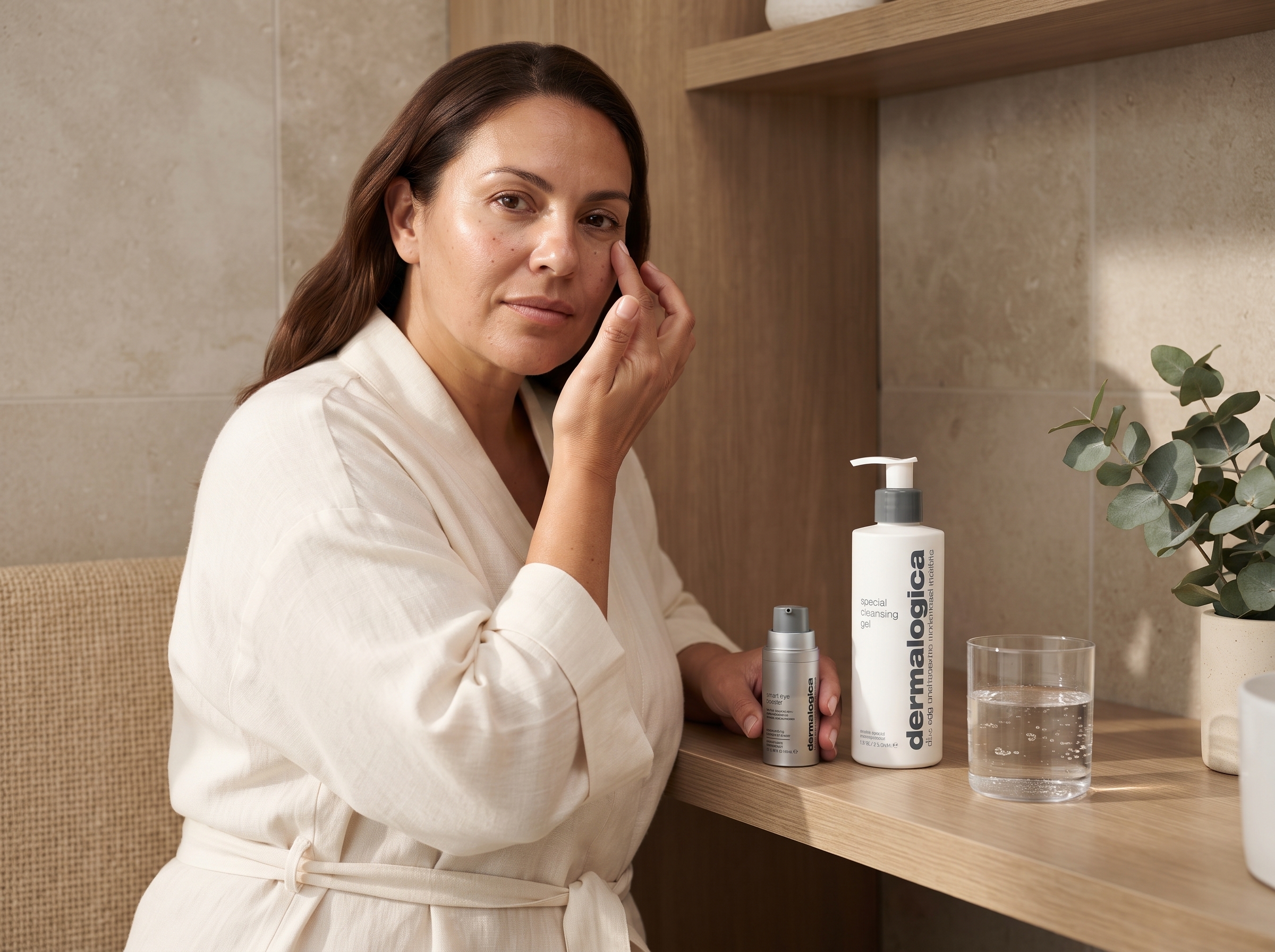
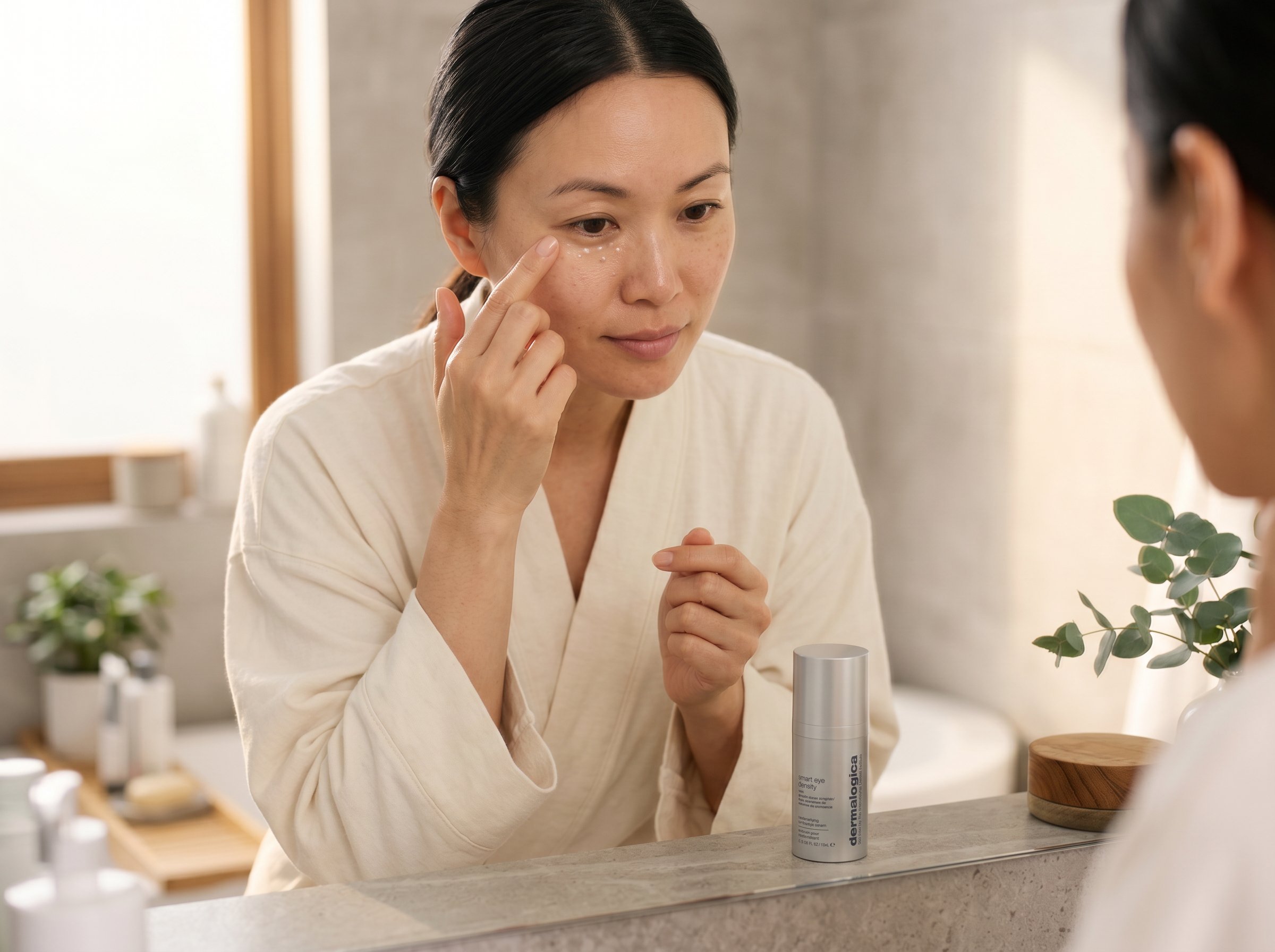
Use your ring finger, it applies the least natural pressure of any finger. Tap (don't rub) a small amount of product along the orbital bone, which is the bony ridge around your eye socket. Work from the inner corner outward along the under-eye area. For the upper lid, tap gently from the outer corner inward.
Apply in the direction of lymphatic flow, outward from the nose toward the temples. This helps reduce puffiness by encouraging fluid to drain rather than pool. Use morning and evening for best results. At night, your skin is in active repair mode, so evening application supports that natural process.
Fine lines around the eyes are rarely just a surface issue. When you understand the role of density, and how thinning tissue creates the shadows that make lines look deeper, you start to see why surface-only treatments often fall short. The structure beneath the skin is where the real change happens. Fix that, and the surface follows.
The Dermalogica Smart Eye Density Booster is designed for exactly this. It's not a retinol replacement, and it won't erase deep wrinkles. But for the hollow, shadowed fine lines that come from density loss, it targets the right problem with the right ingredients. If you're not sure where this fits in your routine, book your Skin Consultation and get a recommendation built around your skin specifically.


