
Your skin feels tight after cleansing. By midday, it looks shiny. You reach for a moisturiser, but a few hours later the tightness is back. If this sounds familiar, you are not dealing with oily skin or dry skin. You are dealing with dehydrated skin, and the two signals your skin is sending, tightness and shine, are actually connected to the same problem.
Most people try to fix one or the other. They blot the shine or layer on more moisturiser. But neither approach gets to what is actually happening inside your skin cells. Understanding the real cause changes everything about how you respond to it.
What Is Dehydrated Skin, and Why Does It Feel Tight?
Dehydrated skin is a skin condition, not a skin type. That means anyone can feel it, including people with oily or combination skin. The difference matters because dry skin and dehydrated skin are not the same thing. Dry skin lacks oil. Dehydrated skin lacks water inside the skin cells themselves.
When your skin is dehydrated, it loses water faster than it can hold onto it. This process is called transepidermal water loss (TEWL), which simply means water is escaping through your skin's outer layer. As that happens, your skin feels tight and uncomfortable, especially after washing your face.
The outer skin layer, called the stratum corneum, acts like a protective wall. Think of it as bricks and mortar. When water content inside that layer drops below about 10 per cent, the wall weakens. Your skin can no longer hold moisture in well, and that uncomfortable pulling sensation sets in.

Why Is Your Skin Shiny If It Is Dehydrated?
This is the part that confuses most people. If your skin is lacking water, why does it look oily and shiny? The answer is compensation. Your skin is smart. When it senses that its water levels are dropping, it signals your oil glands to produce more sebum to try to protect the surface.
So the shine you see is not excess hydration. It is your skin doing its best to cover for a water deficit it cannot fix on its own. You end up with a surface that looks oily but still feels tight underneath. Blotting papers and mattifying products address the shine, but they do nothing for the actual water shortage causing it.
This is also why oily skin types are often dehydrated without realising it. The shine feels like too much of something, when really it is a sign of not enough of something else.
Key Takeaways
- Dehydrated skin lacks water inside the skin cells, not oil on the surface.
- This causes tightness because moisture is escaping faster than your skin can hold it.
- At the same time, your skin produces more oil to compensate, creating that shiny look.
- The root cause often comes down to aquaporins, which are tiny water channels in your skin cells.
- When NAD+ levels drop, these channels work less efficiently, making it harder for your skin to move and retain water properly.
What Are Aquaporins, and Why Do They Matter for Dehydration?
Here is where the science gets genuinely useful. Inside your skin cells are tiny protein channels called aquaporins. Think of them as microscopic water gates. They open and close to move water in and out of your cells, helping your skin stay balanced and hydrated from the inside out.
Aquaporin-3 is the most important one for skin hydration. Research published in the Journal of Investigative Dermatology has shown that aquaporin-3 moves both water and glycerol (a natural humectant) through skin cell walls. When these channels work well, your skin can distribute and hold water efficiently. When they do not work well, water distribution breaks down and dehydration sets in even if you are drinking plenty of water and applying hydrating products.
The key question is: what controls how well aquaporins function? The answer, increasingly supported by research, points to cellular energy. just, it points to a molecule called NAD+.

What Is NAD+ and What Does It Have to Do With Dehydrated Skin?
NAD+ stands for nicotinamide adenine dinucleotide. It is a coenzyme found in every cell in your body. Your skin cells use it to produce energy, repair damage, and run the processes that keep your barrier functioning properly. Think of it as the fuel your cells need to do their jobs well.
The problem is that NAD+ levels decline naturally with age. Research suggests levels can drop by as much as 50 per cent between your twenties and fifties. UV exposure, stress, poor sleep, and environmental damage all speed up that decline. And when NAD+ drops, your cells have less energy to run the systems that keep your skin healthy, including the aquaporin channels that manage water movement.
Studies have shown a direct link between NAD+ availability and aquaporin-3 activity. When NAD+ is low, aquaporin function becomes less efficient. Water does not move through skin cells as well.
Your skin struggles to stay hydrated even when you are applying the right products. This is one reason why dehydration can persist despite a solid routine, especially as you get older. You can read more about how your skin's repair cycles work in our article on how your circadian rhythm affects your skin.

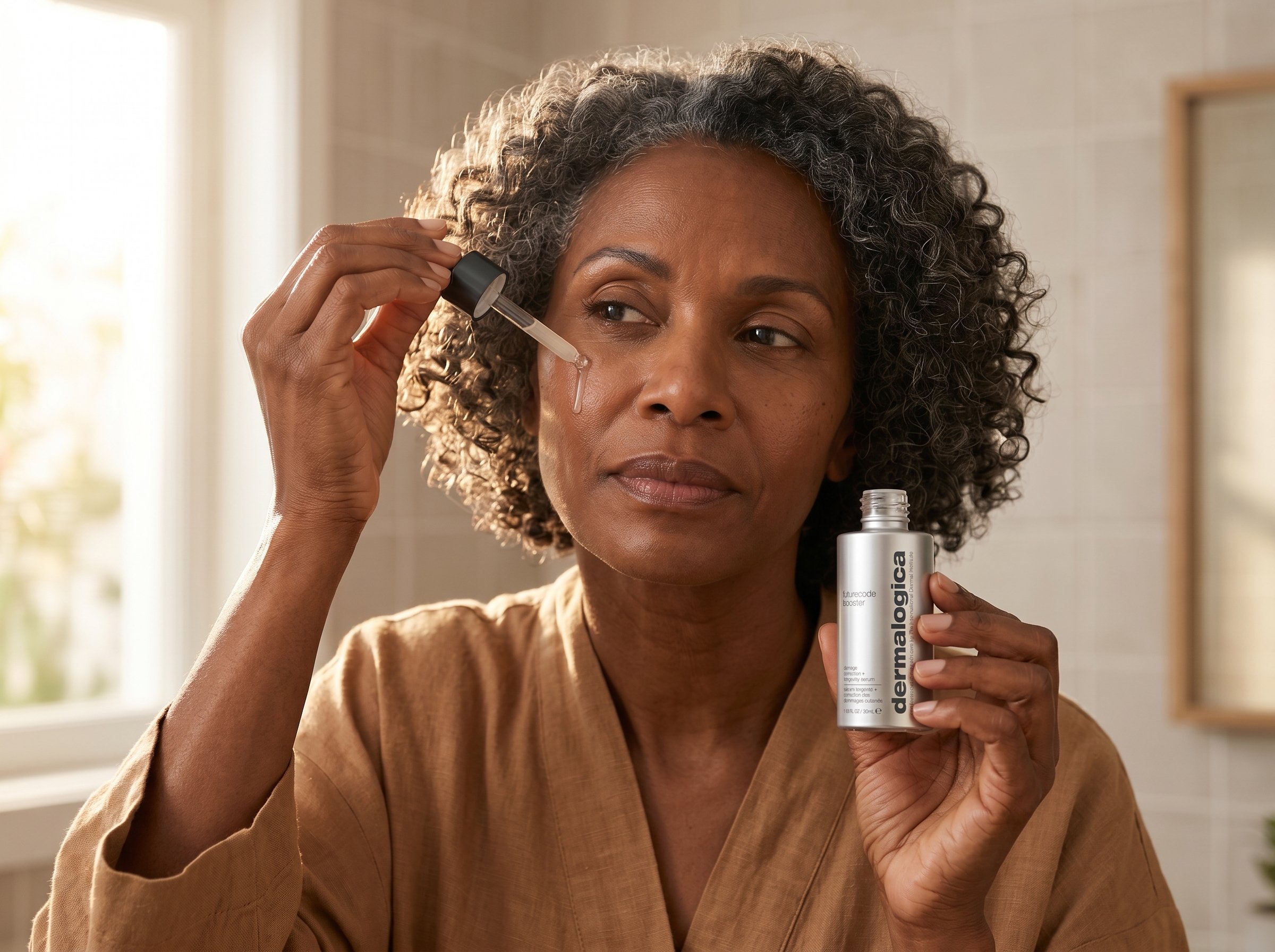
Featured: FutureCode Booster
Advanced booster that helps extend the longevity of healthy-looking skin by supporting natural skin repair and reducing visible signs of DNA-relate...
Shop NowHow Do You Address Dehydration at the Cellular Level?
Most dehydration advice focuses on what you put on your skin: hyaluronic acid, glycerin, barrier-supporting ingredients. These all help, and they are a smart part of any routine. But if your aquaporin channels are not working efficiently, even the best topical hydrators have limits. You are filling a bucket that has a hole in it.
Supporting NAD+ levels topically is a newer but growing area of skincare science. Ingredients like niacinamide (a form of vitamin B3) are well-known NAD+ precursors. They help your cells produce more NAD+, which in turn supports the cellular energy needed to keep aquaporin channels running well. Niacinamide also helps strengthen your barrier and reduce water loss directly.
Other ingredients that support cellular repair, like teprenone and protective-rich plant extracts, help protect the cells themselves from the kind of damage that depletes NAD+ in the first place. This approach works from the inside of the cell outward, rather than just sealing the surface.
What Makes FutureCode Booster Different for Dehydrated Skin?
The Dermalogica FutureCode Booster is formulated just to support cellular repair from the inside out. It contains teprenone, a longevity molecule that helps protect and restore cellular function. It also contains niacinamide, which acts as an NAD+ precursor to support the energy your skin cells need to run water channels well.

The formula also includes Helianthus Annuus (Sunflower) Sprout Extract, which supports DNA repair pathways. And Acetyl Zingerone, a powerful protective that helps protect cells from the environmental stress that depletes NAD+. Rosa Canina Seed Oil (Rosehip Oil) rounds out the formula with essential fatty acids that support barrier integrity.
What makes this booster especially relevant for dehydration is what it is not: a heavy cream. Most NAD+-supporting formulas come in rich, occlusive textures that work well for dry skin but feel wrong on dehydrated or combination skin. The FutureCode Booster delivers cellular restoration in a lightweight serum format, so it works under your existing moisturiser without disrupting your routine. It is designed to complement, not replace, what you are already doing. Shop now to see the full formula.
How Should You Build a Routine for Dehydrated Skin?
Addressing dehydration well means working at two levels at once. The first is the surface level: using gentle, pH-balanced cleansers that do not strip your barrier, applying humectants like hyaluronic acid and glycerin to damp skin within three minutes of cleansing, and sealing with a lightweight moisturiser. Applying your products in the right order makes a real difference to how well each layer works.
The second level is cellular. This is where a booster like FutureCode comes in. Applied after cleansing and before your moisturiser, it supports the cellular processes that help your skin manage water more well over time. You are not just hydrating the surface. You are giving your cells the tools to hold hydration better from within.
A few other habits also support this. Avoiding alcohol-based toners and harsh cleansers reduces the barrier damage that speeds up water loss. Consistent SPF use matters too, because UV exposure is one of the main drivers of NAD+ depletion. And if you want to understand more about the ingredients that can work against your hydration goals, our article on how to choose the right serum is a good next step.
Tight skin and a shiny face are not two separate problems. They are two signals from the same root cause: your skin is losing water faster than it can hold onto it. And underneath that surface issue, your skin cells may be running low on the energy they need to keep water channels working properly.
Understanding that dehydration has a cellular dimension, not just a surface one, changes what you reach for. If your routine already covers the basics but you are still not seeing the hydration you expect, it may be worth looking at what is happening at the cellular level. The Dermalogica FutureCode Booster is a good place to start. Or if you want guidance built around your specific skin, start your Skin Blueprint and get tips shaped by what your skin actually needs.


