Your skin feels tight after cleansing. By midday, it looks shiny. You reach for a mattifying product, then feel dry again an hour later. If this sounds familiar, you are likely dealing with dehydrated skin, and the two symptoms are not contradictory. They are connected.
Dehydrated skin is one of the most misread conditions in skincare. It is not a skin type. It is a state your skin falls into when it loses water faster than it can hold onto it. Understanding why that happens, and what controls it at a cellular level, changes how you approach your routine entirely. This is where NAD+ and a group of proteins called aquaporins come in.
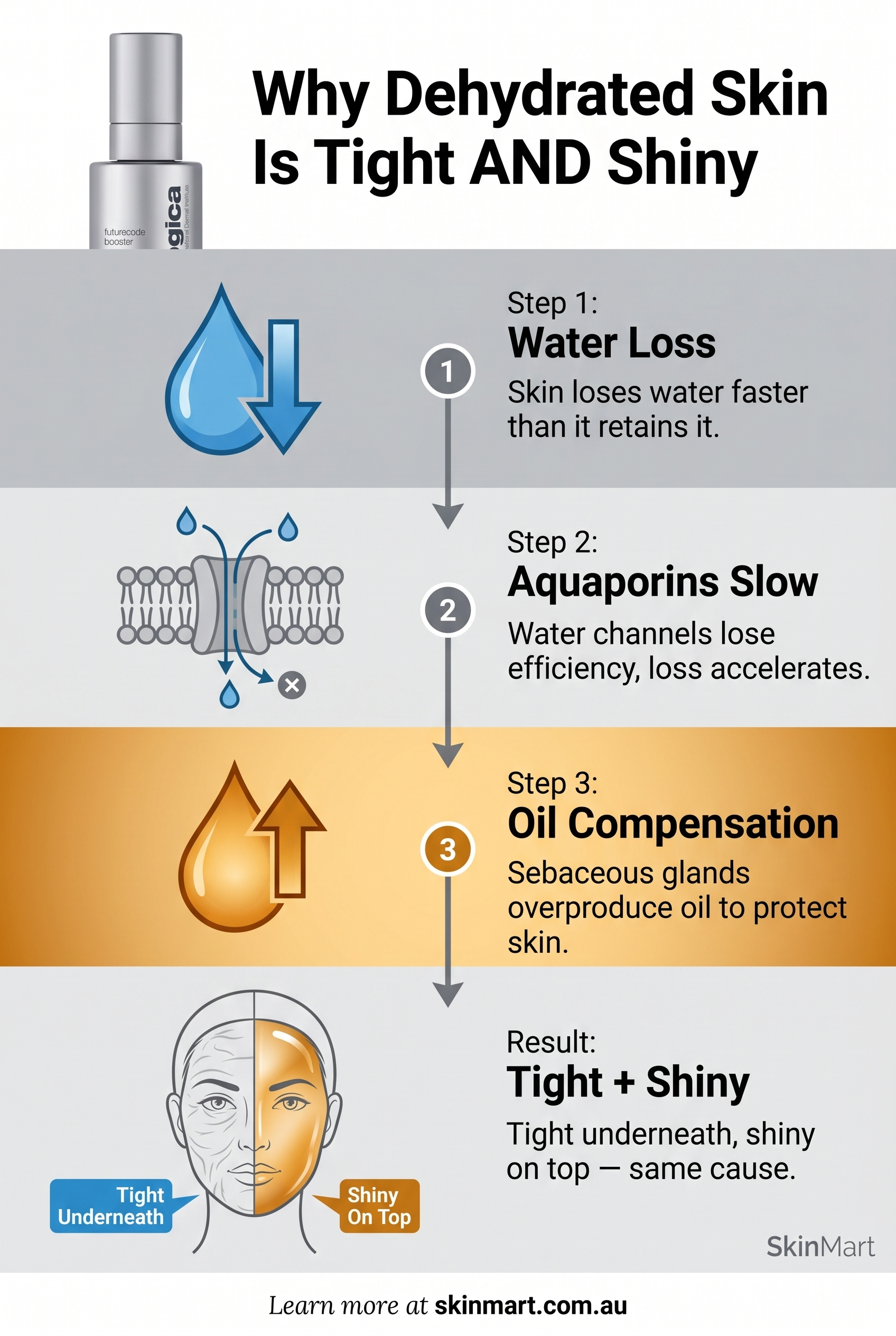
What Is Dehydrated Skin, and Why Does It Feel Tight AND Look Shiny?
Dehydrated skin is often confused with dry skin, but they are different concerns. Dry skin lacks oil. Dehydrated skin lacks water, and it can happen to any skin type, including oily skin. If you want a clear breakdown of the difference, this guide on dry vs dehydrated skin is a great place to start.
When your skin loses water, it triggers a response. Your sebaceous glands (the tiny glands that produce oil) sense the imbalance and ramp up oil production to try to protect the surface. The result is skin that feels tight and uncomfortable underneath, but looks shiny or greasy on top. You are not oily. Your skin is compensating.
This is why mattifying products often make dehydrated skin worse over time. They reduce the surface oil without addressing the water loss underneath. Your skin just produces more oil in response. The cycle continues.
What Are Aquaporins, and Why Do They Matter for Hydration?
Inside your skin cells are tiny proteins called aquaporins. Think of them as water channels, microscopic doors that open and close to move water in and out of your skin cells. They control how well your skin holds onto moisture at a cellular level.
Aquaporin-3 is the most studied type in skin. Research shows it plays a direct role in how well your skin retains water and maintains elasticity (Hara-Chikuma and Verkman, 2008). When aquaporin-3 function drops, water moves out of your skin cells faster than it can be replaced. Surface tightness follows. Then the oil compensation response kicks in.
Here is the part that changes the picture: aquaporin function is not fixed. It is regulated by your cells' energy systems. And one of the most important regulators is a molecule called NAD+.
Key Takeaways
- Dehydrated skin lacks water inside the skin cells, not oil on the surface.
- When your skin loses water, it tightens and then overproduces oil to compensate, causing that confusing tight-and-shiny combination.
- At the cellular level, proteins called aquaporins control how water moves through your skin.
- NAD+, a molecule your skin cells need for energy and repair, helps keep these water channels working properly.
- As NAD+ declines with age and stress, aquaporin function drops, and dehydration becom...
What Is NAD+ and Why Does It Affect Skin Hydration?
NAD+ stands for nicotinamide adenine dinucleotide. It is a molecule found in every living cell in your body. Your skin cells use it to produce energy, repair DNA damage. And regulate hundreds of biological processes, including the ones that keep your water channels working properly.
The problem is that NAD+ levels decline with age. Research shows levels can drop by up to 50 per cent between your twenties and forties (Massudi et al., 2012). UV exposure, stress, and poor sleep accelerate this decline further. As NAD+ drops, your cells have less energy to maintain normal functions, including keeping aquaporins active and efficient.
This is not just a theoretical connection. Studies show that NAD+ directly supports the cellular pathways that regulate aquaporin expression (Camacho-Pereira et al., 2016). Less NAD+ means less aquaporin activity.
Less aquaporin activity means your skin struggles to move and retain water properly. The tight-and-shiny cycle becomes harder to break, not because your products are wrong. But because your cells are running low on the energy they need to respond.
Your skin's ability to repair itself also follows a daily rhythm. Understanding how your circadian rhythm affects your skin can help you time your routine to support this cellular repair window.
How Do You Know If NAD+ Decline Is Affecting Your Hydration?
NAD+ decline does not announce itself with one clear sign. It shows up as a cluster of changes that seem unrelated at first. Your skin stops responding to products that used to work well. Hydration feels temporary, good right after use, then gone within an hour or two. Fine lines appear more visible when your skin is dehydrated, especially around the eyes and mouth.
If you have been increasing the richness of your products without seeing lasting results, this is worth paying attention to. The issue may not be the products. It may be that your cells lack the energy to use them well. Supercharging your skincare routine is not always about adding more, sometimes it is about supporting what your skin does with what you give it.
Age is a factor, but so is lifestyle. High stress, disrupted sleep, and UV exposure all accelerate NAD+ decline. Australian sun exposure in particular creates ongoing oxidative stress that depletes cellular NAD+ reserves faster than many other environments.

Featured: FutureCode Booster
Advanced booster that helps extend the longevity of healthy-looking skin by supporting natural skin repair and reducing visible signs of DNA-relate...
Shop NowWhat Can You Do About It? Supporting NAD+ for Better Skin Hydration
Addressing dehydration at the surface level, with hydrating serums and moisturisers, still matters. Humectants like hyaluronic acid and glycerin draw water into your skin cells. Occlusives seal that moisture in. These steps are important and should stay in your routine.
But if your aquaporins are not functioning well, surface hydration has limits. Supporting NAD+ levels gives your cells the energy they need to keep those water channels working. This is where targeted cellular support becomes relevant, not as a replacement for your existing routine. But as a foundation that helps your skin get more from everything else you use.
Niacinamide is one ingredient that supports NAD+ pathways in the skin. It is a precursor to NAD+, meaning your skin cells can convert it into the molecule they need. Clinical studies show niacinamide improves barrier function, reduces water loss, and supports ceramide production (Gehring, 2004). Many people already use niacinamide without knowing this is part of why it works.
FutureCode Booster: NAD+ Support in a Serum Format
Most products that support cellular repair come in heavy cream formulas. This can feel too rich for dehydrated skin that is already compensating with excess oil. The Dermalogica FutureCode Booster is designed differently. It delivers cellular-level support in a lightweight booster format that layers under your existing routine without adding heaviness.
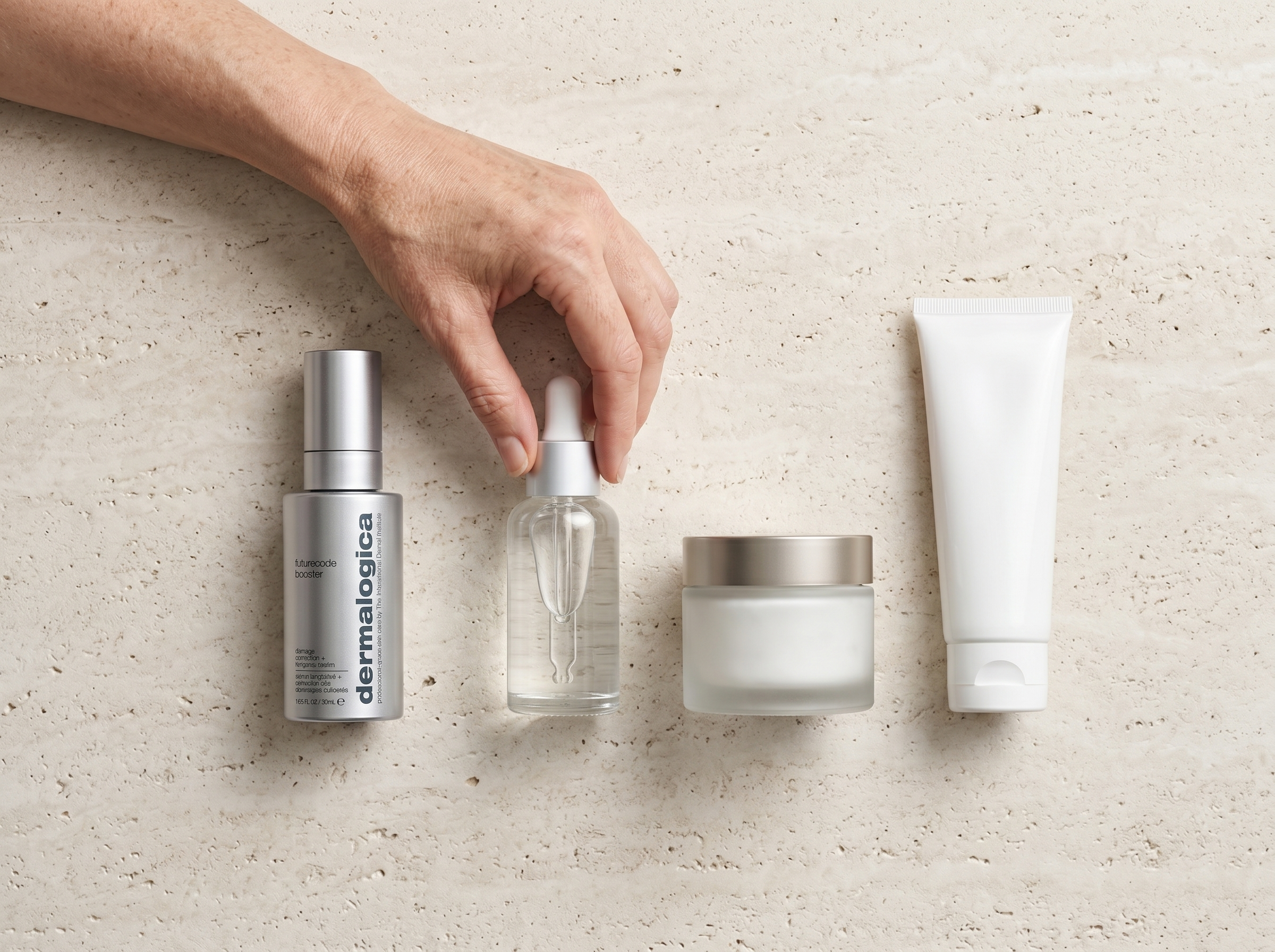
Key ingredients include Teprenone, which supports cellular longevity and helps extend healthy skin function. Niacinamide feeds NAD+ pathways and supports barrier repair. Helianthus Annuus (Sunflower) Sprout Extract provides protective protection against the oxidative stress that depletes NAD+. Acetyl Zingerone adds further protective support. Rosa Canina Seed Oil (Rosehip Oil) provides essential fatty acids that support the lipid barrier.
This is not positioned as a replacement for your hydrating serum or moisturiser. It works alongside them, supporting the cellular environment that determines how well your skin responds to everything else. If your skin has felt stuck despite a solid routine, this is the kind of foundational support worth exploring. Shop FutureCode Booster now.
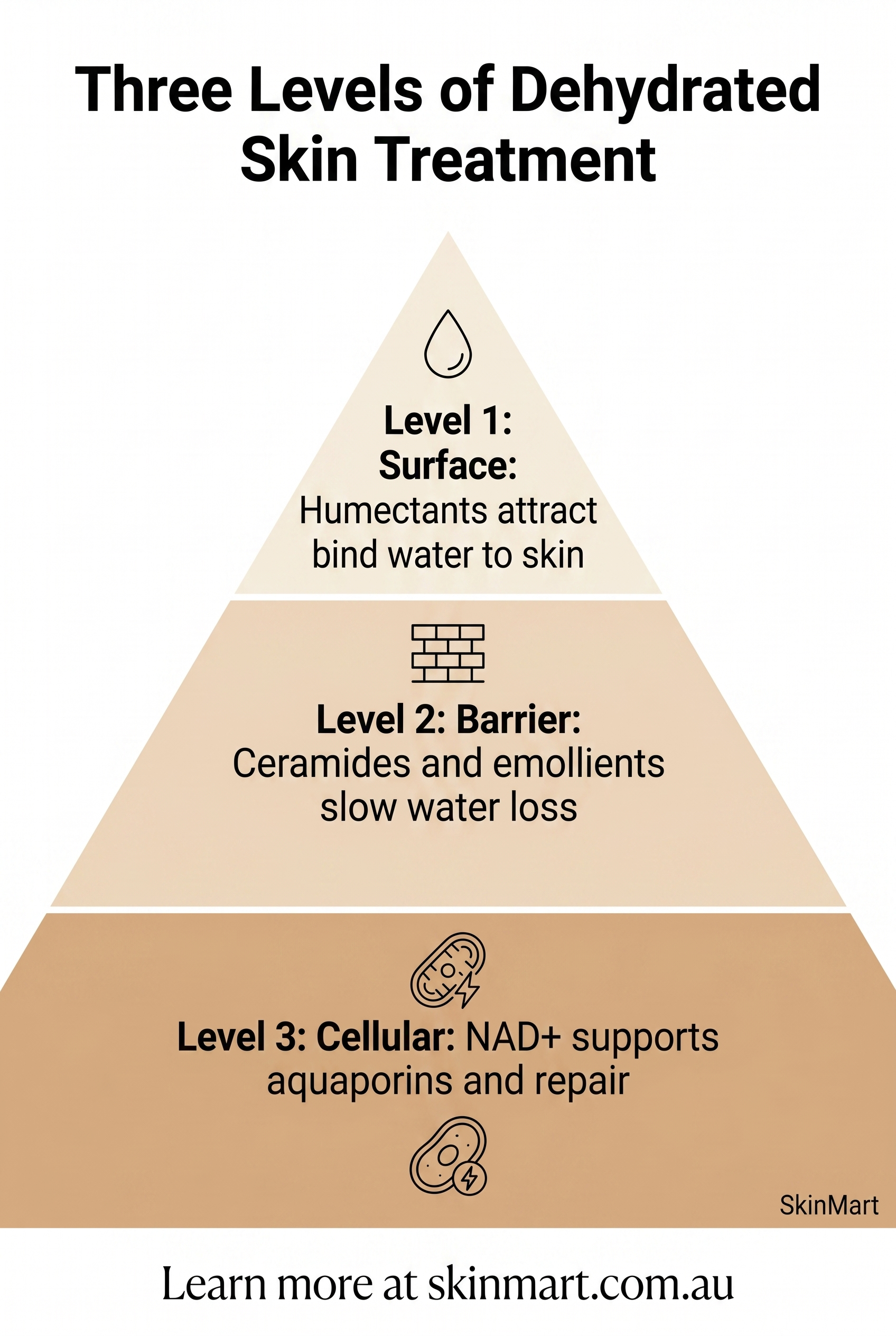
Building a Routine That Addresses Dehydration at Every Level
A complete approach to dehydrated skin works on three levels at once. The first is surface hydration, using humectants on damp skin within three minutes of cleansing to trap available water. The second is barrier support, using emollients and ceramides to slow water loss through the outer skin layer. The third is cellular support, giving your skin cells the energy they need to maintain water channels and repair themselves overnight.
Most routines cover the first two levels well. The third is where many people have a gap, not because they have chosen the wrong products. But because cellular energy support has not often been part of consumer skincare. That is changing.
Also worth considering: the order you apply your products matters as much as what you use. Applying products in the wrong order can block hydration rather than seal it in. Lightest textures go first. Occlusives go last. Cellular boosters like FutureCode sit early in the routine, before your serum and moisturiser.
Tight and shiny at the same time is not a contradiction, it is your skin telling you it is losing water and trying to compensate. The surface symptoms are real. But the cause runs deeper than your moisturiser can reach on its own. When your skin cells lack the energy to keep water channels working, dehydration becomes a cycle that topical hydration alone struggles to break.
Supporting NAD+ levels is not about replacing what works in your routine. It is about giving your skin the cellular foundation to get more from everything you are already doing. If your skin has felt stuck, hydrated for an hour, then tight again, this is the layer worth exploring. Speak to our skin experts to understand what your skin actually needs, and discover whether cellular support like FutureCode Booster belongs in your plan.


