
You've tried the eye creams. You've slept eight hours. You've used the concealer.
But those dark circles are still there, looking back at you every morning. Here's what most advice misses: dark circles aren't one problem. They're three different problems that happen to look similar on the surface.
This matters because the fix for one cause won't touch the other two. If you've been treating pigmentation when the real issue is structural hollowing, you're not going to see results. This guide breaks down all three causes clearly, explains what skincare can and can't do. And shows you how the Dermalogica Smart Eye Density Booster addresses more than one cause at once.
Why Do Dark Circles Look Different on Different People?
Dark circles aren't one condition. They're a visible result of different things happening beneath the skin. Some people have brown or grey discolouration from melanin (the pigment your skin produces). Others have a bluish or purple tone from blood vessels showing through thin skin. And many people have a shadow caused by hollowing under the eye, where lost density creates a sunken look that reads as darkness.
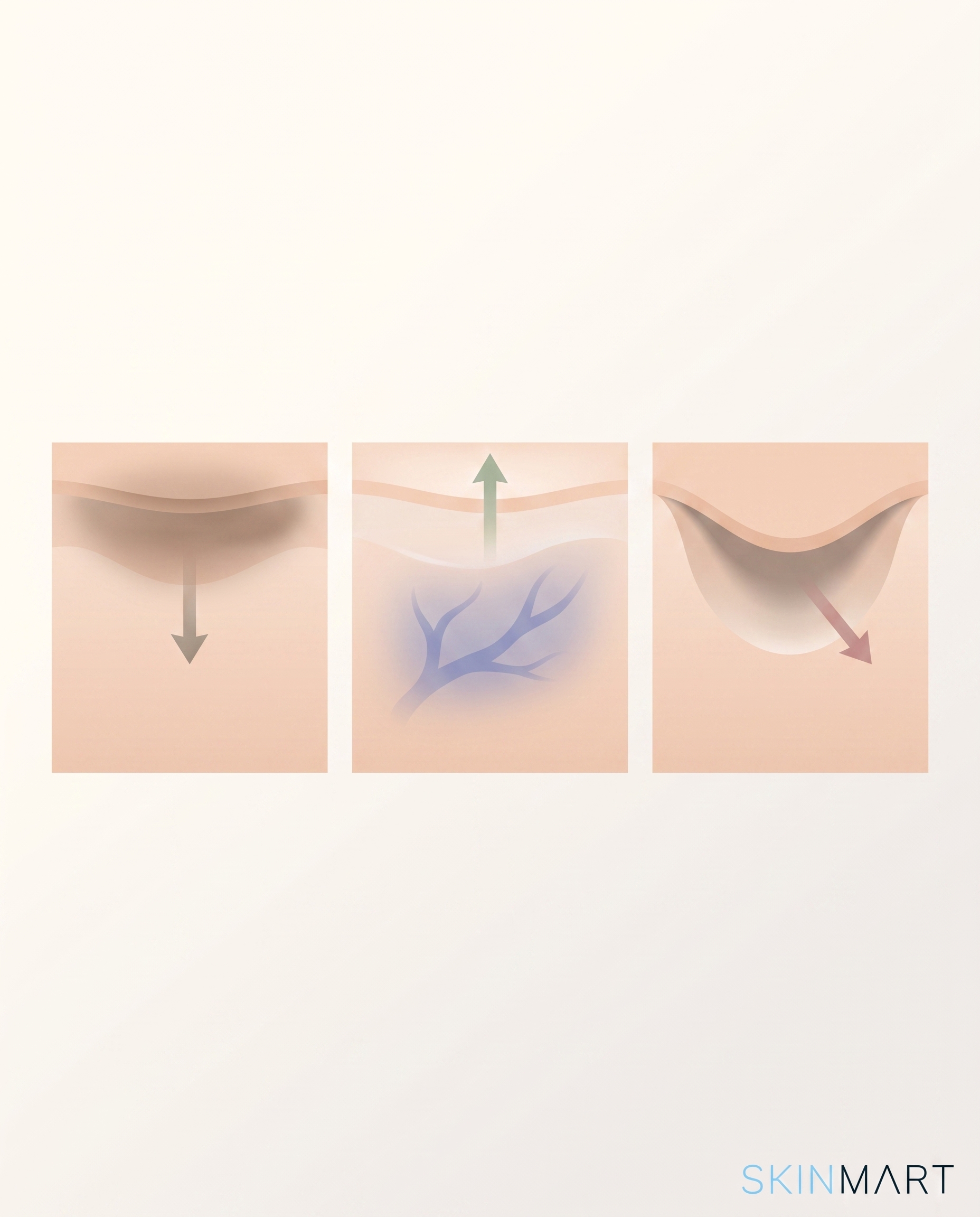
Most people have a combination of all three. That's why a single brightening serum rarely fixes the problem completely. You might lighten pigmentation, but the shadow from hollowing remains. Or you might boost circulation, but the thin skin still lets vessels show through.
Understanding which cause is dominant for you changes your whole approach. It also helps you set honest expectations about what skincare can realistically do.
Cause One: Pigmentation Under the Eye
Post-inflammatory hyperpigmentation (PIH) and sun-related melanin deposits are common causes of dark circles, especially in medium to deeper skin tones. Melanocytes (the cells that produce pigment) are more active in melanin-rich skin. Even minor irritation, rubbing, or sun exposure can trigger extra pigment production in the delicate under-eye area.
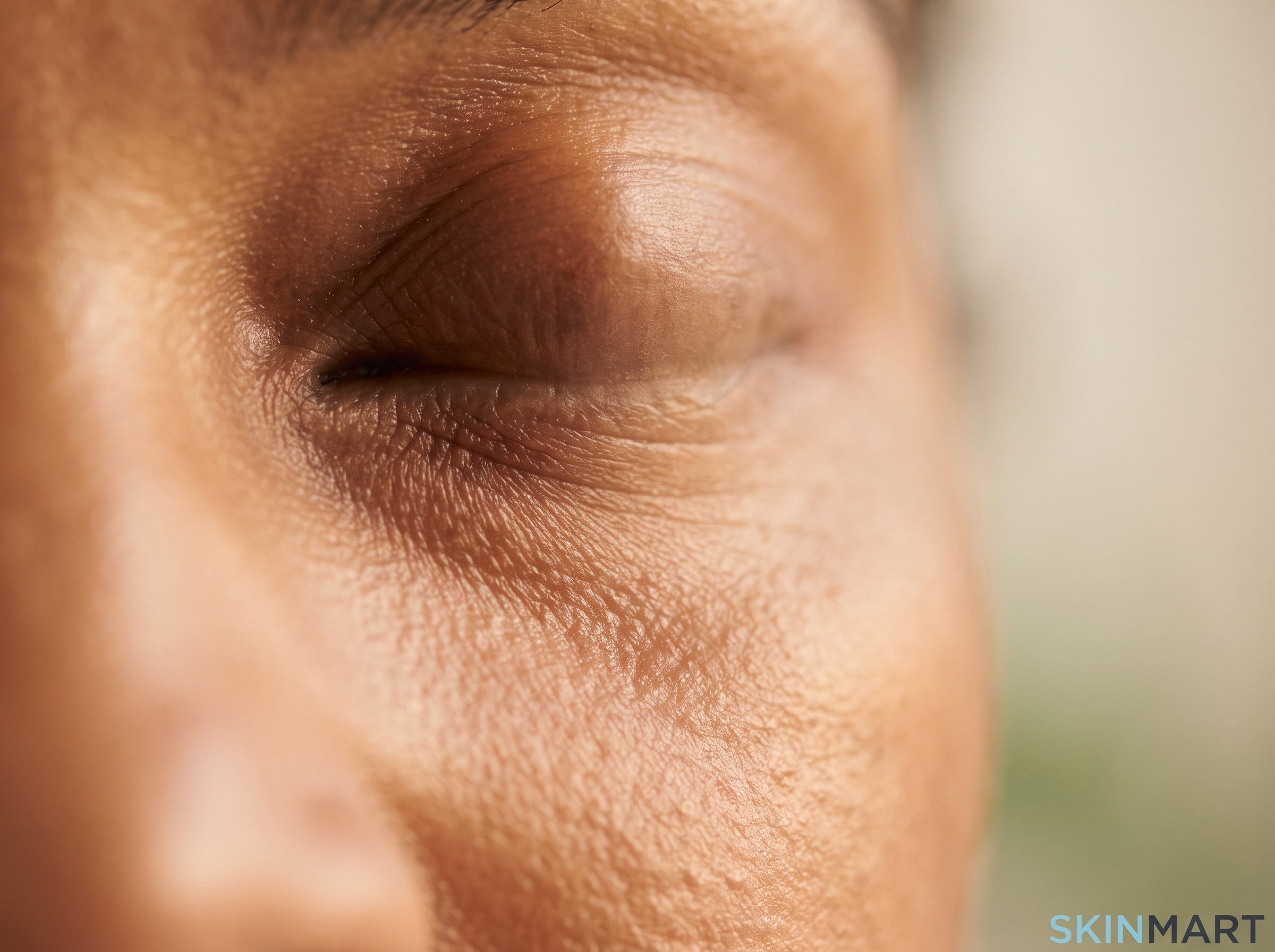
This type of dark circle tends to look brown or grey. It often runs in families and is more common in people with East Asian, South Asian, African, or Mediterranean heritage. It can also develop from years of rubbing tired eyes or from allergic reactions that cause inflammation in the area.
The good news is that pigmentation-related dark circles respond to the right ingredients. Niacinamide (a form of vitamin B3 that helps regulate melanin transfer) and targeted brightening actives can reduce discolouration over time. Progress is gradual, usually 8 to 12 weeks of consistent use before you see real change. Sun protection around the eye area also matters more than most people realise, because UV exposure keeps triggering the melanin response you're trying to calm.
One honest caveat: if pigmentation is deep or genetic, skincare can improve it but may not fully resolve it. That's not a failure. It's just the reality of how melanin works in some skin types.
Key Takeaways
- Dark circles are caused by three things: pigmentation (melanin deposits under the eye), vascular issues (blood showing through thin skin), and structural hollowing (loss of density that creates shadows).
- Most people have a mix of all three.
- The Dermalogica Smart Eye Density Booster targets the structural and pigmentation causes directly, improving density and reducing the appearance of discolouration.
- Genetic and vascular causes can be improved but not fully reversed with skincare alone.
- Know...
Cause Two: Vascular Darkness (The Blue-Purple Kind)
The skin under your eye is the thinnest on your face. In some people, blood vessels sit close enough to the surface that they show through, creating a bluish or purple tone. This is called vascular dark circles, and it's largely structural.
Fatigue, dehydration, alcohol, and poor circulation all make this worse. When you're tired, blood pools in the vessels under your eyes. When you're dehydrated, skin becomes even thinner and more translucent. Both make vascular darkness more visible.
This type of dark circle is the hardest to treat with topical skincare alone. Ingredients that support circulation (like caffeine) can reduce puffiness and temporarily constrict vessels, which helps. Building skin density over time also helps, because thicker, more resilient skin obscures the vessels beneath it. But if your dark circles are primarily vascular and genetic, skincare will improve them, not erase them. That's an important distinction, and we'd rather be honest about it than oversell a result.
Cause Three: Structural Hollowing and the Shadow Problem
This is the cause most people don't know about, and it's often the most significant one after your mid-thirties. As skin loses density and the supportive structure beneath the eye thins, a hollow forms. Light hits that hollow at an angle and creates a shadow. That shadow reads as darkness.
This is why some dark circles look worse in certain lighting, or why a full night's sleep doesn't fix them. You're not looking at pigmentation or blood vessels. You're looking at a shadow caused by a structural change in the skin.
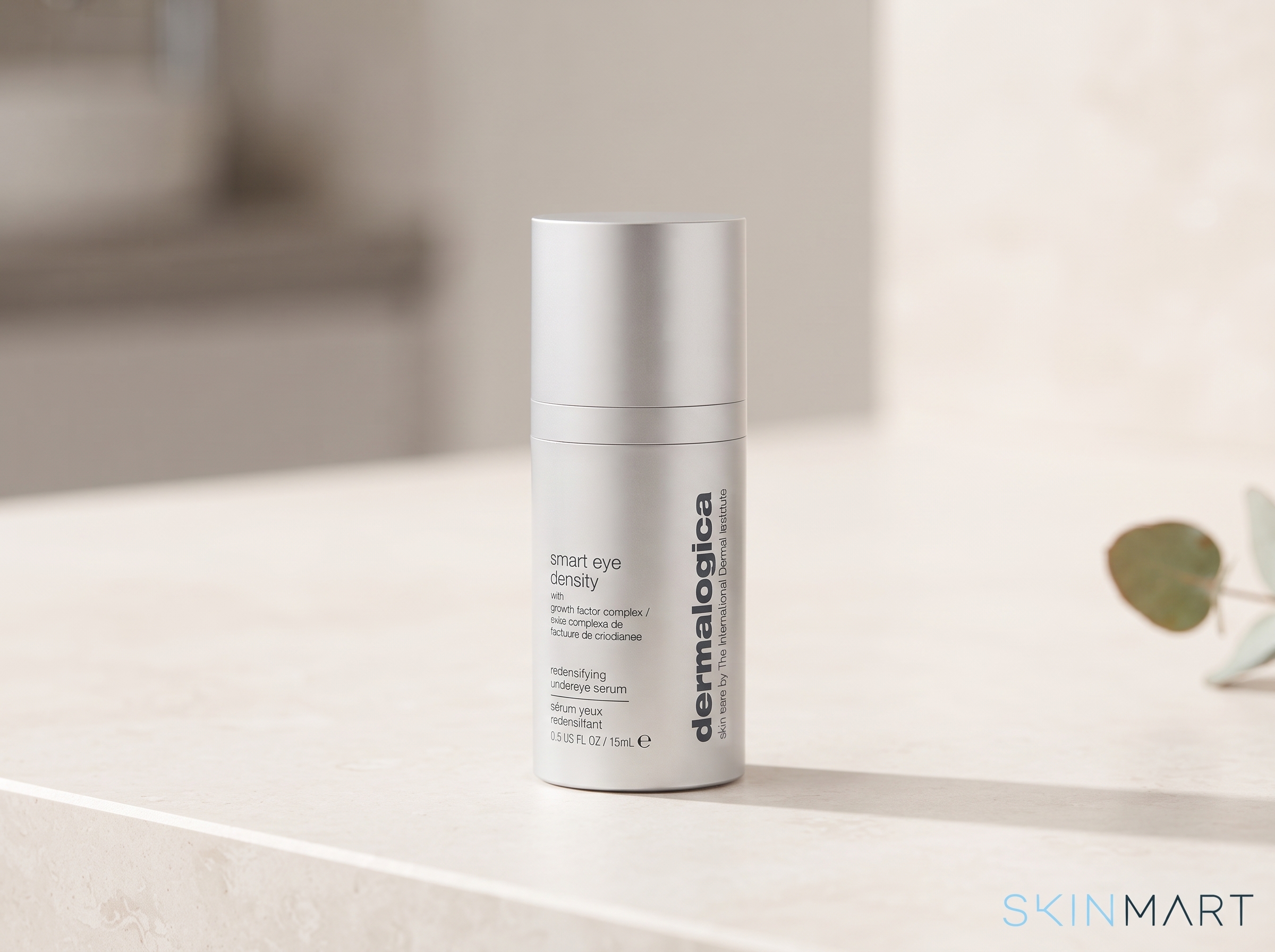
This is where the Dermalogica Smart Eye Density Booster was specifically designed to help. It works by rebuilding density in the under-eye area, which reduces the depth of the hollow and softens the shadow it creates. The result isn't just a brighter look. It's a fuller, more lifted appearance that changes how light falls on the area.
The key distinction here is density versus volume. Volume is what fillers restore. Density is the quality and resilience of the skin itself. The Smart Eye Density Booster targets density, which is something skincare can genuinely influence with consistent use.
How the Smart Eye Density Booster Addresses All Three Causes
Most eye products are built around one concern. The Smart Eye Density Booster is built around the full picture. It works on structural density (reducing the hollow and the shadow it creates), supports the skin's ability to manage pigmentation over time. And improves skin quality so vascular darkness is less visible through the surface.
The formula includes peptides (short chains of amino acids that signal the skin to rebuild and repair), brightening actives that target melanin production, and ingredients that support the skin barrier. The barrier (your skin's outer protective layer) is especially important around the eye, where skin is thin and prone to moisture loss.
It's not a retinol replacement. It's not designed to restore facial fat pad volume. And it won't erase dark circles that are entirely genetic or vascular. What it does is address the structural and pigmentation causes that skincare can genuinely reach. And it does that across all three causes at once rather than forcing you to layer multiple products.
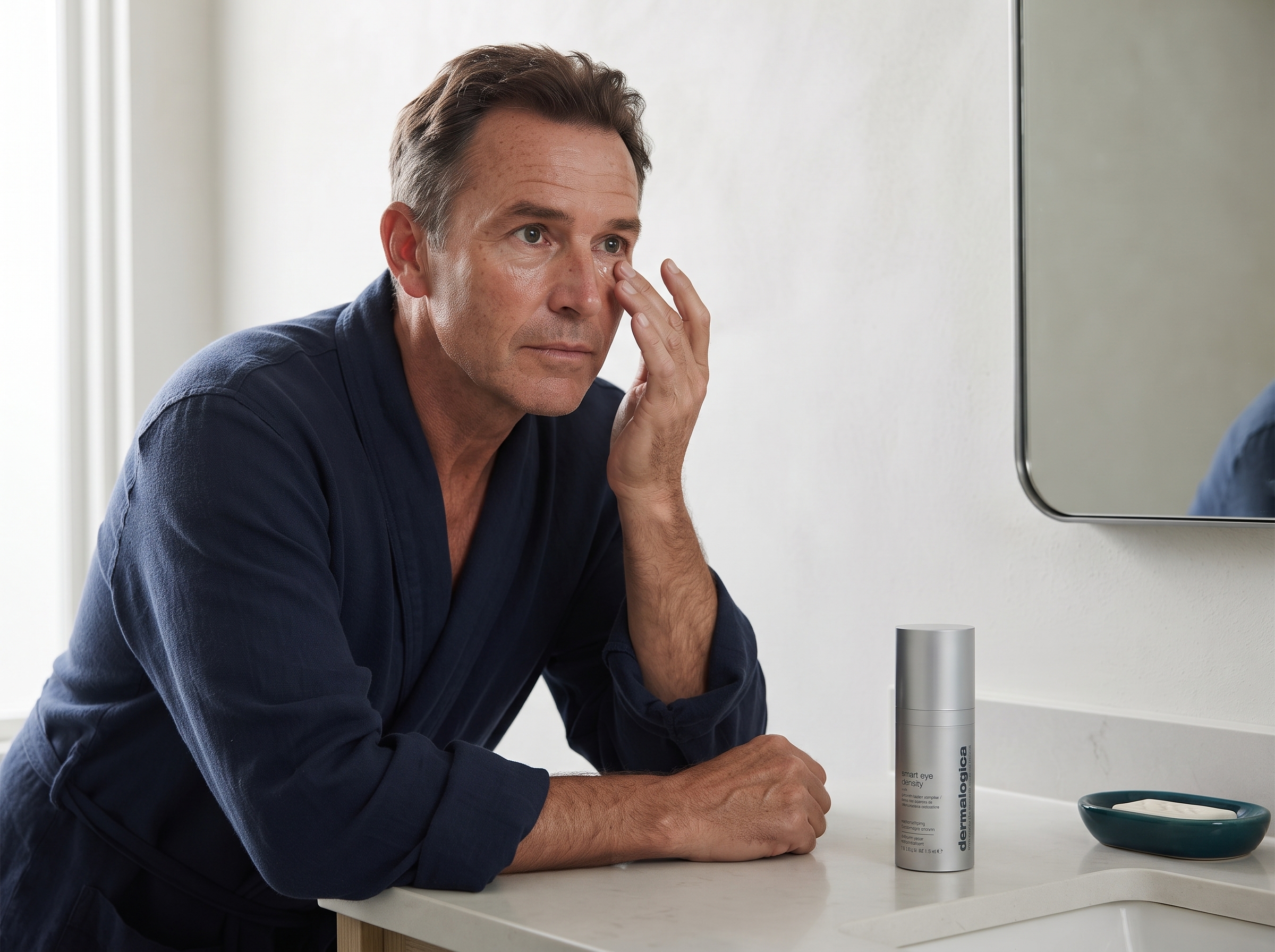
Application matters too. Use your ring finger (it applies the lightest pressure) and work from the inner corner outward, following the direction of lymphatic flow. This reduces puffiness and helps the product absorb evenly.
What to Expect (and What Not To)
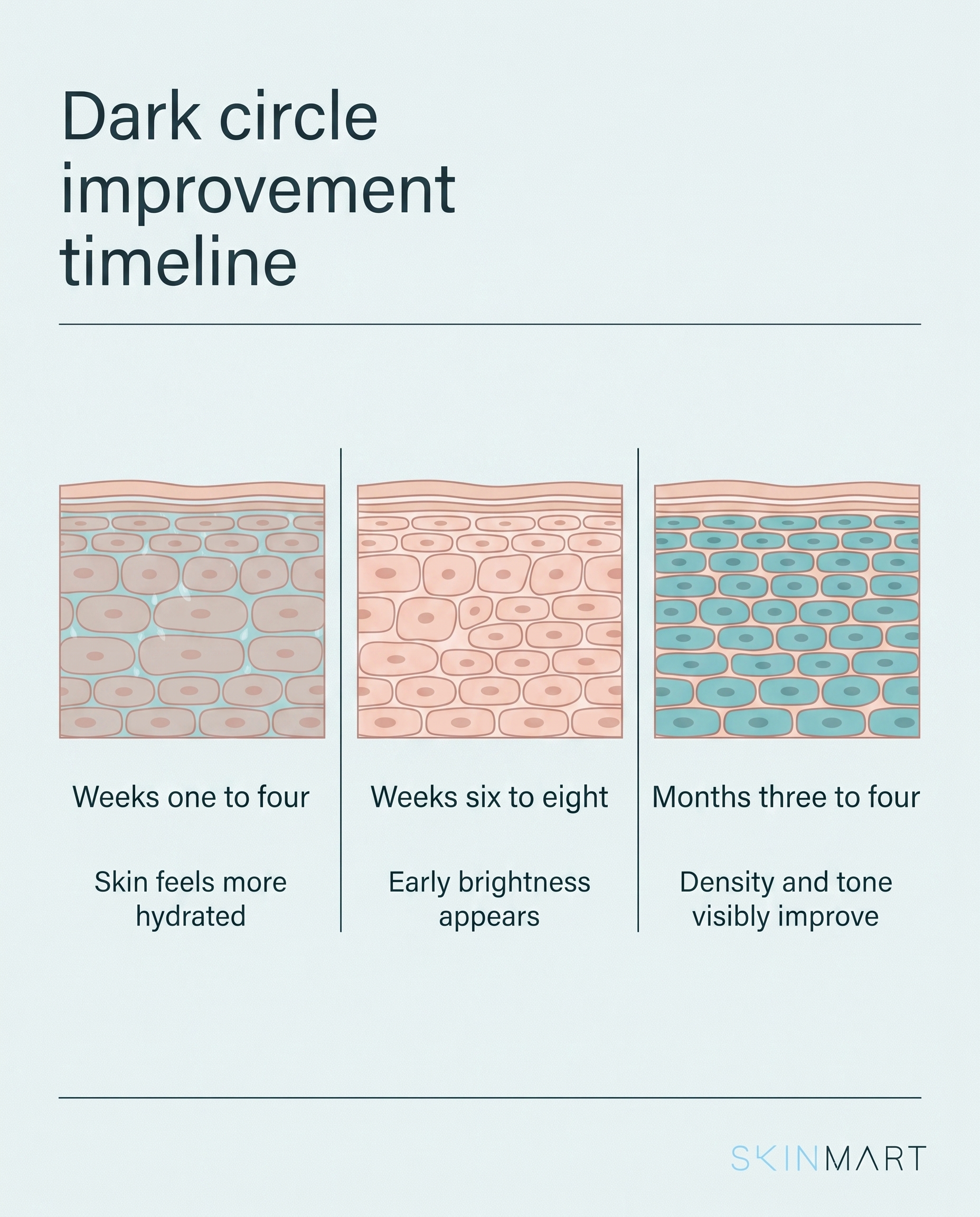
Realistic timelines matter here. For pigmentation-related dark circles, expect to see early improvement at 6 to 8 weeks, with more significant change at 3 to 4 months. For structural hollowing, density improvements tend to show gradually over 8 to 12 weeks of consistent use. Vascular darkness may improve as skin quality improves, but results vary more depending on how much of the cause is genetic.
If you're pregnant or breastfeeding, check with your GP before starting any new active skincare. And if your dark circles are severe or sudden in onset, it's worth speaking to a dermatologist to rule out for a short time. If you've been guessing at the cause of your dark circles, this is a low-risk way to find out what consistent, targeted density support actually feels like on your skin.
How Do You Know Which Cause Is Yours?
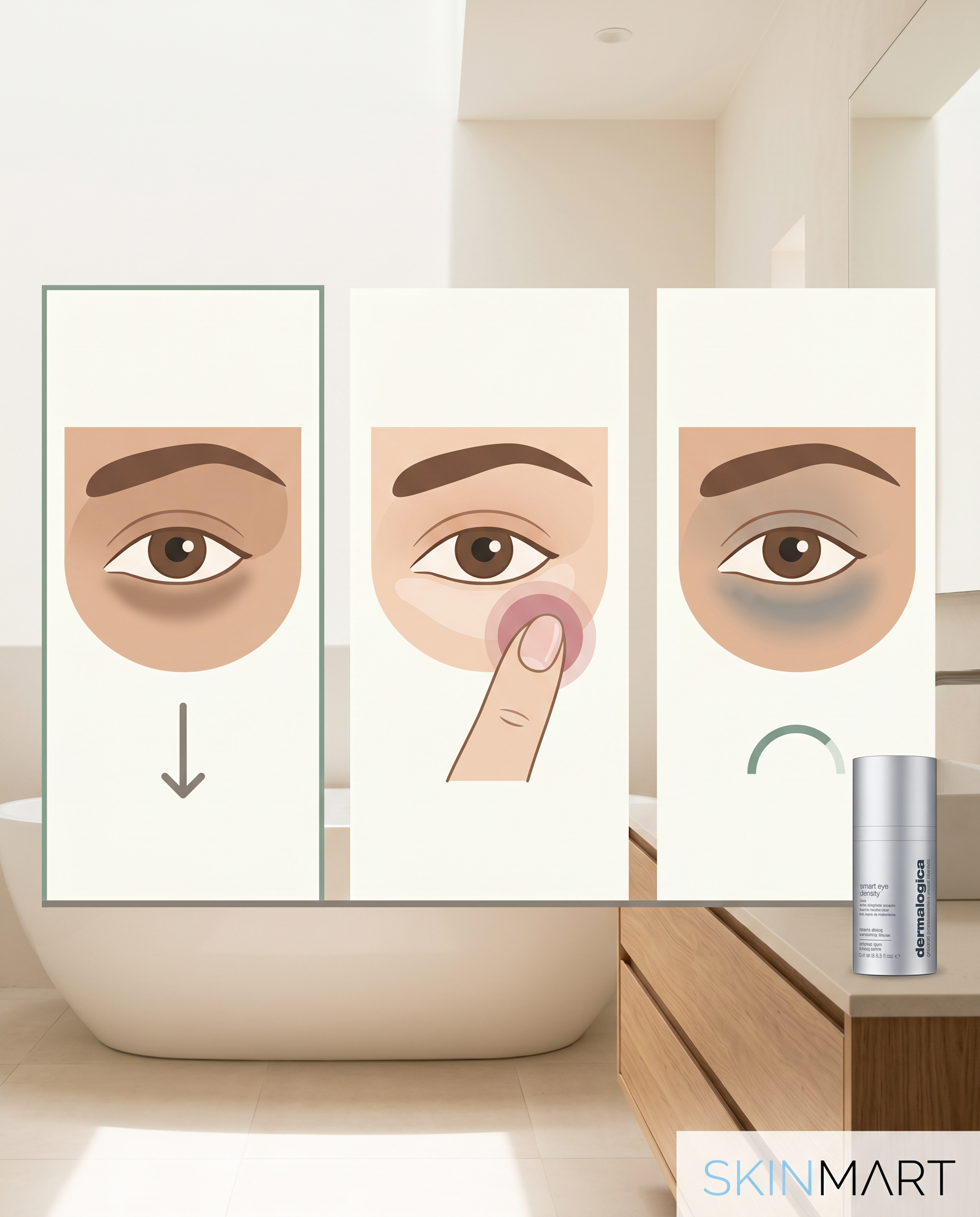
A simple test can help. Pull the skin gently to the side under your eye (don't tug). If the darkness moves with the skin, it's likely pigmentation. If it stays in place or fades slightly, it's more likely vascular or structural. If the darkness is most visible in certain lighting and looks like a shadow more than a stain, structural hollowing is probably the main driver.

Most people find they have two or three causes overlapping. That's normal. It's also why the 'three causes, one product' approach makes practical sense. Rather than building a separate routine for each cause, you address the full picture with one well-formulated step.
If you want a more personalised read on what's driving your dark circles, the Skin Consultation at Skinmart walks through your specific skin history, concerns, and goals. Recommendations come after understanding your skin, not before. That's the difference between buying what's trending and choosing what's right for you.
Dark circles are frustrating partly because they're misunderstood. When you know there are three distinct causes, and that most people have a mix of all three, the path forward becomes clearer. You stop chasing a single fix and start building a strategy that matches what's actually happening beneath the surface.
The Dermalogica Smart Eye Density Booster is one of the few products designed to address all three causes at once. It won't erase what's genetic. But it will rebuild density, reduce pigmentation over time, and improve the skin quality that makes vascular darkness more visible.
That's a meaningful difference from most of what's on the market. If you want to understand your specific dark circle causes before you buy anything, book your skin consultation at Skinmart. We'll help you figure out what's right for your skin, not just what's trending.


