
If your skin feels tight, looks flaky, or reacts to products it once tolerated, your skin barrier might be compromised. Ceramides are one of the most effective ingredients for restoring barrier health—but only when used correctly. Understanding how to incorporate them into your routine can mean the difference between continued frustration and genuine improvement.
This guide explains exactly how to use ceramides effectively, from choosing the right products to timing your application for maximum benefit. You'll learn the science behind why ceramides work, how to layer them with other ingredients, and what results you can realistically expect. Let's take confident control of your barrier health.
What Are Ceramides and Why Does Your Skin Need Them?
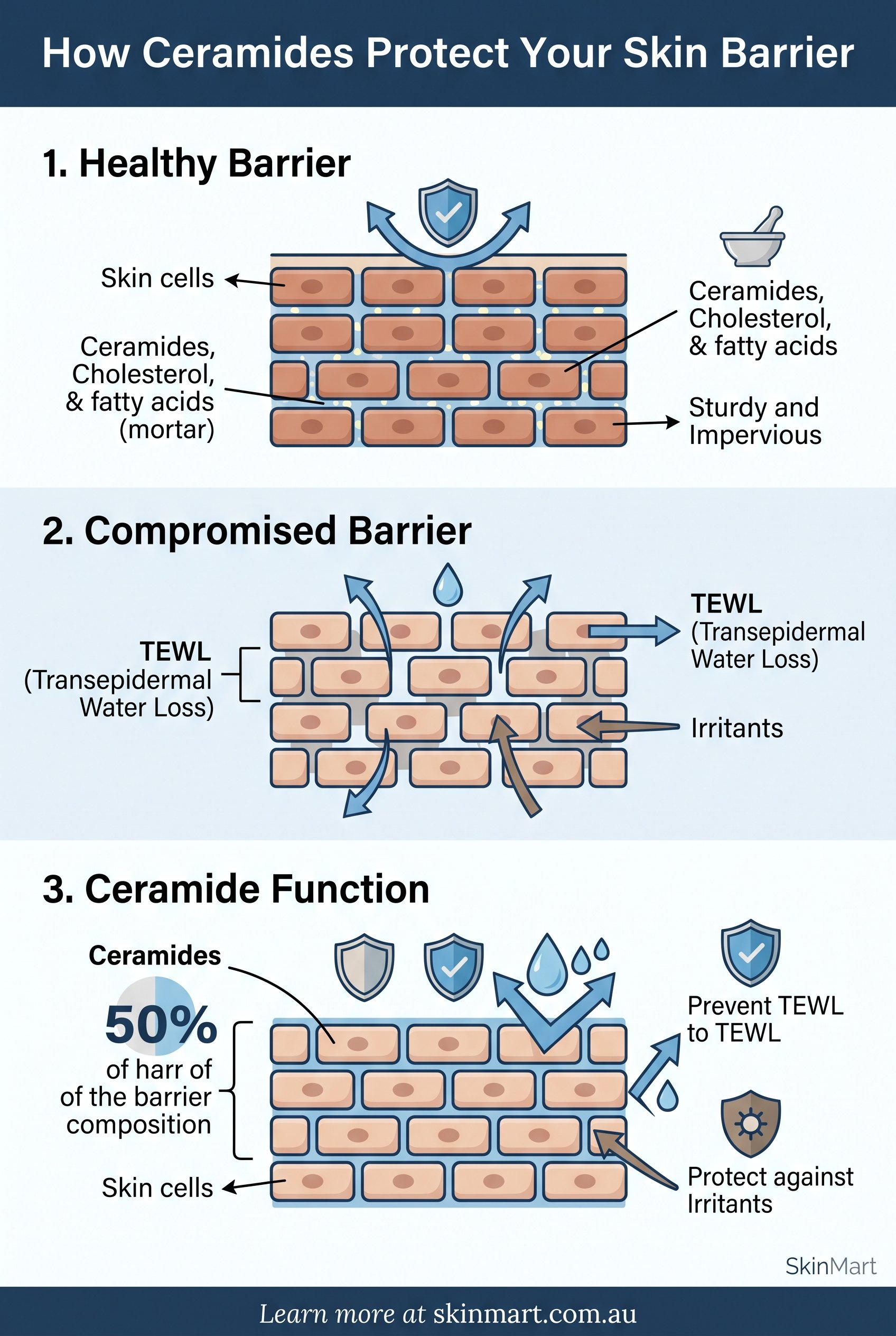
Ceramides are naturally occurring lipid molecules that form approximately 50% of your skin's outermost layer, the stratum corneum. Think of your skin barrier like a brick wall—skin cells are the bricks, and ceramides are part of the mortar holding everything together. This structure prevents water loss from within and protects against external irritants, allergens, and pathogens.
Your skin naturally produces nine different types of ceramides, but production decreases with age, environmental damage, and over-exfoliation. When ceramide levels drop, your barrier becomes compromised, leading to increased water loss, sensitivity, inflammation, and visible signs of aging. Research published in the International Journal of Molecular Sciences shows that ceramide deficiency is linked to conditions like eczema, psoriasis, and premature aging.
The key insight is this: topically applied ceramides can effectively replenish what your skin has lost. Studies demonstrate that ceramide-containing products significantly improve barrier function, increase hydration levels, and reduce transepidermal water loss (TEWL) within weeks of consistent use. Understanding this mechanism puts you in control—you're not just applying a moisturiser, you're actively rebuilding your skin's protective foundation.
How to Choose the Right Ceramide Products
Not all ceramide products deliver equal results. The most effective formulations contain ceramides in a physiological lipid ratio—specifically ceramides, cholesterol, and free fatty acids in a 3:1:1 ratio. This mimics your skin's natural composition and provides superior barrier repair compared to ceramides alone.
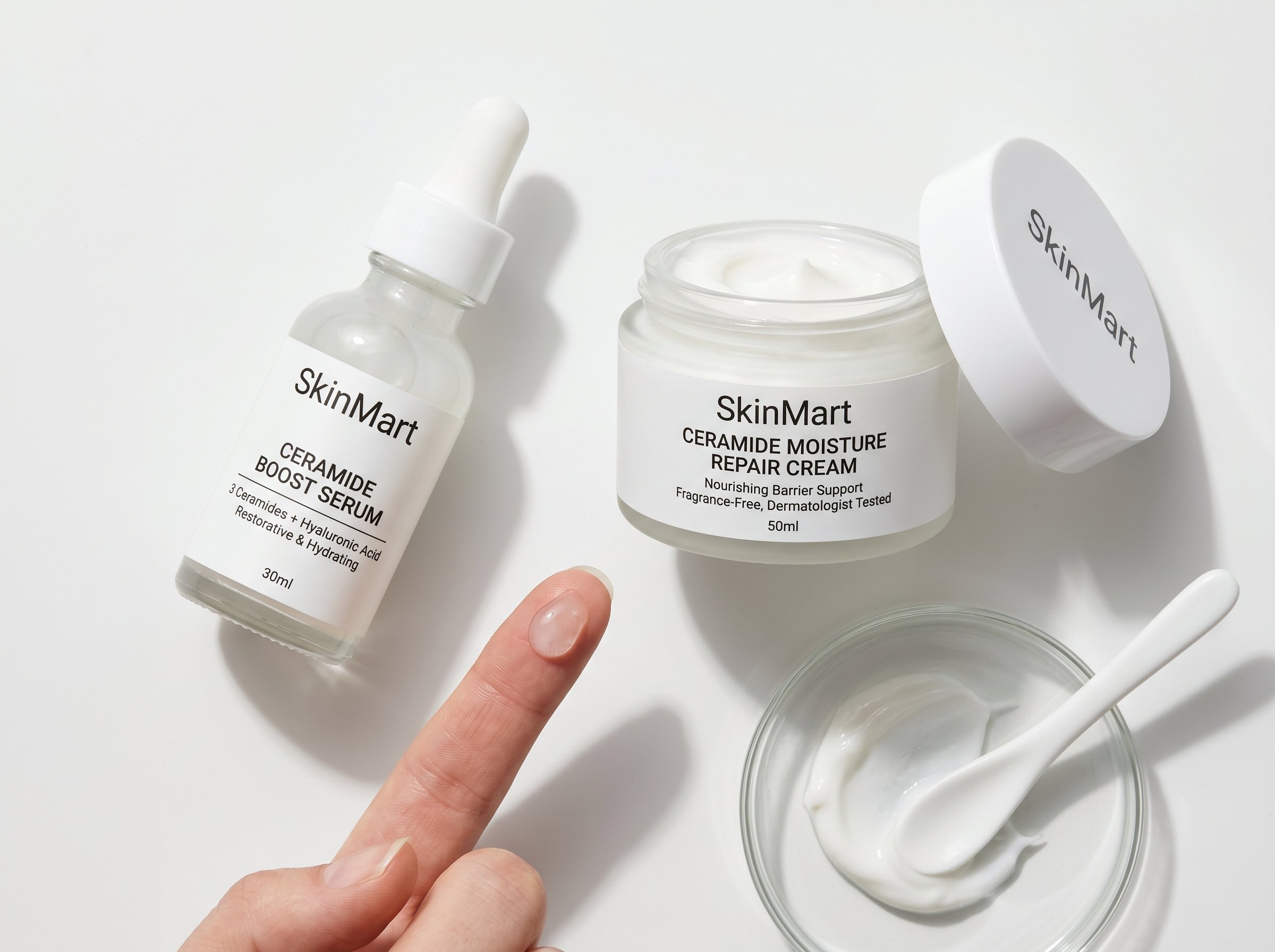
Look for products listing specific ceramide types: Ceramide NP (ceramide 3), Ceramide AP (ceramide 6-II), and Ceramide EOP (ceramide 1) are the most researched and effective. These should appear in the first half of the ingredient list, indicating meaningful concentrations. Avoid products where ceramides are listed near the end—they likely contain insufficient amounts for therapeutic benefit.
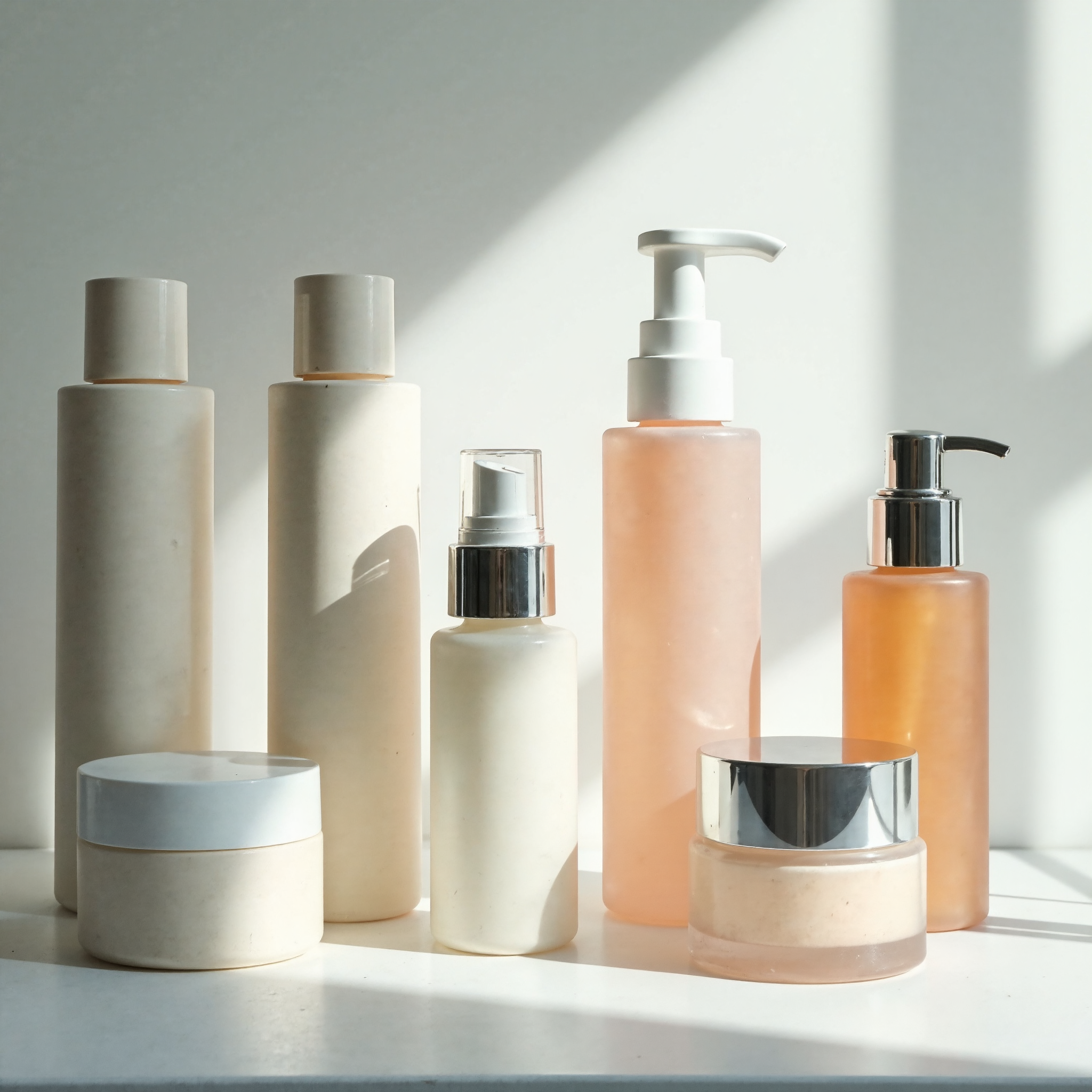
Product format matters for your routine. Ceramide serums absorb quickly and layer well under other products, making them ideal for comprehensive routines. Ceramide moisturisers provide both barrier repair and occlusion, perfect for simplified routines or as a final sealing step. Ceramide cleansers offer gentle cleansing while depositing beneficial lipids, though they provide less barrier support than leave-on products.
For compromised barriers, start with a ceramide-rich moisturiser used twice daily. Once your barrier stabilises, you can add a ceramide serum for enhanced repair. Those with severely damaged barriers benefit from layering both—serum followed by moisturiser—for maximum lipid replenishment.
Key Takeaways
- Ceramides are lipid molecules that make up 50% of your skin's barrier.
- Use ceramide products twice daily after cleansing and before heavier moisturisers.
- They work best when combined with cholesterol and fatty acids in a 3:1:1 ratio.
- Apply to slightly damp skin for better absorption.
- Ceramides are safe for all skin types and can be used morning and night.
When and How to Apply Ceramide Products
Timing and technique significantly impact ceramide effectiveness. Apply ceramide products to slightly damp skin immediately after cleansing—within 60 seconds if possible. Damp skin enhances absorption and helps ceramides integrate into the lipid matrix more effectively. Pat your face with a towel until it's about 70% dry, then apply your ceramide product.
In your routine order, ceramides should come after water-based serums but before heavier occlusives. A typical sequence looks like this: cleanser, toner or essence, water-based serums (like hyaluronic acid or niacinamide), ceramide serum, ceramide moisturiser, then facial oil or occlusive if needed. This layering allows each product to penetrate properly while building barrier protection progressively.
Use ceramide products twice daily—morning and night—for optimal results. Morning application protects your barrier throughout the day against environmental stressors. Evening application supports overnight barrier repair when skin regeneration peaks. Consistency matters more than quantity; a pea-sized amount of serum and a nickel-sized amount of moisturiser suffice for most people.
For application technique, use gentle pressing motions rather than rubbing. Warm the product between your palms, then press it into your skin using upward and outward motions. This method minimises friction that could further compromise a weakened barrier while ensuring even distribution.
What Ingredients Work Best with Ceramides?
Ceramides deliver enhanced results when combined with complementary ingredients. Niacinamide (vitamin B3) stimulates your skin's natural ceramide production while reducing inflammation—a powerful combination for barrier repair. Studies show that niacinamide at 2-5% concentrations increases ceramide synthesis by up to 34% within four weeks.
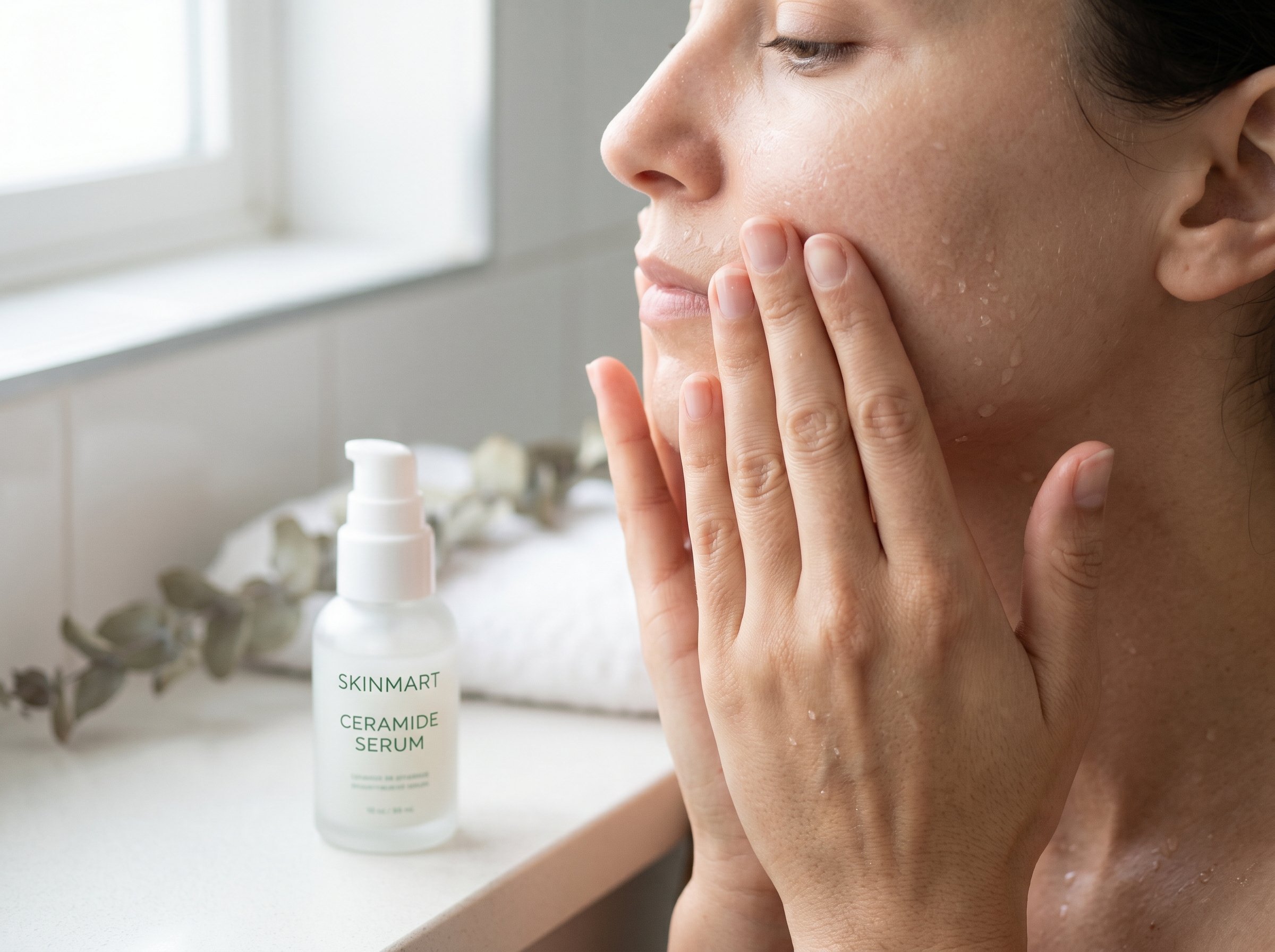
Hyaluronic acid pairs exceptionally well with ceramides. While hyaluronic acid draws water into skin, ceramides prevent that water from evaporating. This synergy creates optimal hydration—water is attracted and retained. Apply hyaluronic acid first, followed by ceramides to seal in moisture.
Cholesterol and fatty acids are essential partners. As mentioned earlier, the 3:1:1 ratio of ceramides, cholesterol, and fatty acids produces superior barrier repair. Many advanced formulations include all three, but if yours doesn't, consider adding a product containing fatty acids (like linoleic acid) or cholesterol.
Ceramides also work safely alongside active ingredients, making them ideal for supporting skin through potentially irritating treatments. Using ceramides with retinoids helps counteract dryness and irritation while maintaining treatment efficacy. Similarly, ceramides support skin during chemical exfoliation or vitamin C use, preventing the barrier compromise these actives can sometimes cause.
Avoid only one combination: ceramides with extremely high pH products (above 8), as alkaline environments can disrupt lipid structure. Otherwise, ceramides are remarkably compatible with most skincare ingredients, making them versatile additions to virtually any routine.
What Results Can You Expect and When?
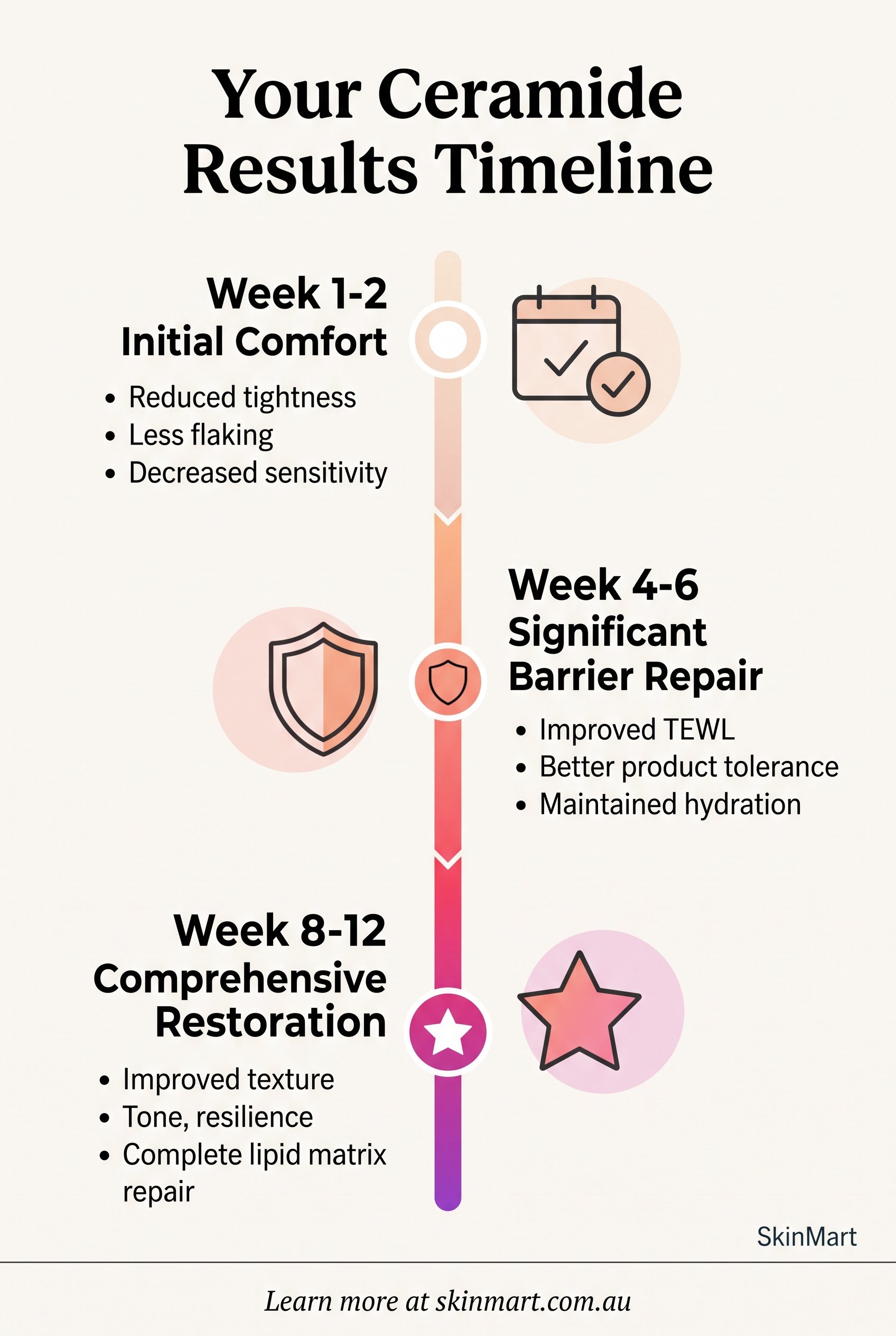
Realistic expectations set you up for success. With consistent twice-daily use, most people notice initial improvements within 1-2 weeks—reduced tightness, less flaking, and decreased sensitivity to products. Your skin may feel more comfortable and look less irritated relatively quickly as the barrier begins stabilising.
Significant barrier repair typically occurs within 4-6 weeks. Clinical studies measuring transepidermal water loss (TEWL) show meaningful improvements in this timeframe. You'll likely notice your skin tolerates products better, maintains hydration longer, and shows fewer signs of sensitivity or reactivity.
For comprehensive barrier restoration and visible improvements in texture, tone, and resilience, expect 8-12 weeks of consistent use. This timeline aligns with your skin's natural renewal cycle and allows for complete lipid matrix restoration. Those with severely compromised barriers from conditions like eczema may require longer—3-6 months—for optimal results.
Track your progress by noting specific changes: How long does your skin stay hydrated after moisturising? Do products that once stung now apply comfortably? Is your makeup application smoother? These practical markers often reveal improvements before dramatic visual changes appear.
Remember that barrier health requires ongoing maintenance. Once repaired, continue using ceramide products at least once daily to maintain results. Think of this as preventative care—you're not just treating symptoms, you're addressing the root cause of barrier dysfunction and preventing future compromise.
Common Mistakes to Avoid When Using Ceramides
Even beneficial ingredients can underdeliver when misused. The most common mistake is expecting immediate results. Ceramides rebuild your barrier gradually—this is biological repair, not cosmetic coverage. Patience and consistency deliver results; product-hopping every week doesn't.
Another frequent error is using insufficient product. While you don't need excessive amounts, skimping on application means inadequate lipid delivery. Use enough to cover your face comfortably without tugging or dragging—typically more than you'd use for a serum, less than a heavy cream.
Applying to completely dry skin reduces effectiveness. That 60-second window after cleansing when skin is slightly damp significantly enhances ceramide absorption and integration. If your skin dries completely, mist it lightly with water or essence before applying ceramides.
Some people make the mistake of over-exfoliating while using ceramides. If you're trying to repair your barrier, aggressive exfoliation (chemical or physical) works against ceramide benefits. Reduce exfoliation to once or twice weekly maximum while focusing on barrier repair, then gradually increase once your barrier stabilises.
Finally, don't assume all ceramide products are equal. Choosing products with insufficient ceramide concentrations or poor formulations leads to disappointment. Invest in well-formulated products from reputable brands with transparent ingredient lists and appropriate ceramide types and concentrations.
Ceramides offer proven, science-backed barrier repair when used correctly. By choosing well-formulated products, applying them to damp skin twice daily, and combining them with complementary ingredients, you're actively rebuilding your skin's protective foundation. This isn't about quick fixes—it's about sustainable barrier health that supports every other aspect of your skincare.
Start with a quality ceramide moisturiser, apply it consistently for at least 4-6 weeks, and track the practical improvements in how your skin feels and functions. You're not just treating symptoms; you're addressing the underlying barrier dysfunction that drives sensitivity, dehydration, and premature aging. Armed with this understanding, you can take confident control of your barrier health and build the resilient, comfortable skin you deserve.


