You have been consistent. You use your retinol. You layer your vitamin C. You have not skipped SPF in years.
And yet, somewhere around the six-month or twelve-month mark, the results slow down. The improvement that felt real in the early weeks becomes harder to see. You wonder if your skin has adapted, or if the product has simply stopped working.
The product probably has not changed. But your skin cells may have. There is a biological process called cellular senescence that affects how well your skin can respond to the actives you apply. Understanding it does not just explain the plateau, it points toward what can actually move things forward again.
What Is Cellular Senescence, and Why Does It Matter for Ageing Skin?
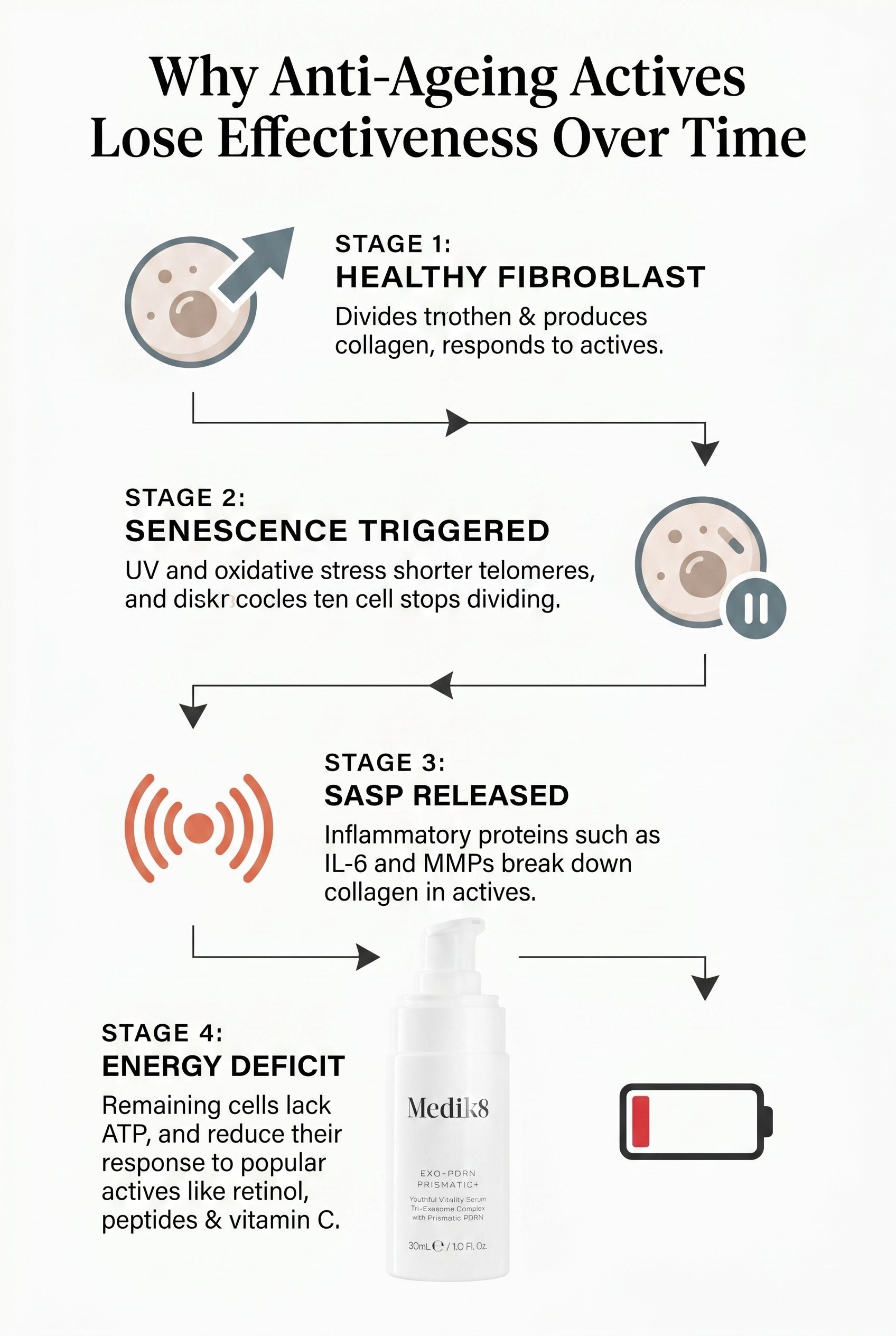
Every skin cell has a lifespan. Fibroblasts, the cells deep in your dermis that produce collagen, elastin, and hyaluronic acid, divide and renew over time. But each time a cell divides, its telomeres (the protective caps on the ends of its DNA) get a little shorter. After enough divisions, the cell can no longer replicate safely. It enters a permanent state called senescence.
A senescent cell does not die. It stays in your skin, metabolically active but no longer contributing to repair or renewal. By middle age, research suggests that senescent fibroblasts can make up 10 to 15 percent of the dermal cell population. That number keeps rising with time, UV exposure, and oxidative stress.
The real problem is what these cells do while they linger. They release a mix of inflammatory proteins called the Senescence-Associated Secretory Phenotype, or SASP. This includes cytokines like IL-6 and IL-8, as well as enzymes called matrix metalloproteinases (MMPs) that actively break down collagen. So instead of building structure, these cells are quietly dismantling it, and driving low-grade inflammation that accelerates visible ageing. To understand more about how inflammation shapes the ageing process, this piece on whether ageing is genetic gives useful context on what drives skin change over time.
Why Do Actives Lose Effectiveness Over Time?
Retinoids work by binding to receptors inside skin cells and changing which genes get switched on. They tell fibroblasts to produce more collagen and turn over cells faster. Vitamin C supports collagen synthesis and neutralises free radicals. Peptides send signals that prompt repair. These are all legitimate, well-researched mechanisms.
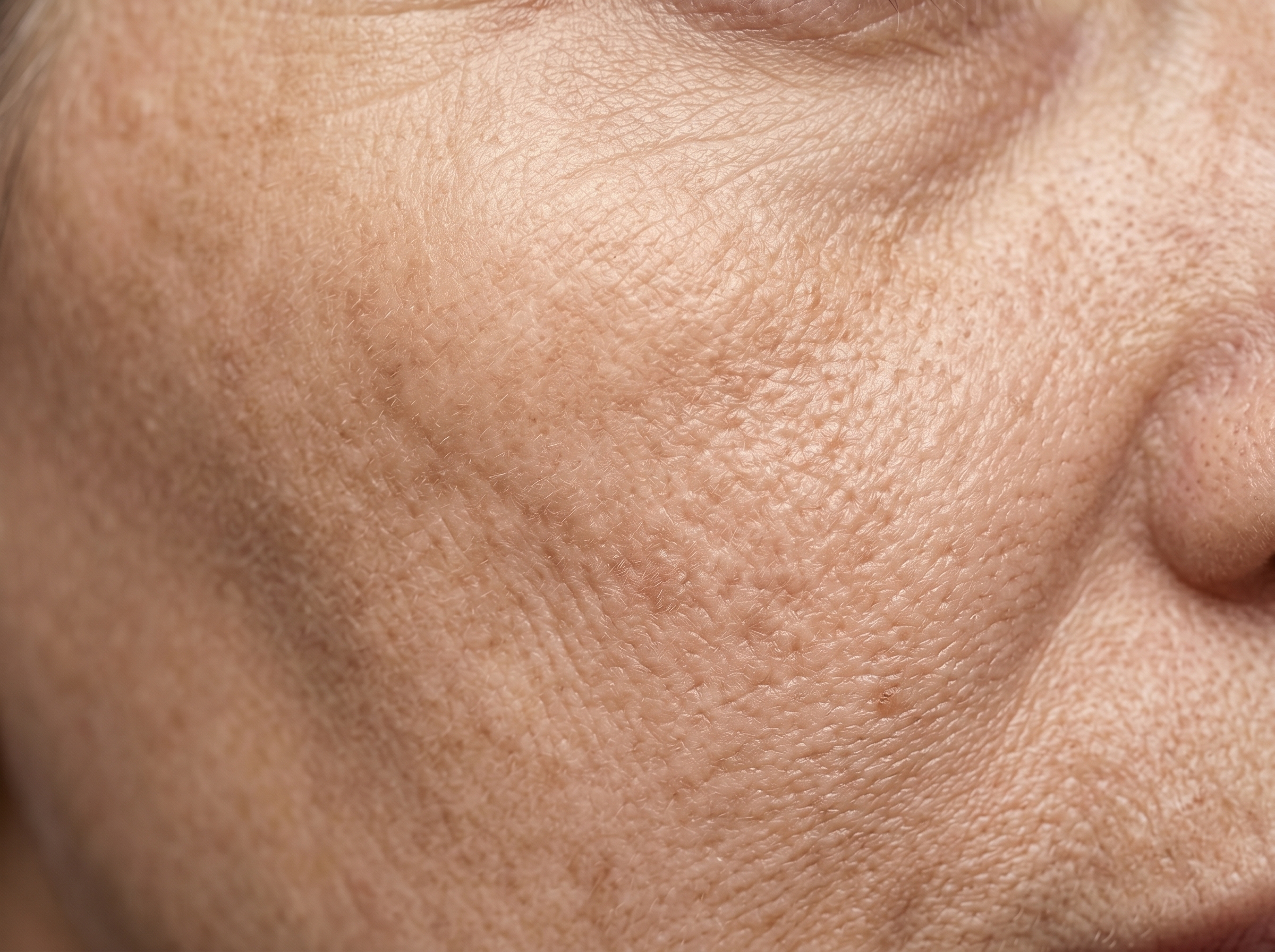
But here is the issue: all of these actives depend on healthy, responsive cells to act on. If a growing proportion of your fibroblasts are senescent, they no longer respond to those signals the same way. The receptor activity is reduced. The cellular machinery is impaired. You are sending the right messages into a system that has less and less capacity to act on them.
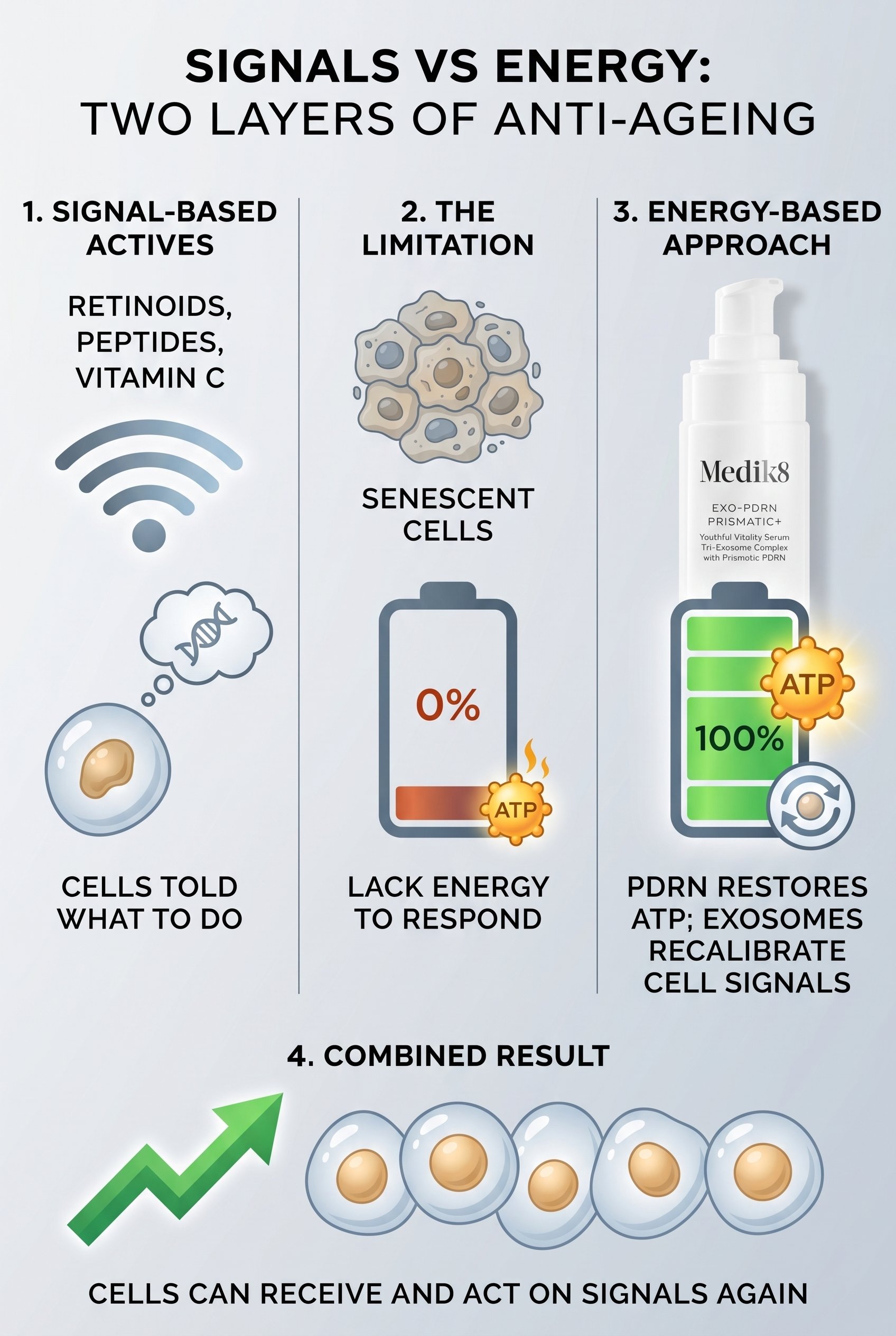
This is the energy problem in anti-ageing skincare. It is not just about signals. It is about whether the cells receiving those signals have the biological energy and functional capacity to respond.
Senescent cells have compromised mitochondria, the structures inside cells that produce ATP, which is the cell's primary energy source. Without adequate ATP, even a well-formulated active cannot generate the response it was designed to produce. If you are just starting to explore why retinoids may feel less effective than they once did, this guide on starting the retinol journey covers what realistic expectations look like at different stages.
Key Takeaways
- Anti-ageing products often stop working because the skin cells they target, called fibroblasts, become senescent over time.
- Senescent cells stop dividing and lose the ability to produce collagen.
- They also release inflammatory proteins that break down the skin's structure.
- When enough fibroblasts enter this state, even well-formulated actives have fewer healthy cells to work with.
- Addressing this requires more than signals.
How Does SASP Create a Cycle That Is Hard to Break?
The SASP does not just damage collagen directly. It also signals to neighbouring healthy cells, pushing them toward senescence too. This is called the bystander effect. One senescent fibroblast creates an inflammatory environment that can compromise the cells around it. Over time, the proportion of dysfunctional cells grows faster than it otherwise would.
At the same time, the SASP drives chronic low-grade inflammation, sometimes called inflammaging, that impairs barrier function, slows wound healing, and accelerates structural breakdown. You may notice this as skin that feels less resilient, takes longer to recover after stress, or develops texture changes that do not respond to your usual routine.
This cycle is self-reinforcing. More senescent cells produce more inflammatory signals. More inflammatory signals compromise more cells. Standard topical actives are not designed to interrupt this loop. They are designed to support healthy cell function, which becomes harder to do when the cellular environment is increasingly compromised.
What Can Actually Address Senescent Cell Activity?
There are two broad approaches researchers are exploring. Senolytic strategies aim to selectively clear senescent cells. Senomorphic strategies aim to reduce what those cells secrete, suppressing the SASP without eliminating the cells themselves. Both are active areas of research, and both point toward a more targeted approach than simply adding more actives to your routine.
At the cosmetic level, ingredients like quercetin and fisetin show senomorphic properties in research settings. NAD+ precursors such as nicotinamide riboside support cellular energy and sirtuin activity, which helps regulate the inflammatory output of ageing cells. These approaches work gradually and require consistent use over months to show meaningful change.
A newer category of ingredients focuses on restoring cellular energy directly. PDRN (Polydeoxyribonucleotide) is a nucleotide-rich compound derived from salmon DNA. It provides the raw materials cells need to support DNA repair and ATP synthesis.
When fibroblasts have access to these building blocks, their capacity to respond to growth signals and repair signals improves. This is the distinction between giving cells a message and giving cells the energy to act on it. For a broader look at how DNA-based technology is being used in skincare, this article on DNA technology in skincare is worth reading alongside this one.

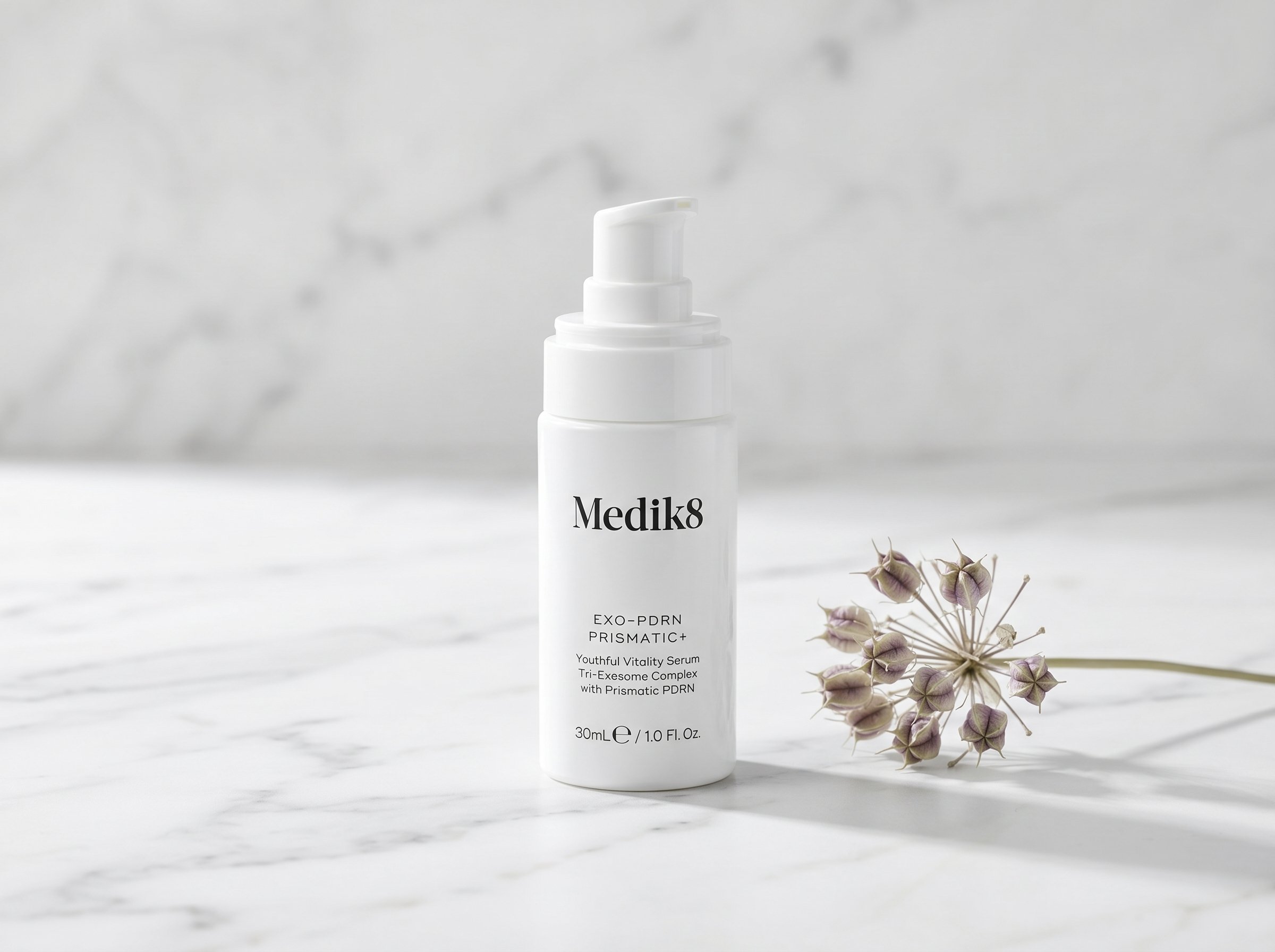
Featured: Exo-PDRN Prismatic+
A full-spectrum face serum that boosts skin's natural rejuvenation by over 50%.
Shop NowHow Do Exosomes Fit Into This Picture?
Exosomes are tiny vesicles, small membrane-bound particles, that cells use to communicate with each other. They carry proteins, lipids, and genetic material (including microRNA) that can influence how receiving cells behave. In younger, healthier skin, this communication network is active and well-coordinated. As senescence increases, the quality and content of these signals degrades.
Research into exosome-based skincare is growing quickly. The idea is that delivering high-quality exosome signals to skin can help recalibrate how cells behave, reducing inflammatory signalling and supporting regenerative activity. When combined with PDRN, the pairing addresses two related problems: the quality of the signals being sent, and the cellular capacity to act on them.
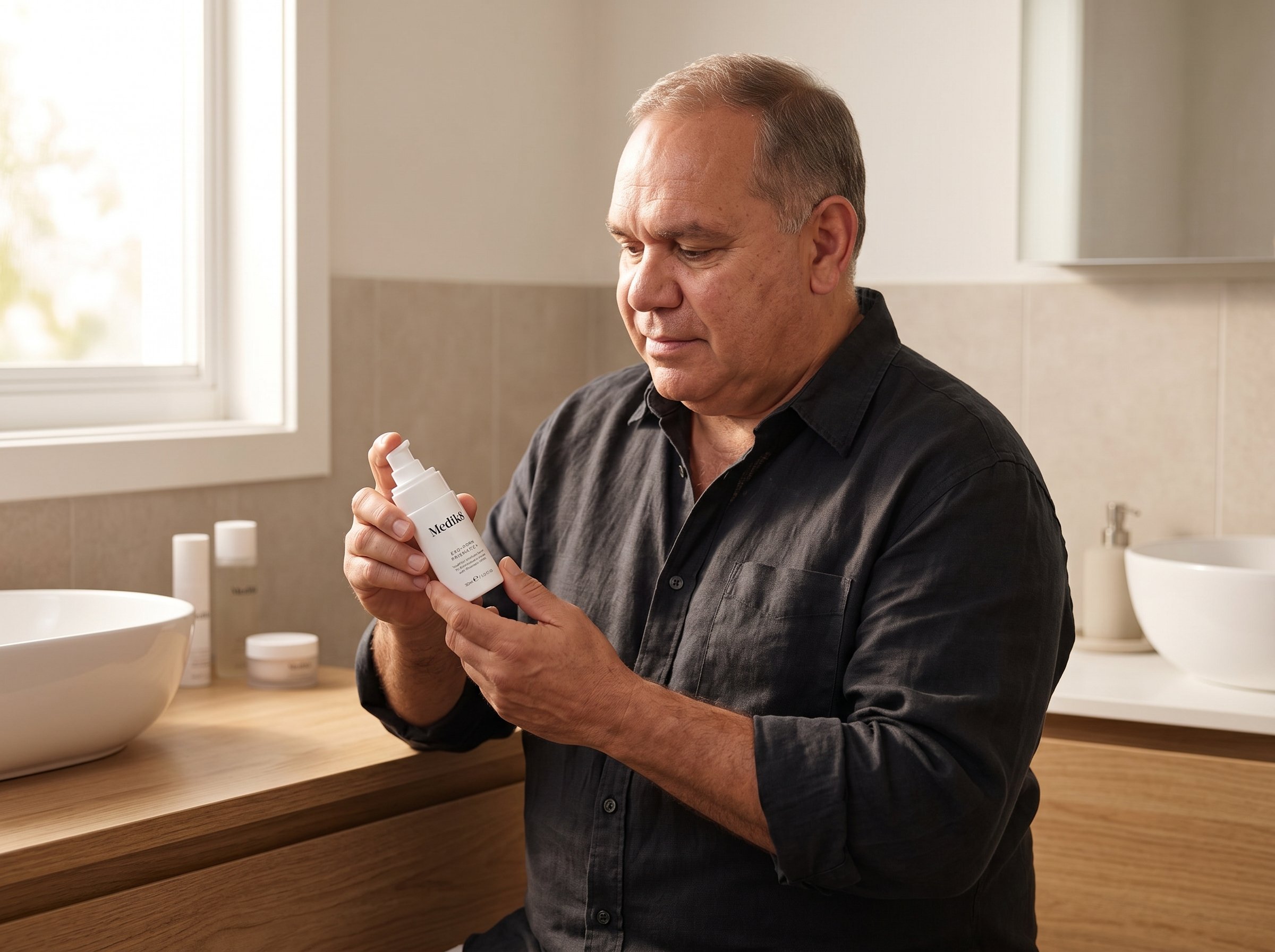
This combination approach is what makes formulations like Exo-PDRN Prismatic+ worth understanding in the context of this article. It is not positioned as a replacement for your retinoid or your vitamin C. It is designed to work alongside them, by improving the cellular conditions that allow those actives to do their job. In 14-day clinical assessments, users saw improvements in skin volume and visible wrinkle reduction. Post-procedure, 98 percent of participants agreed it supported skin recovery effectively.
What Does a More Complete Anti-Ageing Strategy Look Like?
Retinoids remain one of the most evidence-backed tools in age-positive skincare. They directly influence gene expression in skin cells and have decades of clinical data behind them. The same is true for vitamin C, niacinamide, and broad-spectrum SPF 50+. These are not things to replace, they are things to build on.
But if your results have plateaued, the question worth asking is whether your strategy addresses cellular capacity, not just cellular signals. Are the cells you are targeting able to respond? Is the inflammatory environment in your dermis working against the actives you are applying? These are the deeper questions that senescence science helps answer.
A layered approach, combining proven actives with ingredients that restore cellular energy and reduce SASP activity, is where the science is pointing. This does not mean adding ten new products. It means being intentional about what each layer of your routine is actually doing, and whether those layers are working together toward the same goal. If you want to think about how to build a routine that works at multiple levels, this guide on supercharging your routine covers the principles of layering actives effectively.
The plateau you have hit is not a sign that you chose the wrong products. It is a sign that your skin's biology has shifted in ways that standard active ingredients were not designed to address on their own. Cellular senescence is a real and measurable process, one that changes what your skin cells can do, not just what they look like.
Understanding this opens up a more honest conversation about what a complete strategy actually involves. It is not about adding more to your routine. It is about asking whether what you are already doing has the cellular foundation it needs to keep working. If you want to explore how Exo-PDRN Prismatic+ fits into that foundation, learn more here, or book your skin consultation to get a plan built around what your skin actually needs right now.


