
You have tried the salicylic acid. You have used the niacinamide. You have been consistent with your routine for weeks.
And yet your skin keeps breaking out, staying red, and feeling reactive. If that sounds familiar, the problem might not be what you are putting on your skin. It might be what is happening inside your cells.
Acne is not just a pore problem. It is an causing swelling cascade, a chain reaction that starts deep inside your skin cells and works its way to the surface. And one of the key drivers of that cascade is something most skincare conversations skip entirely: NAD+ (nicotinamide adenine dinucleotide), a molecule your cells need to regulate swelling, repair damage, and stay resilient. When NAD+ levels fall, your skin loses one of its most important tools for keeping breakouts under control.
What Is the causing swelling Cascade Behind Acne?
Most people think of acne as a bacteria problem. And Cutibacterium acnes (C. acnes), the bacteria that lives in your pores, does play a role. But the breakout you see on the surface is actually the end result of a much longer chain of events happening beneath it.
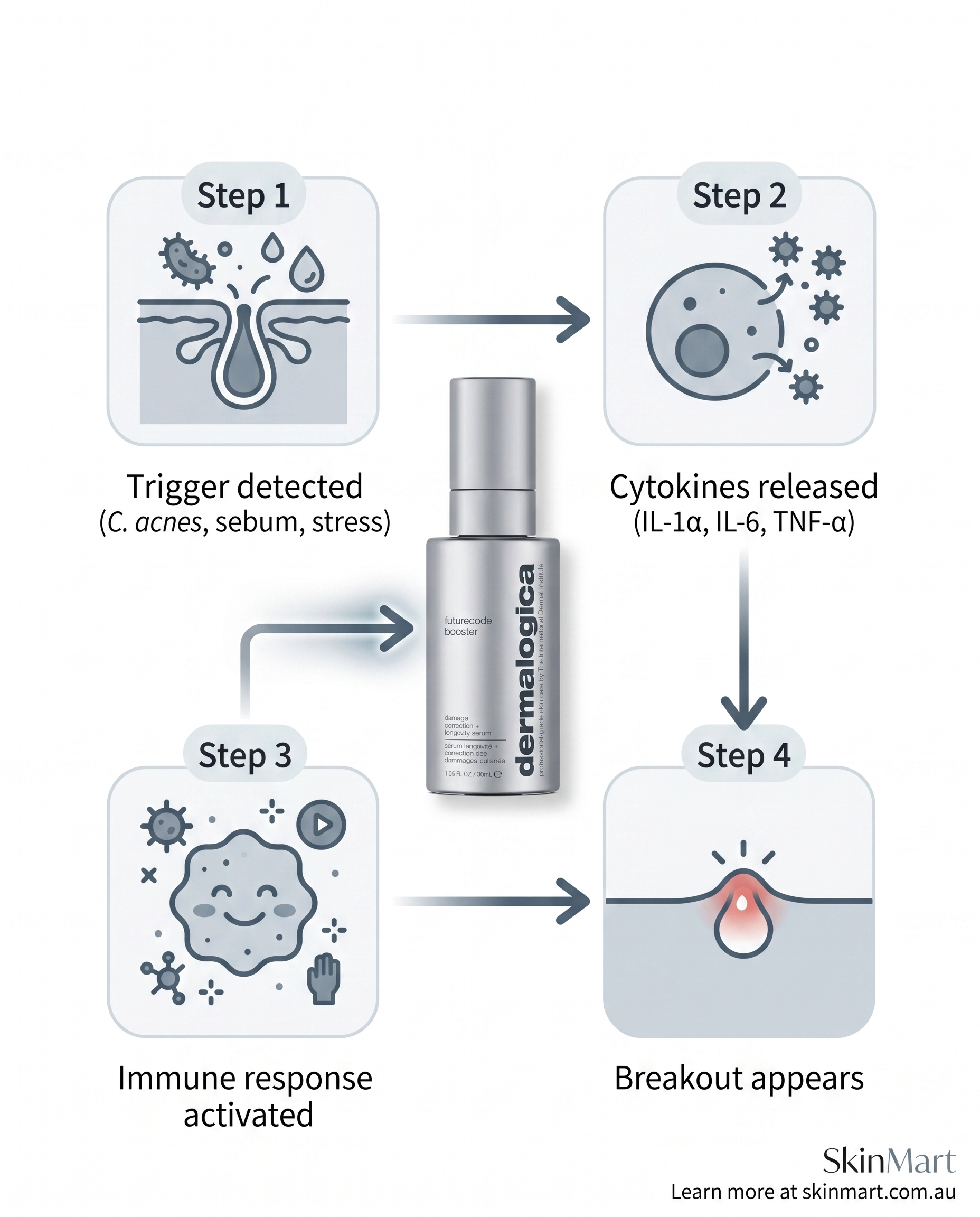
It starts when your skin's immune system detects a threat. This could be C. acnes bacteria, excess sebum, a clogged follicle, or even environmental stress. Your skin responds by releasing causing swelling cytokines, chemical signals including IL-1α, IL-6, TNF-α, and IL-8. These cytokines tell your immune cells to flood the area. The result is the redness, swelling, and pain you recognise as a breakout.
The problem is that this causing swelling response can become self-sustaining. One breakout triggers cytokine release. Cytokines damage the follicle wall.
That damage triggers more cytokines. And the cycle continues, which is why acne-prone skin often feels like it never fully settles, even between visible breakouts. Understanding what drives this cycle is the first step to breaking it.
Why Does NAD+ Matter for Acne-Prone Skin?
NAD+ is a coenzyme found in every cell in your body. Think of it as a cellular fuel source. Your skin cells use NAD+ to produce energy, repair DNA damage, and, critically, regulate the causing swelling signals that drive acne.
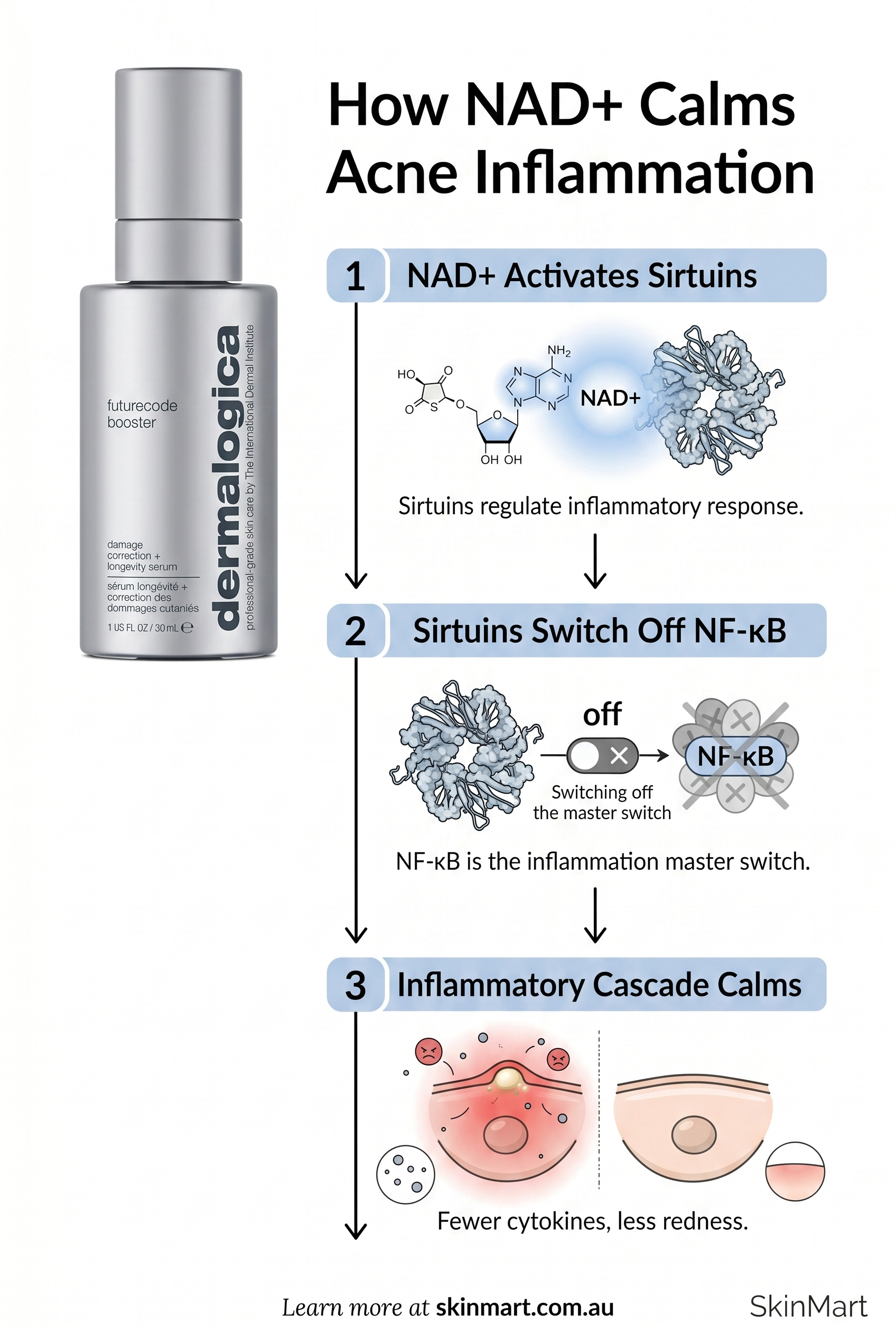
One of NAD+'s most important roles is activating a family of proteins called sirtuins. Sirtuins act like volume controls for swelling. When they are active, they help switch off the NF-κB pathway, the master switch that turns on your skin's causing swelling response.
When NAD+ levels are low, sirtuin activity drops. The NF-κB switch stays on for longer. And your skin produces more causing swelling cytokines than it needs to.
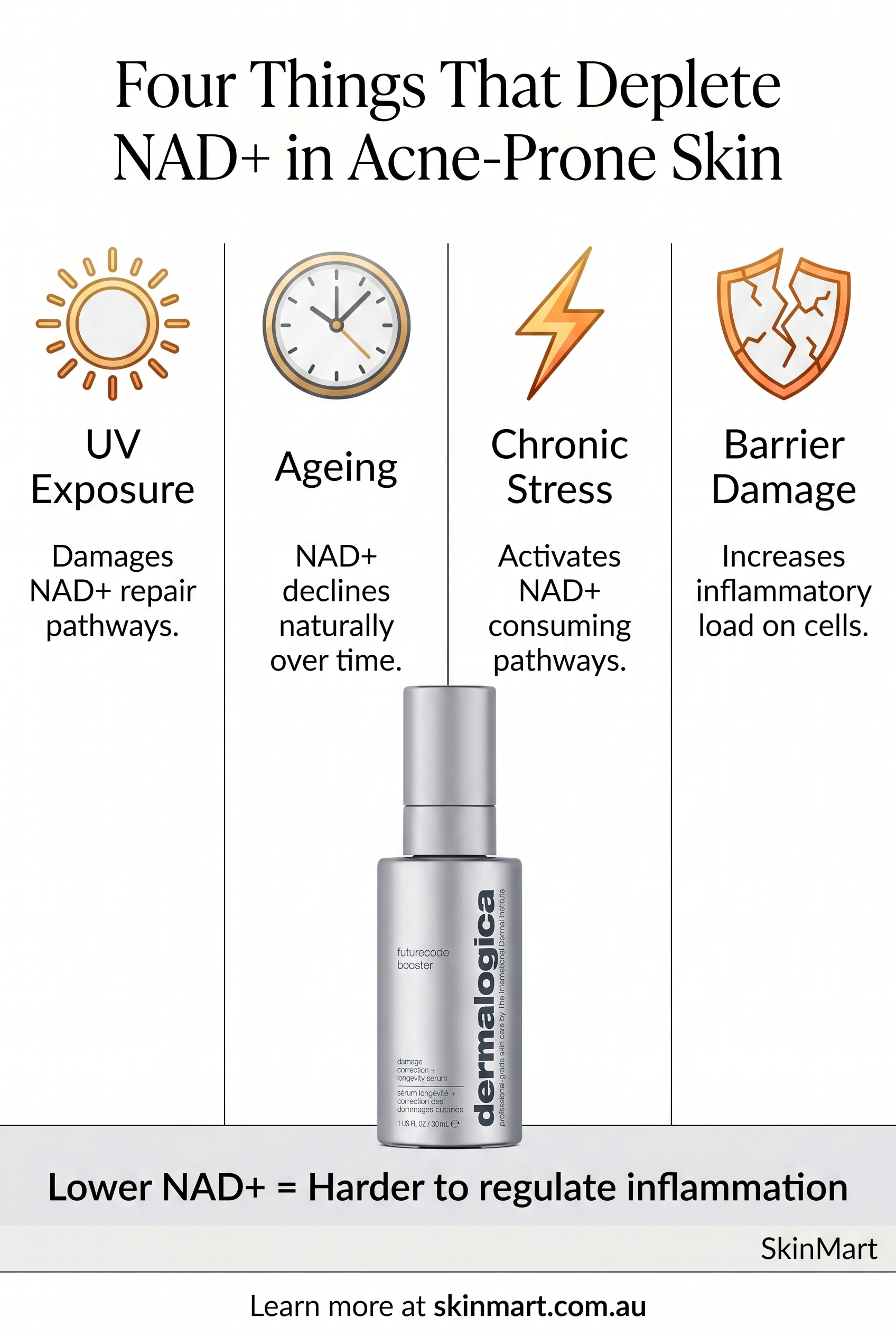
Research shows that NAD+ levels decline with age, UV exposure, and chronic stress, all factors that also worsen acne. A 2013 study published in Cell (Gomes et al.) showed that NAD+ depletion leads to impaired cellular repair and increased causing swelling signalling. For acne-prone skin, this means that low NAD+ is not just a background issue. It is actively making the causing swelling cascade harder to switch off. You can also explore how stress affects your skin's causing swelling response in more depth.
Key Takeaways
- Acne is not just a surface problem.
- It starts with an causing swelling cascade inside your skin cells.
- When NAD+ levels fall, your cells lose the energy they need to regulate swelling.
- This allows cytokines, the chemical signals that drive redness and breakouts, to go unchecked.
- Restoring NAD+ helps your skin manage swelling at the cellular level.
How Does NAD+ Decline Make Breakouts Worse?
When your cells run low on NAD+, several things happen at once. Your skin's repair systems slow down. Damaged cells take longer to clear. Sebum production can become harder to regulate. And your skin's barrier, the outer layer that keeps irritants out and moisture in, becomes weaker and more reactive.
A weakened barrier is a major problem for acne-prone skin. When your barrier is compromised, irritants and bacteria reach more easily. Your immune system responds with more swelling. And that swelling makes the barrier weaker still. It is a cycle that many people with persistent acne know well, even if they do not know the cellular reason behind it.
Low NAD+ also impairs PARP activity (poly ADP-ribose polymerase), a repair enzyme that helps fix DNA damage caused by UV exposure and oxidative stress. When PARP cannot function well, damaged skin cells linger longer. They release more distress signals.
And those signals feed back into the causing swelling cascade. This is why acne-prone skin that also gets a lot of sun exposure can be especially hard to manage, the UV damage is adding fuel to an already active fire. Lifestyle factors like diet can also affect this cycle in ways that are worth understanding.
What Does NAD+ Restoration Actually Do for Breakouts?
Restoring NAD+ does not treat acne the way a targeted active like salicylic acid or benzoyl peroxide does. It works at a deeper level, supporting the cellular systems that regulate how your skin responds to swelling in the first place.
When NAD+ levels are supported, sirtuin activity improves. The NF-κB causing swelling pathway becomes easier for your skin to regulate. Cytokine production becomes more controlled. Your skin's barrier repair systems work more efficiently. And your cells have more energy to clear damage and maintain healthy function.
Think of it this way. Your acne treatments are working on the surface of the problem. NAD+ restoration is working on the cellular foundation underneath.
Both matter. And for many people with persistent, inflamed breakouts, the missing piece is not a stronger active, it is better cellular support for the skin that active is trying to treat. This is especially relevant if you have noticed that your routine works for a while, then seems to stop delivering the same results.

Featured: FutureCode Booster
Advanced booster that helps extend the longevity of healthy-looking skin by supporting natural skin repair and reducing visible signs of DNA-relate...
Shop NowHow Does FutureCode Booster Support NAD+ Levels in Acne-Prone Skin?
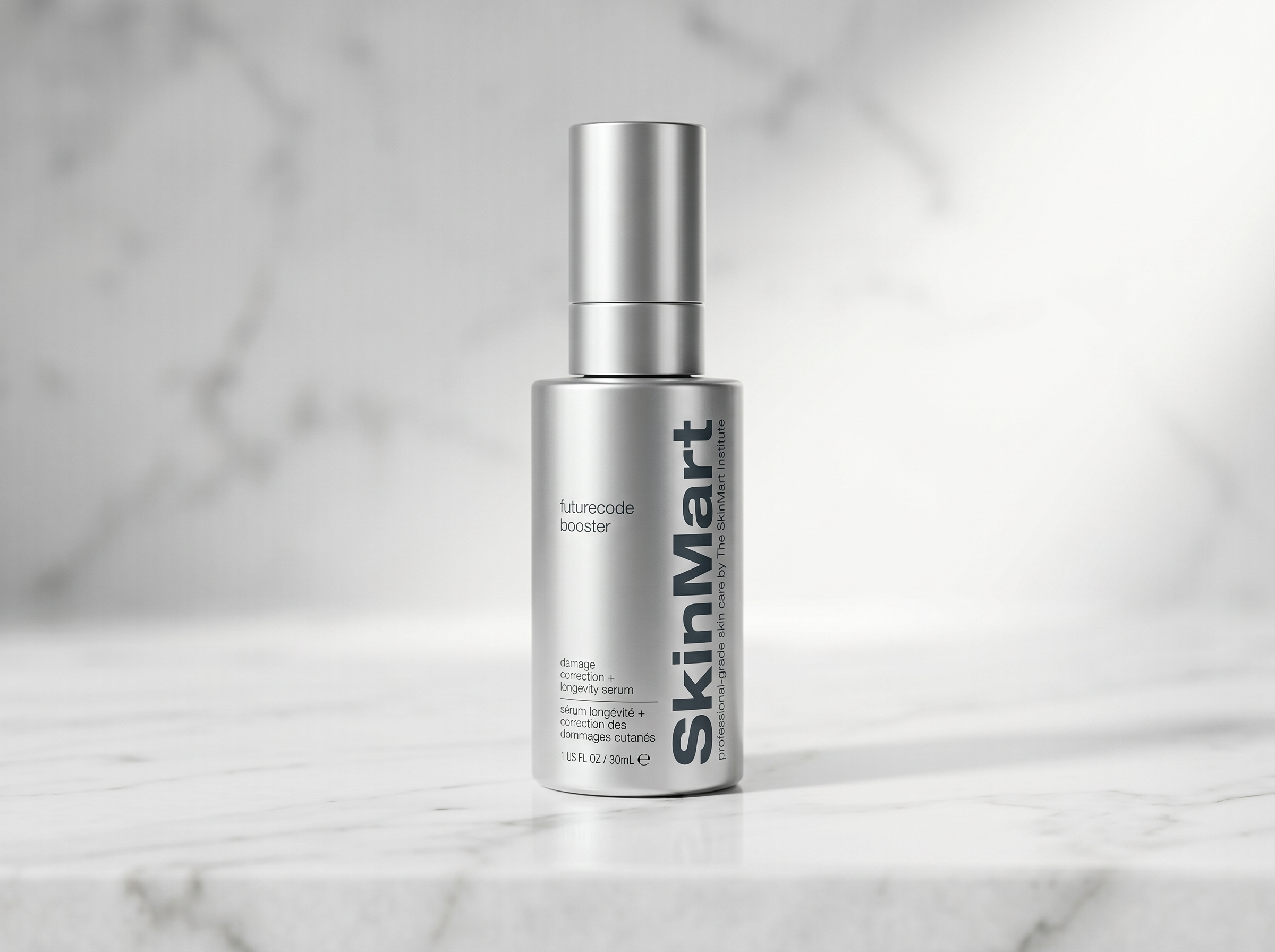
FutureCode Booster by Dermalogica is formulated to support your skin's natural repair and cellular resilience. It contains Teprenone, a compound shown to support cellular longevity and NAD+ related repair pathways. It also contains Niacinamide, a form of vitamin B3 that serves as a precursor to NAD+ in the skin, helping to restore cellular energy reserves.
For acne-prone skin, niacinamide brings additional benefits. At effective amounts, it helps reduce causing swelling cytokines including IL-1α and IL-8, two of the key drivers of the acne causing swelling cascade. It also helps regulate sebum production and supports the skin barrier. The formula includes Helianthus Annuus (Sunflower) Sprout Extract, which provides protective support to reduce oxidative stress. And Acetyl Zingerone, which has anti-causing swelling properties that help calm reactive skin.
What makes FutureCode Booster especially useful for acne-prone skin is its texture. NAD+ supporting ingredients are often delivered in heavy creams, not ideal for skin that is already prone to congestion. FutureCode Booster is a serum, which means it absorbs quickly and layers cleanly under your existing treatments.
It is designed to work alongside your routine, not replace it. If you are already using actives for acne, this is the kind of foundational support that could help those actives perform more consistently. Learn more about how cellular-level ingredients can complement your acne routine.
How Should You Add NAD+ Support to an Acne Routine?
The key is to think of NAD+ restoration as a foundation layer, not a standalone treatment. Your acne routine still needs its core elements: a gentle, pH-balanced cleanser, targeted actives appropriate for your skin, and daily SPF 50+ broad-spectrum sunscreen. In Australia's UV environment, with an index regularly reaching 11 to 14 in summer, sun protection is not optional. UV exposure depletes NAD+ and triggers the same causing swelling pathways that drive breakouts.
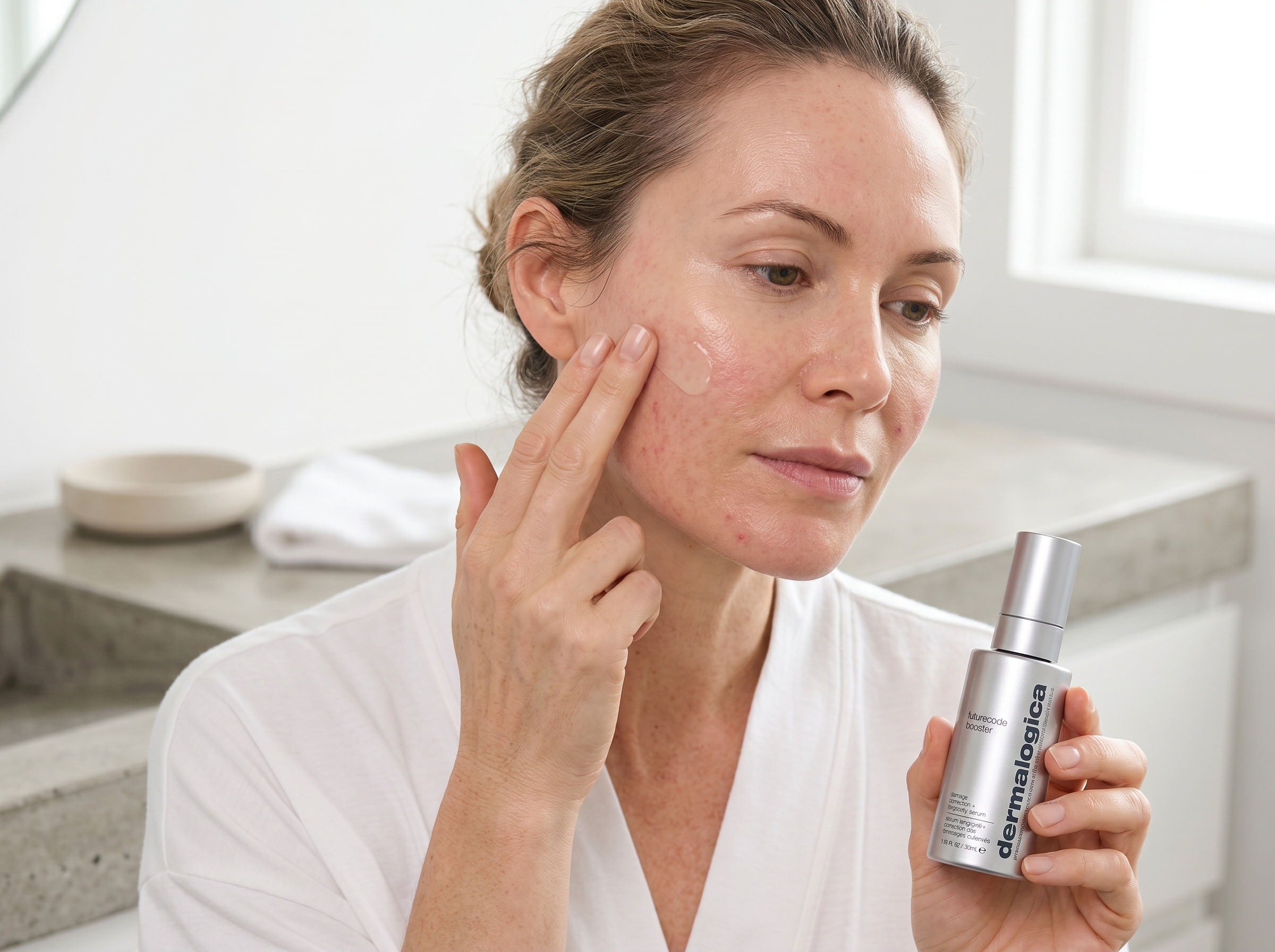
Apply FutureCode Booster after cleansing and before heavier serums or moisturisers. It absorbs quickly, so it will not interfere with the actives you apply on top. Use it consistently, cellular restoration is a gradual process. You are not looking for an overnight result. You are building a more resilient cellular environment over weeks and months.
If you are new to layering serums and want to make sure you are applying your products in the right order, this guide on product order is a useful reference. Getting the sequence right means every product in your routine has the best chance of working properly.
Acne is more than a surface concern. The breakouts you see are the end result of an causing swelling cascade that starts inside your cells. And one of the key regulators of that cascade is NAD+. When NAD+ levels are low, your skin loses its ability to control swelling efficiently.
Cytokines fire more easily. The barrier weakens. And even good acne treatments have less cellular support to work with.
Restoring NAD+ does not change what your treatments do. It changes the environment they are working in. For skin that keeps breaking out despite a consistent routine, that cellular foundation could be exactly what is missing. Shop FutureCode Booster and explore how cellular restoration can support your skin from the inside out.


