
You have tried the salicylic acid. You have used the niacinamide. You have been consistent.
But your skin still flares, still reddens, still breaks out in the same spots. If that sounds familiar, here is something worth knowing: acne does not start at the surface. It starts deep inside your skin cells, long before a blemish appears.
The real driver is swelling. just, it is an causing swelling cascade, a chain reaction inside your skin that, once triggered, is very hard to stop. And one of the key reasons that cascade keeps firing may be something most acne advice never mentions: declining NAD+ levels. This article looks at what that means, why it matters for acne-prone skin. And how restoring NAD+ could help your skin do what it is already trying to do.
What Is the causing swelling Cascade Behind Acne?
Most people think of acne as a clogged pore problem. And yes, blocked follicles and Cutibacterium acnes bacteria play a role. But the visible blemish, the redness, the swelling, that is swelling. It is your immune system responding to a perceived threat inside your skin.
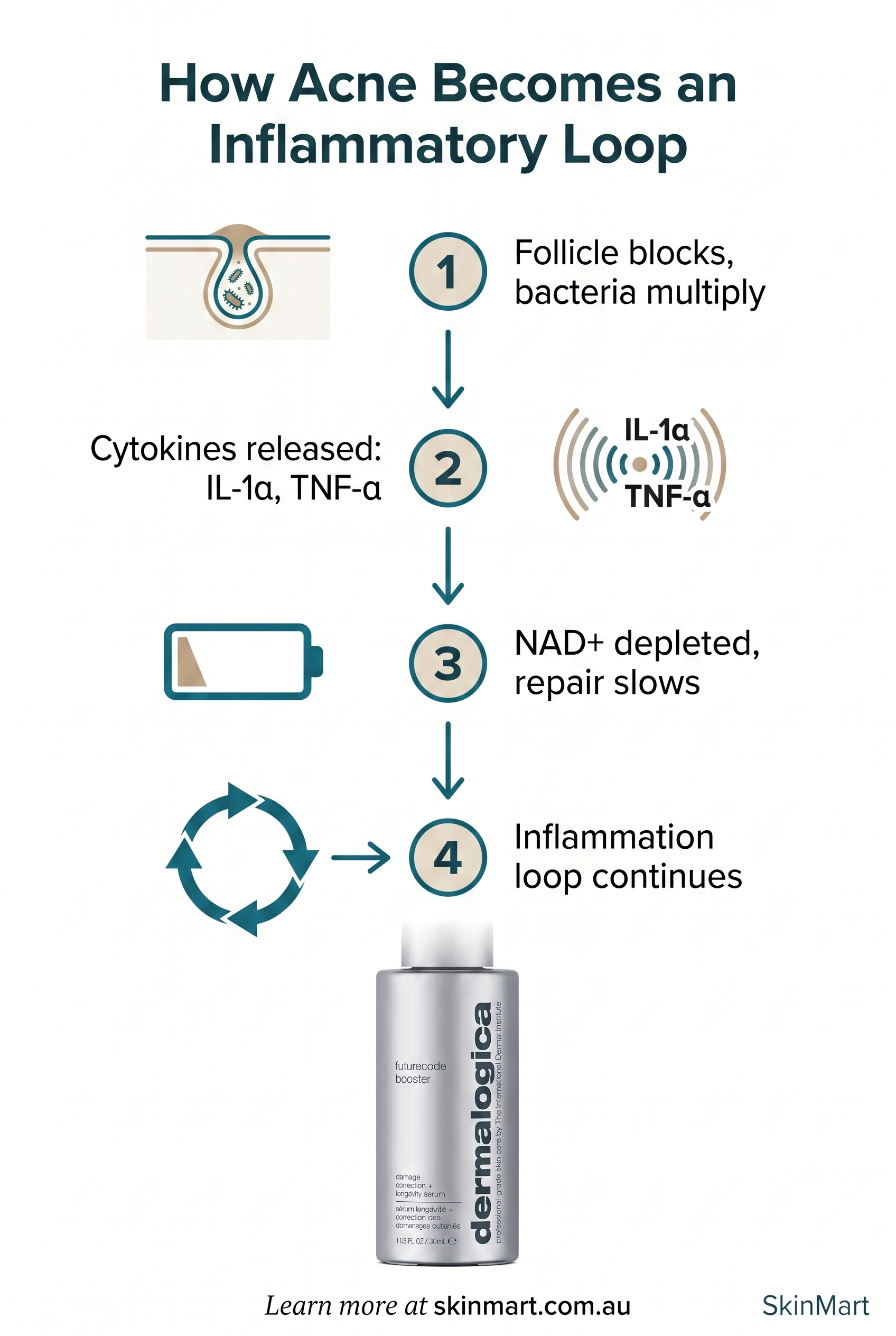
Here is how it unfolds. When a follicle becomes blocked or bacteria multiply inside it, your immune cells release cytokines (chemical messengers that signal the body to send more immune cells). Those signals trigger more swelling, which causes more tissue stress, which releases more cytokines. It is a loop.
And in acne-prone skin, that loop is often overactive. Research shows that causing swelling markers like IL-1α, IL-6, and TNF-α are elevated in acne-affected skin, even in areas that look clear. Your skin is in a low-grade causing swelling state much of the time.
This is why treating only the surface often falls short. You may clear one blemish, but the underlying causing swelling environment is still primed to create the next one. Understanding what your skin actually needs during a breakout starts with understanding this deeper process.
What Is NAD+ and Why Does It Matter for Acne?
NAD+ stands for nicotinamide adenine dinucleotide. It is a coenzyme (a molecule that helps enzymes do their job) found in every living cell. Think of it as your cells' energy currency. Without enough NAD+, your cells cannot carry out the repair and regulation processes they depend on.
NAD+ declines naturally with age, starting in your late twenties. But it also drops in response to oxidative stress and chronic swelling, two things that acne-prone skin deals with constantly. When NAD+ falls, your skin cells become less efficient at managing the very causing swelling signals driving your breakouts.
Key enzymes like sirtuins (proteins that regulate cellular stress responses) and PARP (which helps repair DNA damage from swelling) both need NAD+ to function. When NAD+ is low, these systems slow down. swelling becomes harder to control. Cellular repair stalls.
This creates a frustrating cycle. swelling depletes NAD+. Low NAD+ makes it harder to manage swelling. And so the cascade keeps going, even when you are doing everything else right. Stress also depletes NAD+ and worsens swelling, which is one reason many people find their skin flares during high-stress periods.
Key Takeaways
- Acne is not just a surface problem.
- It begins as an causing swelling cascade inside your skin cells.
- When NAD+ levels drop, your cells lose the energy they need to control swelling.
- This allows cytokines (chemical messengers that trigger redness and swelling) to build up unchecked.
- Restoring NAD+ helps your skin manage this cascade more well.
How Does NAD+ Restoration Help Calm Acne swelling?
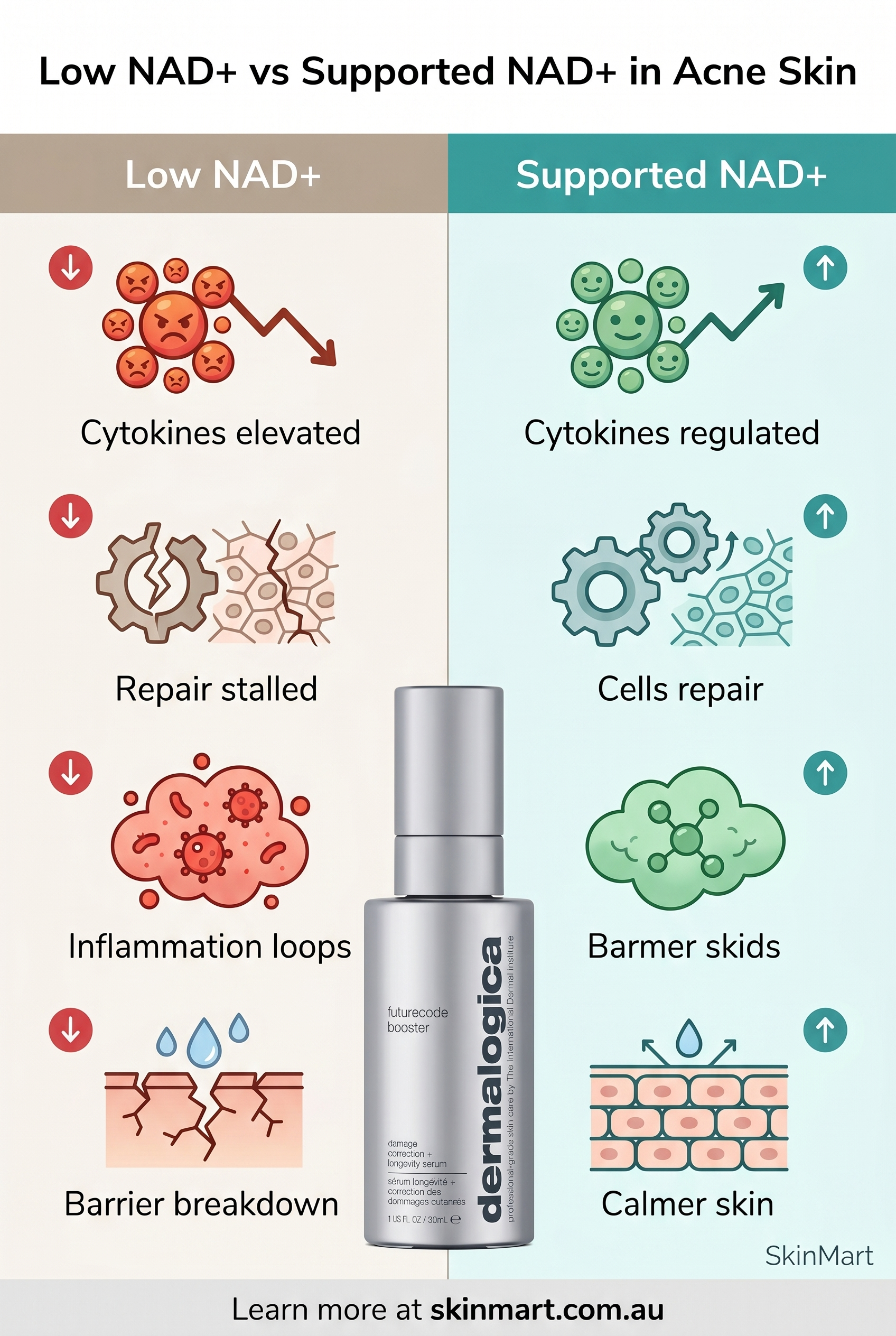
Restoring NAD+ does not directly kill bacteria or unclog pores. That is not its role. Its role is to give your skin cells the energy and regulatory capacity to manage swelling more well. Think of it as restoring the control room, not fighting the fire itself.
When NAD+ levels are supported, sirtuin activity increases. Sirtuins help regulate the production of pro-causing swelling cytokines, including the IL-1α and TNF-α that drive acne swelling. Higher sirtuin activity means your skin has a better chance of keeping that causing swelling cascade in check before it spirals.
NAD+ also supports mitochondrial function (the part of your cell that produces energy). Skin cells under causing swelling stress burn through energy fast. When mitochondria are working well, cells can repair damage, regulate immune responses, and maintain the skin barrier more well.
There is also a direct link between NAD+ and your skin barrier. A compromised barrier allows more irritants to reach, which triggers more immune responses, which drives more swelling. Supporting cellular energy helps maintain the structural integrity of your skin's outer layer, reducing one of the key triggers for causing swelling flares. Combining cellular support with targeted acne treatment is one of the more effective approaches for skin that stays inflamed despite a consistent routine.
What Does This Mean for Your Existing Acne Routine?
This is important: NAD+ restoration is not a replacement for your acne treatments. It is a foundation beneath them. Salicylic acid still helps clear blocked follicles.
Niacinamide still reduces sebum and calms redness. Azelaic acid still targets bacteria and pigmentation. These all still matter.
What NAD+ restoration adds is cellular readiness. When your skin cells have the energy to regulate swelling, your active ingredients have a better environment to work in. They are not fighting an uphill battle against a system that is already overwhelmed.
Think of it this way: if your skin is like a house with faulty wiring, adding better appliances will not fix the problem. You need the wiring sorted first. NAD+ restoration is the wiring.
For acne-prone skin just, this matters because the causing swelling environment is often the reason treatments plateau. You see early results, then progress slows. The surface concern is being addressed, but the underlying cellular stress is not. Supporting NAD+ could be what shifts that plateau. Learn more about building a routine that works at every level, from surface actives to cellular support.

Featured: FutureCode Booster
Advanced booster that helps extend the longevity of healthy-looking skin by supporting natural skin repair and reducing visible signs of DNA-relate...
Shop NowFutureCode Booster: NAD+ Support in a Lightweight Serum
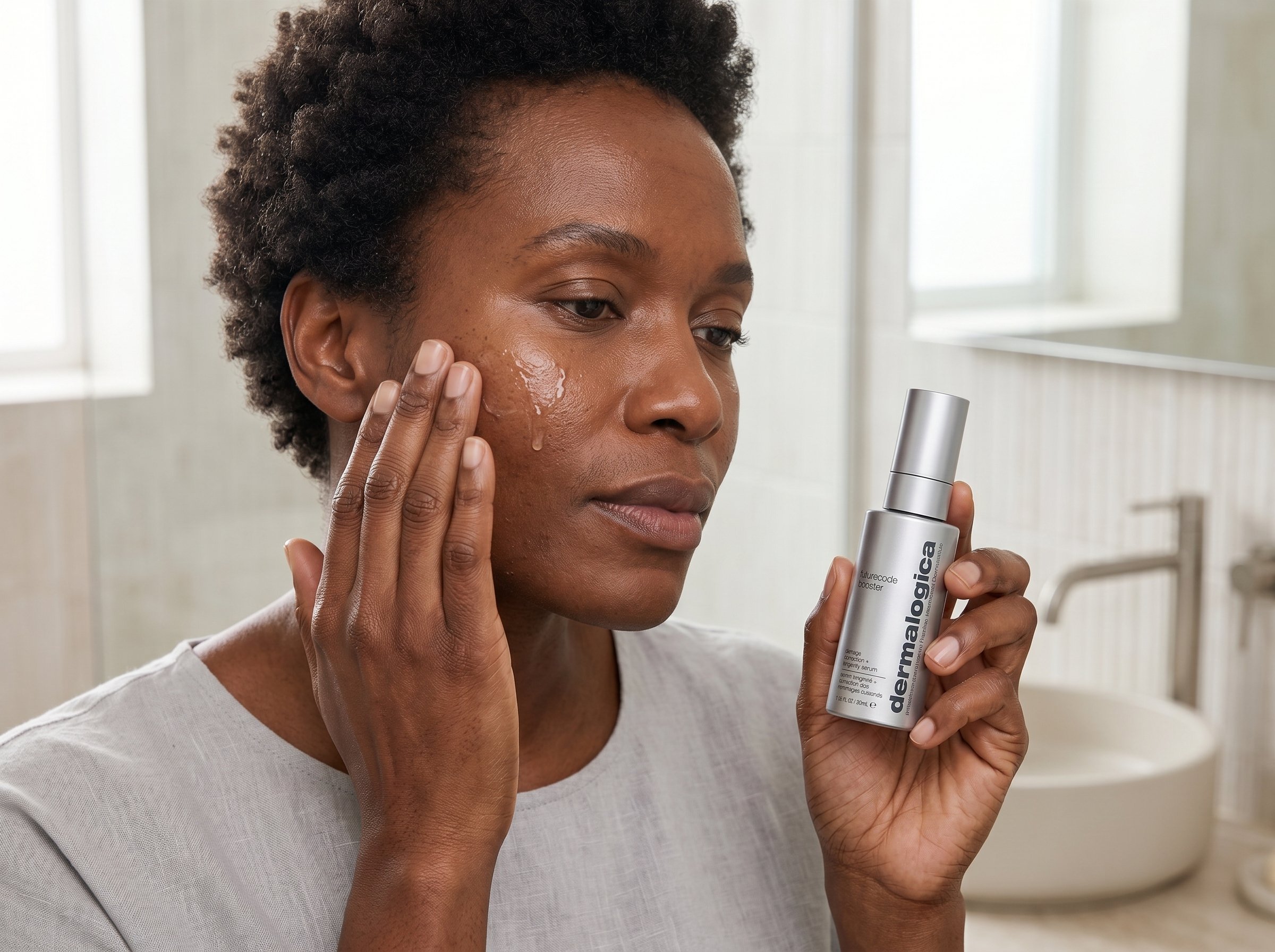
Most NAD+-supporting formulas come in heavy creams. That is a problem for acne-prone skin, which often reacts poorly to rich, occlusive textures. The Dermalogica FutureCode Booster delivers cellular support in a lightweight serum format, making it genuinely usable for inflamed or congestion-prone skin.
Its key ingredient is Teprenone, which supports the maintenance of telomeres (the protective caps on your DNA that shorten with cellular stress and age). When telomeres are protected, cells remain more stable and better equipped to manage causing swelling signals. The formula also includes Niacinamide at an active amount, which reduces causing swelling cytokines and supports the skin barrier.
Sunflower Sprout Extract provides protective protection against the oxidative stress that depletes NAD+. Acetyl Zingerone (a stable form of ginger-derived protective) adds further anti-causing swelling support. And Rosehip Oil provides essential fatty acids to support barrier repair without clogging pores.
Together, these ingredients work at the cellular level to support the skin's ability to manage the causing swelling cascade, not just treat the symptoms of it. For acne-prone skin that has hit a wall with surface treatments, this kind of foundational support is often what is missing. Shop the FutureCode Booster now and see how cellular restoration fits into your routine.
What Should You Realistically Expect?
Cellular restoration is not an overnight fix. NAD+ levels do not rebound in days, and the causing swelling cascade does not calm in a week. What you are doing when you support NAD+ is changing the environment your skin cells are working in. That takes time, and the results are cumulative.
Most people using cellular support alongside their existing acne routine notice changes over four to eight weeks. Skin may feel less reactive first. causing swelling flares may become less intense or less frequent. The redness that lingers after a blemish clears may fade faster.
These are signs that the underlying cellular environment is shifting. They are not dramatic before-and-after moments. They are steady, meaningful progress.
If you are also dealing with post-acne marks, understanding how to treat acne markings alongside active swelling will help you build a more complete plan. Addressing the causing swelling cascade and the pigmentation it leaves behind are two different jobs, and both deserve attention.
Acne is not just a surface problem. It is an causing swelling cascade that begins inside your cells, driven by cytokines, oxidative stress. And a cellular environment that has lost its ability to regulate itself. When NAD+ levels drop, that environment becomes even harder to manage. Your treatments work against a system that is already overwhelmed.
Supporting NAD+ does not replace your routine. It restores the foundation beneath it. When your skin cells have the energy to regulate swelling, manage stress. And repair damage, everything else you are doing has a better chance of working the way it should.
If your acne has plateaued despite a consistent routine, the answer might not be a stronger active. It might be deeper cellular support. Learn more about the FutureCode Booster and whether it belongs in your plan.


