
If you've scanned the ingredient list on a serum lately, you've probably spotted vitamin E sitting near vitamin C. This isn't a coincidence. Vitamin E skincare benefits go far beyond simple moisturising. Understanding why this ingredient shows up so often can help you judge whether a serum is well made.
Vitamin E is one of the most researched antioxidants in skin science. But it rarely works alone in a good formulation. Once you understand how it teams up with vitamin C and ferulic acid, you'll start reading ingredient labels very differently.
What Is Vitamin E and Why Does Your Skin Need It?
Vitamin E is a fat-soluble vitamin, meaning it dissolves in oil rather than water. Its scientific name is tocopherol. Your skin makes some vitamin E naturally, mostly through sebum, the oil your skin produces to stay soft and protected.
But your natural vitamin E stores drop with sun exposure, pollution and age. This matters because vitamin E belongs to a group of ingredients called antioxidants. Antioxidants protect your skin cells from free radicals, unstable molecules that damage collagen and leave skin looking dull and tired.
Think of vitamin E as a shield. It absorbs some of the daily damage before it reaches deeper skin layers. On its own, it's a steady, reliable antioxidant. Combined with two other ingredients, like those explored in our complete guide to vitamin C serums in Australia, it becomes something far more effective.
Key Takeaways
- Vitamin E is a fat-soluble antioxidant that protects skin cells from free radical damage caused by sun, pollution and stress.
- On its own, it works well.
- Paired with vitamin C and ferulic acid, research shows it can offer up to four times more photoprotection than no antioxidant at all.
- This is why vitamin E shows up in nearly every professional antioxidant serum.
- It's not just for its own benefits.
How Do Vitamin C, Vitamin E and Ferulic Acid Work Together?
This trio is one of the most studied antioxidant combinations in skin science. A well-known study from Duke University tested this combination. Skin treated with vitamin C, vitamin E and ferulic acid together showed four times more protection against sun damage than untreated skin (Lin et al., 2005). That's double the protection of vitamin C alone.
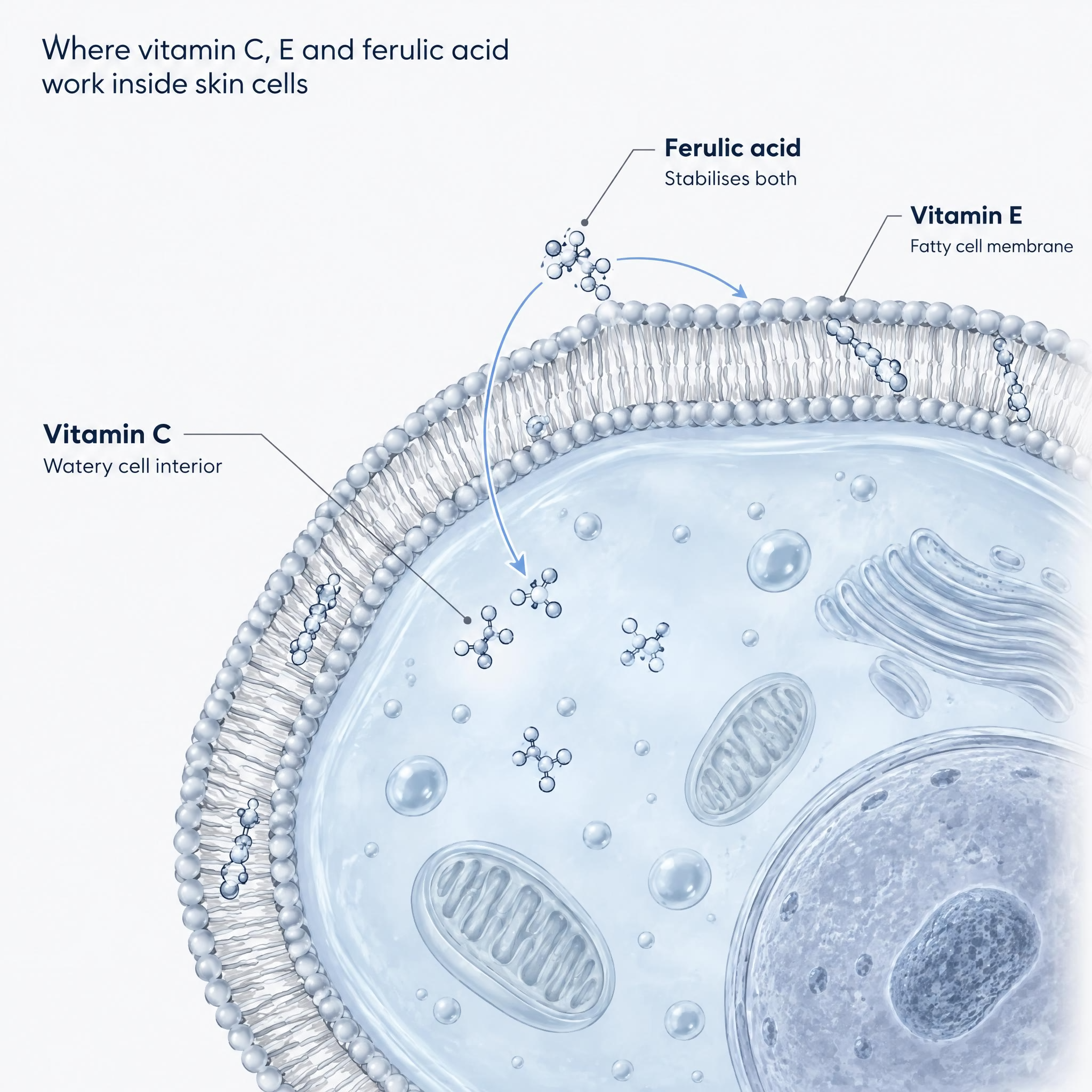
Here's why the combination works so well. Vitamin C is water-soluble, so it protects the watery parts of your skin cells. Vitamin E is fat-soluble, so it protects the fatty parts, like cell membranes. Together, they cover far more ground than either one alone.
Ferulic acid plays a different role. It acts as a stabiliser, helping vitamin C and vitamin E stay active for longer instead of breaking down quickly. For a closer look at this ingredient, see our guide on ferulic acid as an antioxidant booster. If you want to understand vitamin C's role in more depth, our guide on why you need vitamin C in your skincare routine covers this in detail.
Why Does Vitamin E Appear in Almost Every Professional Antioxidant Serum?
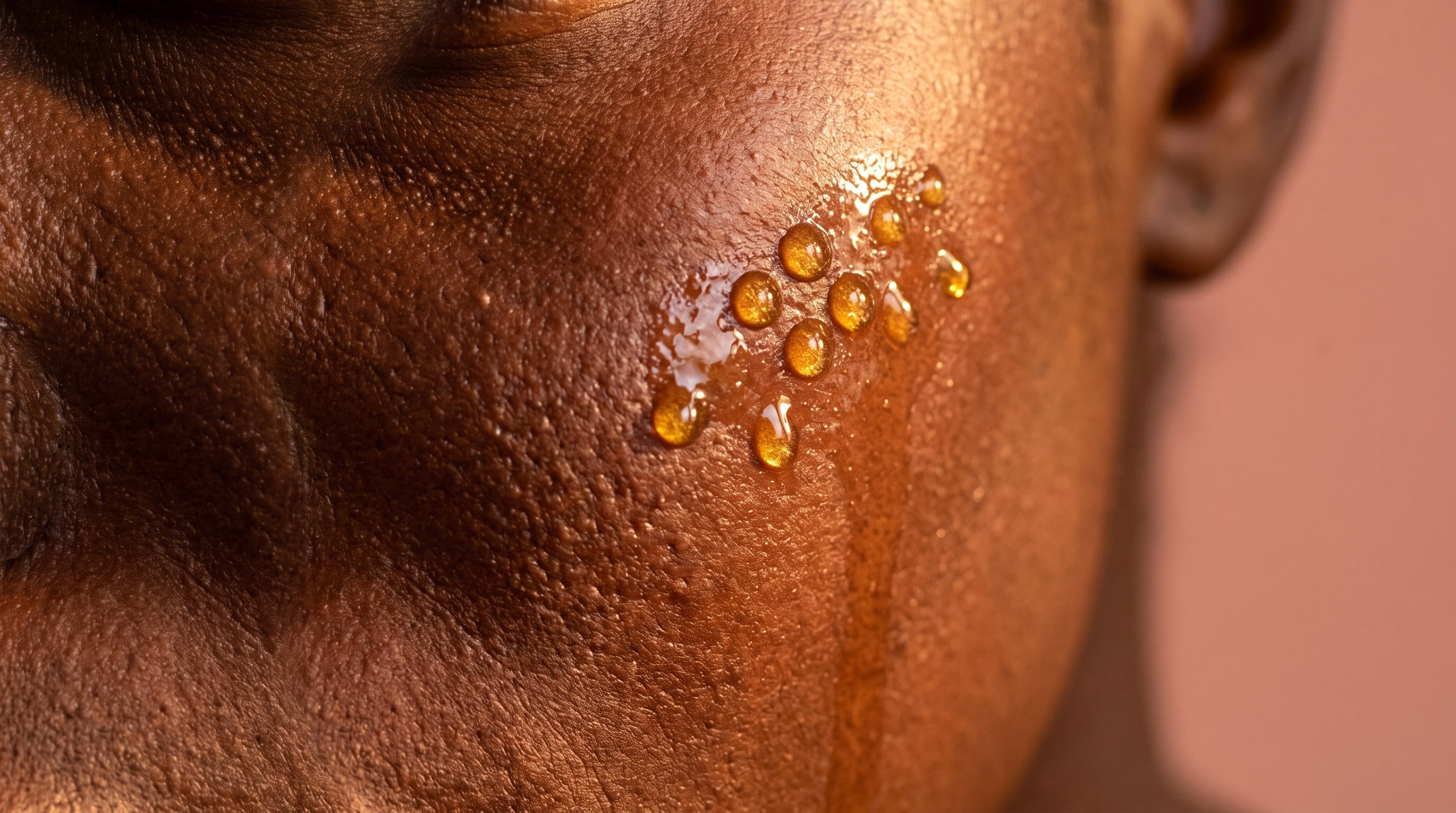
Vitamin E isn't just added for its own antioxidant benefits. It also protects other ingredients in the bottle. Vitamin C, especially the pure form called L-ascorbic acid, breaks down quickly when exposed to air and light. Once it oxidises, it turns a dark orange colour and stops working as well.
Vitamin E slows this breakdown. It helps the whole formulation stay stable and potent for longer, which is why most professional-grade serums include it alongside vitamin C. This isn't just marketing. It's chemistry doing its job behind the scenes.
Vitamin E also supports your skin's barrier (the outer layer that keeps moisture in and irritants out) and gives serums a smoother, more comfortable feel on skin. To understand this protective layer better, our article on ceramides and barrier repair explains why a healthy barrier matters so much. If you're new to layering actives like this, our piece on serums and how to use them is a good place to start.
How Can You Check If a Vitamin E Serum Is Formulated Well?
Not all vitamin E serums are equal. A few simple checks can tell you a lot about formulation quality.
First, check the ingredient list. Vitamin E can appear as tocopherol (the natural form) or tocopheryl acetate (a more stable, synthetic version). Both work, but tocopherol is generally considered more active on skin.
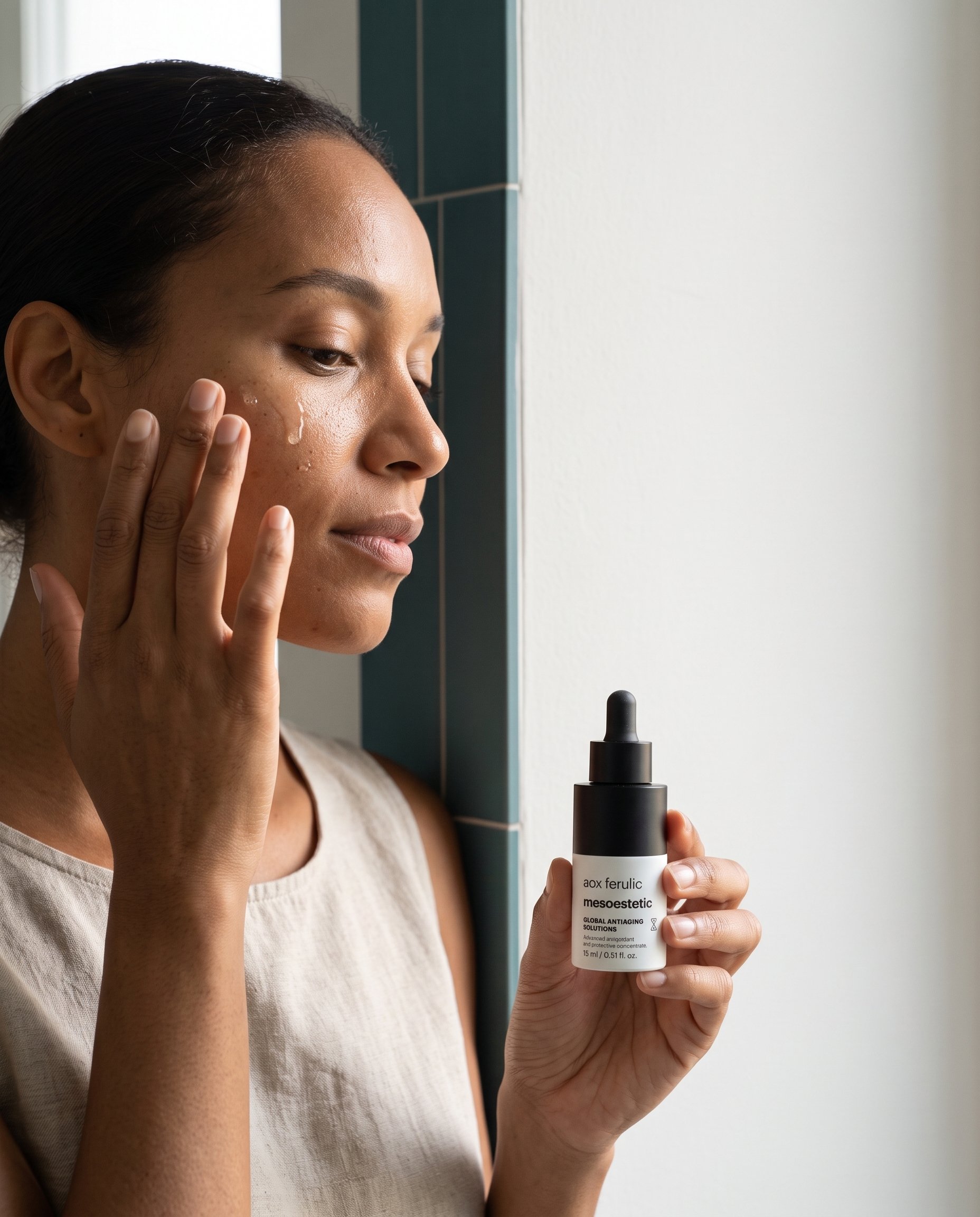
Second, check the packaging. Vitamin C and vitamin E both break down when exposed to light and air. A well-formulated serum comes in an opaque, airtight bottle or pump, not a clear jar you open with your fingers.
Third, check the colour. A fresh vitamin C and E serum should be clear, pale yellow, or very light. If it has turned dark amber or brown, it has likely oxidised. This happens even if vitamin E is listed on the label. Our guide on active ingredients and how to choose them has more tips on reading labels with confidence. You can browse well-formulated options in our serums and boosters collection to see this in practice.
Is Vitamin E Right for Every Skin Type?
Vitamin E suits most skin types, but the form matters. Pure vitamin E oil is thick and rich. It can feel heavy, and on oily or acne-prone skin, it may sit on top and contribute to congestion.
Serums with lighter vitamin E derivatives, often paired with vitamin C, tend to work better for skin that's prone to breakouts. If you have sensitive skin, introduce any new antioxidant serum gradually and patch test first, just as you would with any active ingredient.
Combining actives correctly matters as much as choosing them. Our guide on how to layer your skincare routine walks through the order that gets the best results from ingredients like these.
Vitamin E skincare benefits go well beyond hydration. As a fat-soluble antioxidant, it protects your skin cells from daily damage. Combined with vitamin C and ferulic acid, its protective power multiplies. This is exactly why it shows up in almost every well-made antioxidant serum.
Understanding this synergy gives you a real advantage. Next time you check a serum's label, you'll know what to look for: the right forms of vitamin E, stable packaging, and a colour that tells you the formulation is still fresh. That knowledge puts you in control of every skincare choice you make from here.


