
If you've ever squeezed a blackhead only to watch it come straight back a week later, you already know the frustration of oily, congested skin. Most exfoliants clean the surface but leave your pores untouched. That's where salicylic acid comes in, and it's why this single ingredient has become a staple in Australian skincare routines for anyone dealing with breakouts, blackheads or a shiny T-zone.
Salicylic acid works differently to almost every other acid on your shelf. Understanding why it behaves this way, and how much of it your skin actually needs, is the difference between a routine that clears congestion and one that just dries you out. Let's look at what makes this ingredient worth the hype, and how to choose the right strength for your skin.
What Makes Salicylic Acid Different From Other Exfoliants?
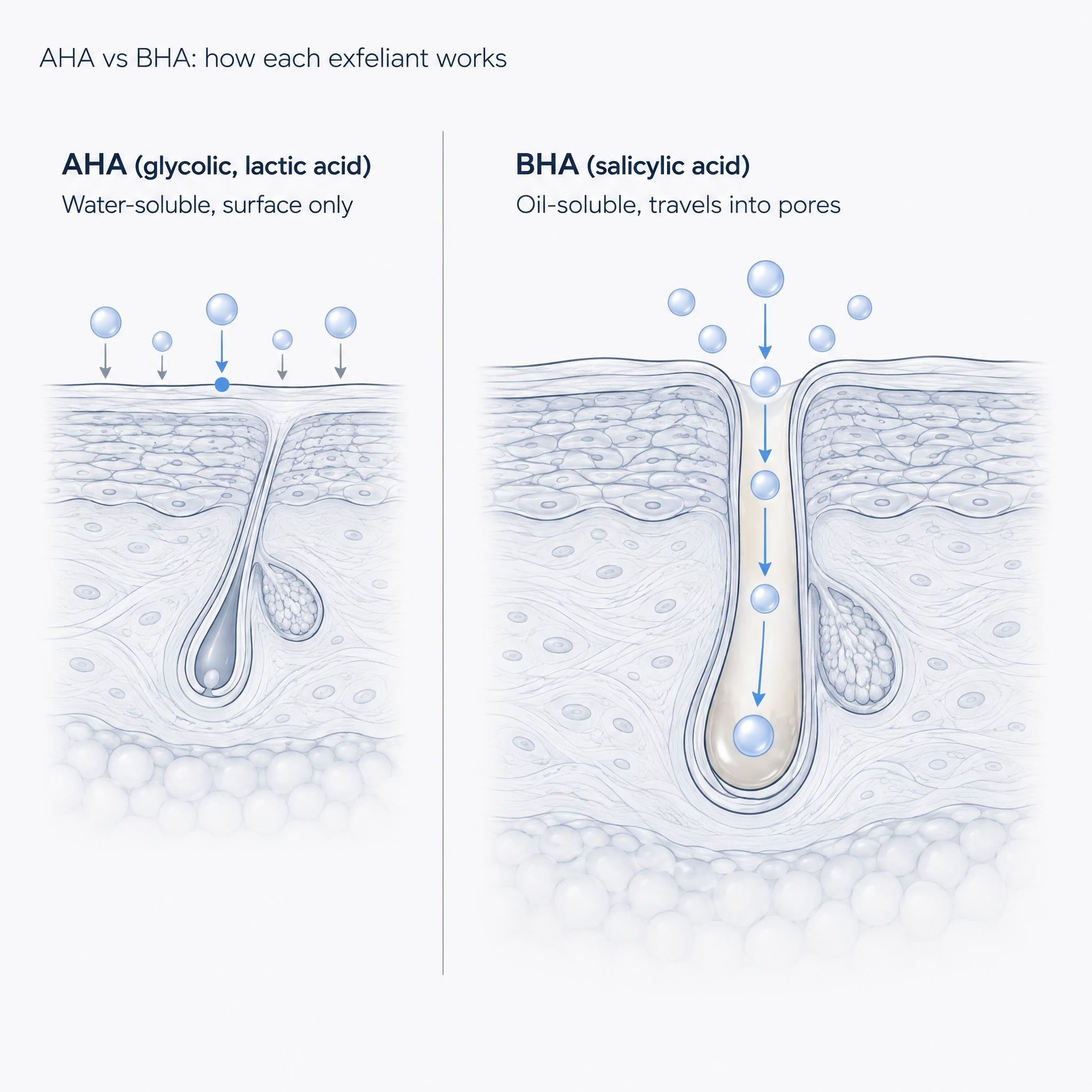
Most chemical exfoliants fall into two camps: water-soluble or oil-soluble. Alpha hydroxy acids (AHAs) like glycolic and lactic acid are water-soluble. They work on the surface of your skin, loosening dead cells to reveal fresher skin underneath. This makes them great for texture and dullness. If you'd like to understand how these acids differ, our guide to AHAs like glycolic, lactic and mandelic acid breaks down which suits which skin type.
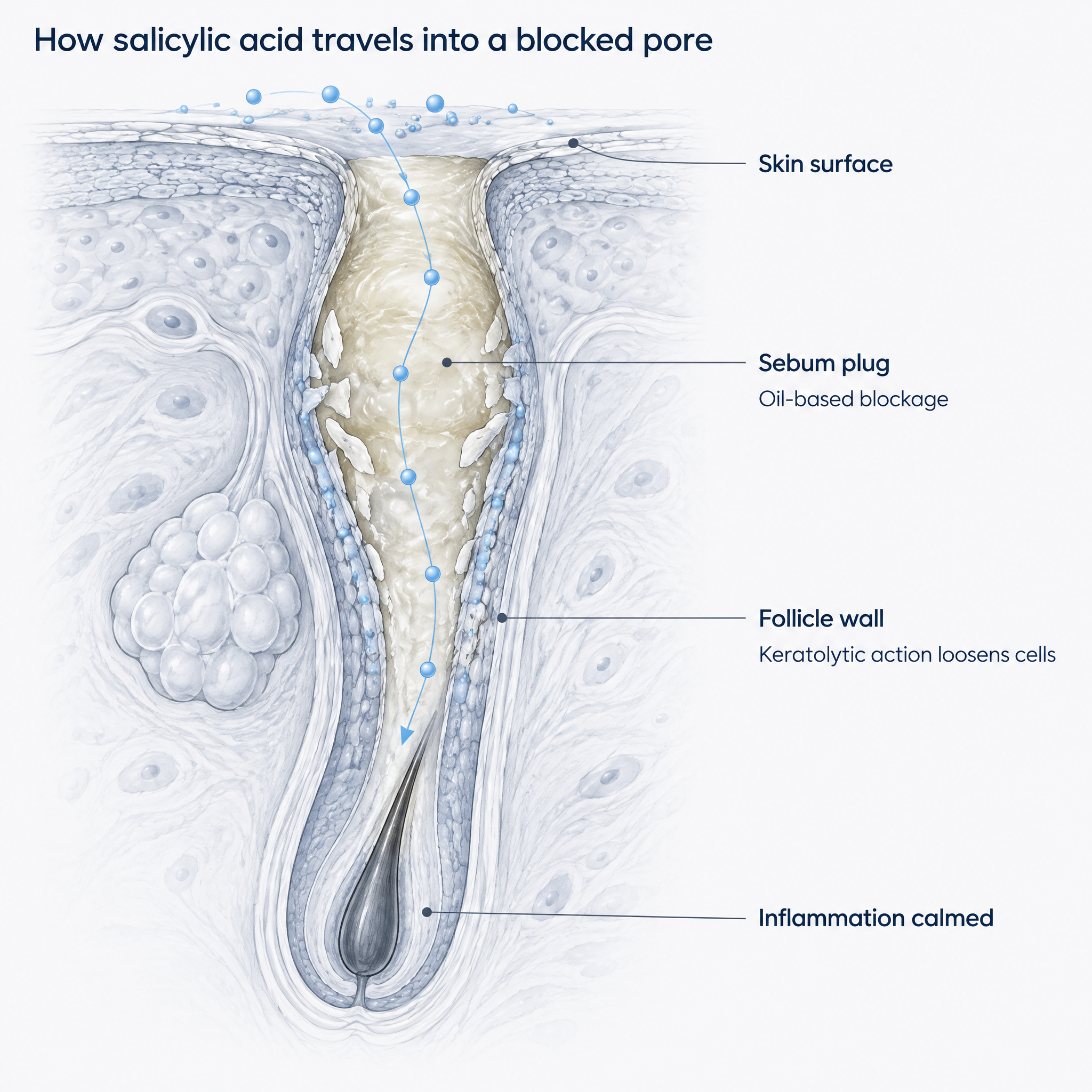
Salicylic acid is different. It's a beta hydroxy acid (BHA), and BHAs are oil-soluble. This one property changes everything about how the ingredient behaves on your skin. Because oil dissolves oil, salicylic acid can travel through the sebum sitting inside your pores, rather than staying stuck on top of it.
This is why salicylic acid is the go-to choice for oily and congestion-prone skin, while AHAs tend to suit dry or dull skin better. If you want a deeper breakdown of AHAs specifically, our guide on choosing the best exfoliation method for your skin walks through both categories side by side. For a broader look at common misconceptions, our therapists bust the most common skincare acid myths.
Key Takeaways
- Salicylic acid is a beta hydroxy acid (BHA) that dissolves in oil, not water.
- This lets it travel through sebum and clean out congested pores from the inside, unlike AHAs which only work on the skin's surface.
- In Australia, over-the-counter products can contain up to 2% salicylic acid, while professional peels use higher strengths.
- Most people see smoother texture within 2 to 4 weeks and reduced blackheads by week 8 to 12.
- The right percentage depends on your skin type and current tolerance,...
How Does Salicylic Acid Actually Get Into Your Pores?
Here's the part most people never get explained to them. Your pores are filled with sebum, a natural oil your skin produces. Water-soluble acids simply can't move through this oil layer. Salicylic acid can, because its molecular structure is lipophilic, meaning it's attracted to fat and oil rather than water.
Research shows salicylic acid actually builds up inside hair follicles and pores at levels far higher than on the skin's surface. Once inside, it gets to work in a few ways. It loosens the bonds between dead skin cells (this is called keratolytic action), breaks down the oily plug causing the blockage, and calms inflammation at the same time.
This combination is exactly why salicylic acid remains one of the most studied ingredients for treating blackheads and breakouts. If you're curious about exactly what happens beneath the surface, we've covered it in more depth in what does salicylic acid do for the skin. And if blackheads are your main concern, why we get blackheads in the first place explains the full picture.
What Percentage of Salicylic Acid Should You Use in Australia?
In Australia, the Therapeutic Goods Administration (TGA) allows up to 2% salicylic acid in leave-on products you can buy without a prescription. Anything higher, like the 20 to 30% peels used for stubborn congestion, needs to be applied by a qualified professional.
More isn't always better here. If you're new to BHAs or have sensitive skin, starting at 0.5% to 1% gives your skin time to adjust, or you may prefer to begin with gentle PHA exfoliants suited to sensitive and rosacea-prone skin before progressing to salicylic acid. If you've used acids before and your skin is oilier, 2% is usually well tolerated and delivers faster results.
The formula's pH matters just as much as the percentage. Salicylic acid works best at a pH between 3 and 4. A product sitting above pH 5 might list 2% on the label but deliver very little actual benefit, because less of the acid is available in its active form. This is one reason two products with the same percentage can feel completely different on your skin.
Not sure where your skin sits on the sensitivity scale? A professional 20 to 30% peel might be worth considering once you've built tolerance at home. You can read more in the benefits of an at-home chemical peel.
Featured: Dermalogica Active Clearing Clear + Brighten Kit
Salicylic acid at 2% penetrates into the pore lining to dissolve the sebum and dead cell buildup that causes blockages — working where surface clea...
Shop NowWhich Salicylic Acid Products Are Worth Trying?
With so many BHA products on the market, the right one depends on your skin type, sensitivity and current routine, not just the percentage on the front of the bottle. We stock a curated range across several professional brands rather than pushing one label over another.
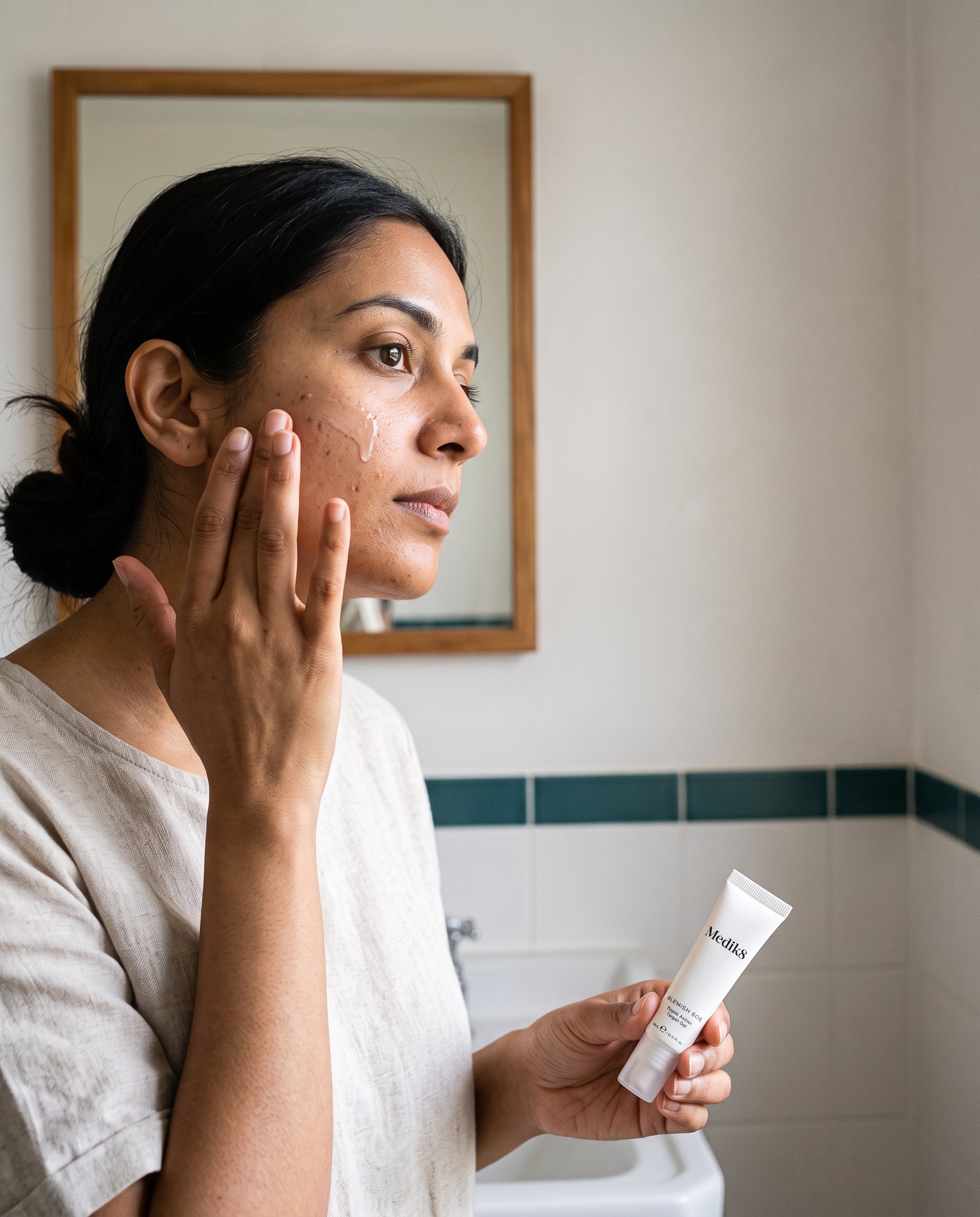
Medik8's salicylic acid treatments suit those wanting a targeted approach to occasional congestion, especially around the T-zone. Cosmedix offers salicylic acid within formulas designed to support barrier health at the same time, which helps if you've had irritation with acids before. Understanding why this matters is worth a read too, since your skin barrier and ceramide levels play a big role in how well you tolerate any acid.
For more established congestion, mesoestetic's Blemiderm range was built specifically for oily, blemish-prone skin and pairs salicylic acid with complementary ingredients for a more complete approach. ASAP's clarifying formulas are a solid option if you want daily, gentle maintenance rather than an intensive treatment.
Pairing your BHA with the right cleanser also matters, since a harsh cleanser can undo the barrier support your serum is trying to provide. Browse our range of cleansers to find one that won't fight against your acid routine.
How Do You Add Salicylic Acid to Your Routine Without Irritation?
The biggest mistake we see is going from zero acids to daily 2% salicylic acid overnight. Your skin needs time to adjust. Start with two to three applications a week for the first two weeks, then build up to daily use if your skin tolerates it well.
Expect a settling-in period. Some people notice small breakouts in weeks two to four as the BHA clears out congestion that was already forming beneath the surface. This is often called purging, and it's different from an allergic reaction, which usually shows up as redness or breakouts in areas you don't normally get them.
Apply salicylic acid to clean, dry skin, and avoid layering it with other strong actives like retinol until your skin has built tolerance. Adding a niacinamide serum alongside can help support your barrier while you build tolerance. If you're deciding which vitamin A derivative to introduce once your skin is ready, our comparison of retinol, retinal and tretinoin explains the differences. Morning or evening both work, but daily SPF becomes non-negotiable regardless of when you apply it, since fresh skin cells are more exposed to UV. For a wider look at how actives fit together, our guide on whether active ingredients are right for you is a useful next read.

Featured: Aspect Try Me Kit
Vitamin C at 20% concentration neutralises free radicals and supports collagen synthesis, visibly brightening uneven skin tone with consistent use.
Shop NowSalicylic acid earns its place in Australian skincare routines because of one simple property: it dissolves in oil. That single difference lets it travel into your pores and address congestion at the source, rather than just smoothing the surface. Getting the percentage, formulation pH and introduction pace right matters just as much as choosing the ingredient itself.
Every skin type responds to BHAs a little differently, which is exactly why a one-size-fits-all percentage rarely works. If you're not sure where to start, or which of our Medik8, Cosmedix, mesoestetic or ASAP options suits your skin, our Skin Blueprint assessment looks at your congestion pattern and sensitivity before recommending anything. Learn more about building a routine that's actually right for your skin.


