
Peptide serums get a lot of attention, and honestly, some of it is deserved. But peptide serum benefits aren't one single thing. Peptides are short chains of amino acids that act like tiny messengers, sending specific instructions to your skin cells. The catch is that different peptides send completely different messages.
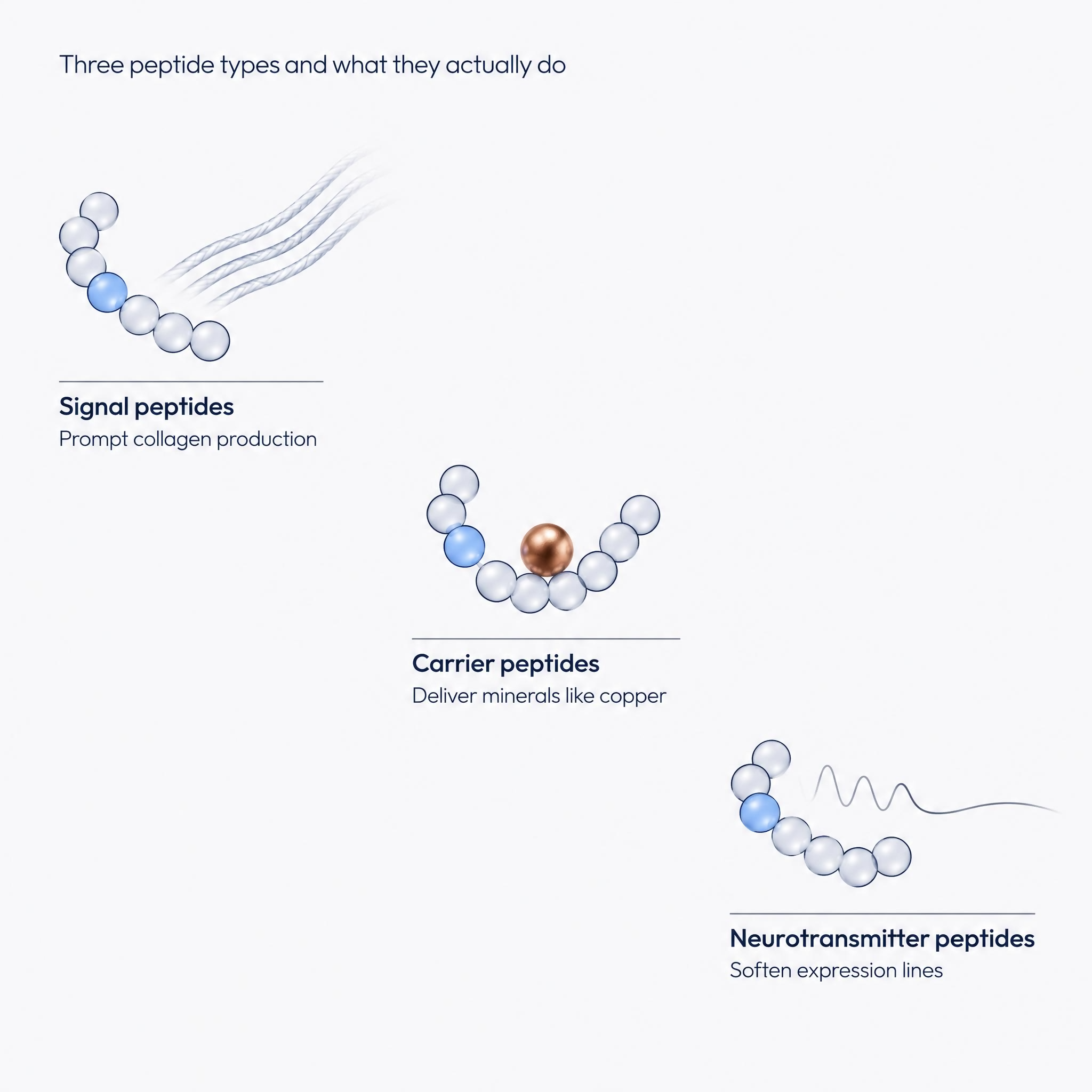
Some peptides tell your skin to make more collagen. Some deliver minerals that support repair. Others target the small muscle movements behind expression lines. In this guide, we'll look at three main peptide types, signal, carrier and neurotransmitter, and explain what the science actually says about each one. No hype, just an honest look at what these ingredients can and can't do.
What Are Peptides and Why Do They Matter for Your Skin?
Peptides are small fragments of protein. Your skin already makes them naturally, as part of building collagen and elastin, the fibres that keep skin firm and bouncy. When collagen breaks down over time, it leaves behind peptide fragments. Your skin reads these fragments as a signal that repair is needed.
Cosmetic peptides work by copying this natural signal. A well-formulated peptide serum delivers these messenger molecules to your skin, prompting a specific response. This is different from ingredients like hyaluronic acid, which mainly hold water in the skin rather than instruct cells to do something.
The important thing to understand early is this: peptides are not one ingredient. They're a whole family, and each member has a different job. If you want a deeper look at how serums fit together in a routine, our article on serums and how to layer them is a good place to start.
What Do Signal Peptides Actually Do?
Signal peptides are the most studied peptide type, and for good reason. They mimic the small protein fragments released when collagen naturally breaks down. Your skin sees this fragment and responds by ramping up collagen production, essentially tricking your fibroblasts (the cells that build collagen) into thinking repair work is needed.

Palmitoyl pentapeptide-4 and palmitoyl tripeptide-1 are two common examples. Clinical studies on these signal peptides have shown measurable improvements in fine lines and skin firmness, usually visible after 8 to 12 weeks of steady use.1 That timeline matters. Signal peptides work with your skin's own repair cycle, so results build gradually rather than overnight. For those comparing options, our guide to retinol vs retinal vs tretinoin explains how vitamin A derivatives aim for similar collagen goals through a different mechanism.
Medik8 includes signal peptide technology across several of its serums, designed to support long-term collagen health rather than deliver a quick, temporary plump. If you're building a preventative routine, our guide on starting age-positive skincare earlier explains why signal peptides often make sense before visible concerns even appear.
Key Takeaways
- Peptide serum benefits depend on the type of peptide used.
- Signal peptides tell your skin to make more collagen.
- Carrier peptides deliver minerals like copper to support repair.
- Neurotransmitter peptides relax the tiny muscle movements that cause expression lines.
- Evidence for signal and carrier peptides is fairly solid, with several clinical studies showing improved firmness and texture over 8 to 12 weeks.
How Do Carrier Peptides Work in Your Serum?
Carrier peptides have a different job entirely. Instead of sending a message, they act as a delivery service. Their main role is transporting trace minerals, like copper, deep enough to support your skin's repair processes.
The most well-known example is copper peptide, often listed as GHK-Cu. Beyond simply carrying copper, this peptide also appears to support enzyme activity involved in collagen and elastin production.2 Research on copper peptides shows benefits for skin repair and wound healing, which is part of why they're valued in more advanced skincare formulas. Ingredients like niacinamide work through a different pathway to support similar barrier and repair goals, making it a common pairing with carrier peptides in professional formulas.
Mesoestetic's Collagen 360 line uses this carrier peptide approach as part of a broader strategy that also includes collagen-supporting ingredients, aiming to reinforce skin structure from multiple angles rather than relying on one mechanism alone. If you're curious about how different active ingredients are chosen and combined, our piece on whether active ingredients are right for you covers the basics well.
Can Neurotransmitter Peptides Really Soften Expression Lines?
Neurotransmitter peptides, like acetyl hexapeptide-8, work on a completely different pathway. Rather than affecting collagen, they aim to gently reduce the strength of tiny muscle contractions under the skin, the kind that create expression lines around the eyes and forehead over time.
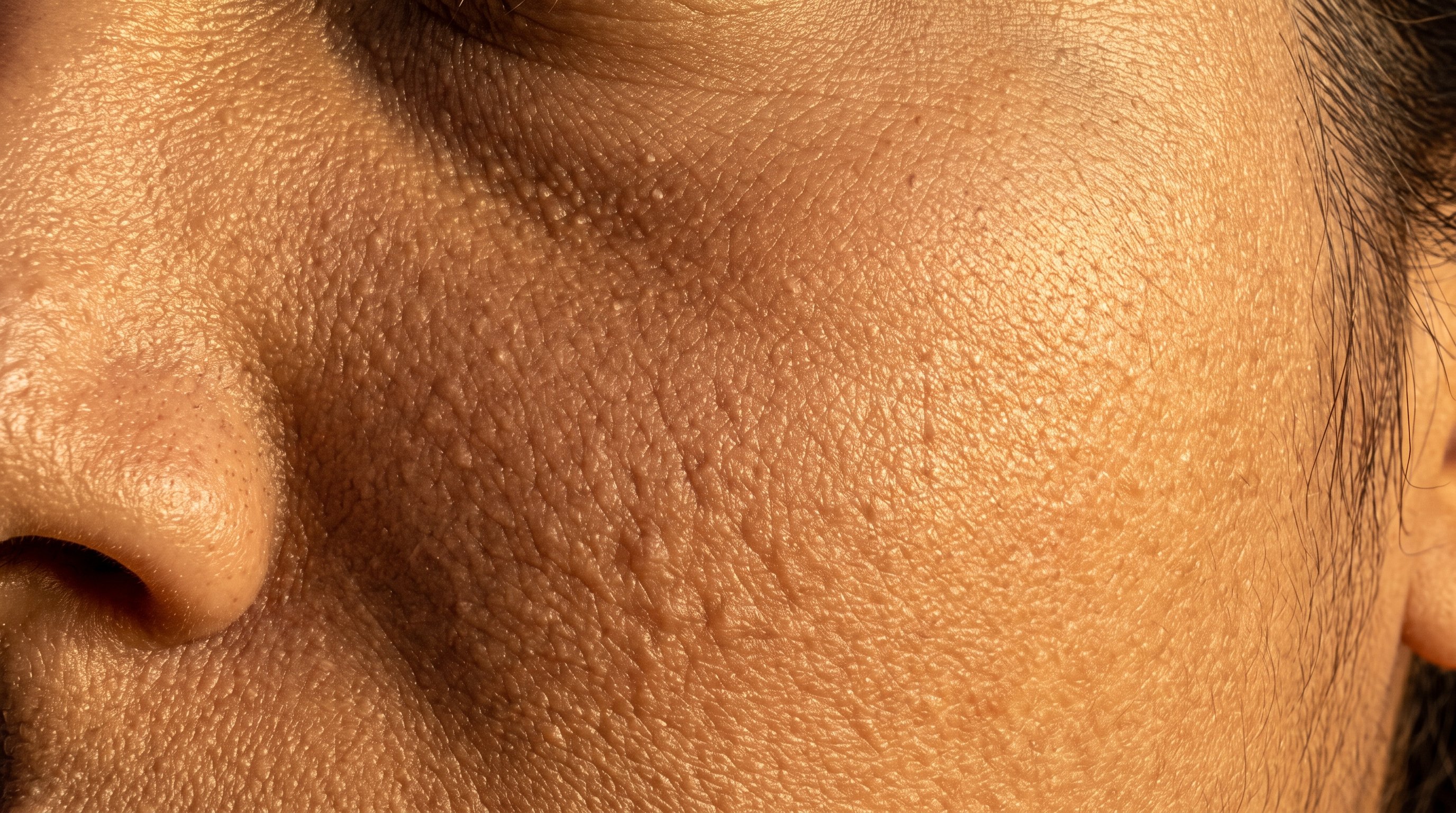
This is sometimes compared loosely to injectable treatments, but let's be honest about the difference. Topical neurotransmitter peptides don't penetrate deeply enough to match the effect of an injectable. The evidence here is real but modest, with some studies showing a reduction in wrinkle depth, while others show more limited results.3 This is one area where the marketing has, at times, run ahead of the science.
Aspect's peptide range includes formulas designed for the eye area, where this gentler, more targeted peptide action tends to be most noticeable. If under-eye concerns are your main focus, our guide on treating dark circles and puffiness looks at how different ingredients, including peptides, play a role.
What Does the Evidence Actually Show?
Here's the honest summary. Signal peptides have the strongest evidence base, with multiple studies showing improved firmness and reduced fine lines over consistent use.1 Carrier peptides, especially copper peptides, have decent support from wound-healing and skin repair research.2 Neurotransmitter peptides have the least robust evidence, and results tend to be more subtle than signal or carrier types.3
One thing that matters more than most people realise is stability. Peptides are delicate molecules that break down easily when exposed to light, air, or the wrong pH. A peptide serum with excellent ingredients can still underperform if the formula doesn't protect those peptides properly, much like ferulic acid needs careful stabilising to remain effective in a formula. This is why formulation quality matters as much as the ingredient list itself.
It's also worth saying clearly, using more peptides at once isn't automatically better. Layering three or four peptide products with overlapping messages can be less effective than one well-formulated serum with a clear job to do.
Which Peptide Serum Is Right for You?
The right peptide depends entirely on what your skin actually needs. If firmness and collagen support are your main concern, signal peptides like those in Medik8's serums are a sensible starting point. If you're focused on skin repair and structural support, carrier peptides such as those found in Mesoestetic's Collagen 360 line may be more relevant, and are often paired well with ceramides for barrier repair. For a more complete anti-ageing routine, many therapists also recommend layering peptides with gentle exfoliation, and our guide to AHAs like glycolic and lactic acid explains how to do this safely.
If expression lines around the eyes or forehead are your concern, Aspect's peptide range offers a more targeted, gentler approach worth exploring. None of these are competing solutions. They're different tools for different jobs.
You can browse the full range of peptide serums and boosters, across Medik8, Aspect, and Mesoestetic, on our serums and boosters collection. For a wider look at the science behind other active ingredients, our Skin Science Hub is a good next stop.
Peptide serum benefits are real, but they're specific. Signal peptides support collagen. Carrier peptides help deliver repair minerals. Neurotransmitter peptides target expression lines, with more modest evidence behind them. None of these peptides is a single miracle ingredient, and understanding which one matches your skin's actual needs is what makes a peptide serum worth using.
If you want to explore how peptides fit into a wider, evidence-based routine, our Skin Science Hub covers the ingredients that work alongside them, from collagen support to barrier repair.


