
How often should you exfoliate? It's one of the most common questions we hear, and for good reason. Exfoliating clears away dull, built-up skin cells so your skin looks brighter and feels smoother. But too much, too often, can leave skin red, tight, or sore.
In this guide, we'll walk through why exfoliating actually matters, the different kinds you'll find on the market, and who each one suits. We'll also explain how retinol fits in differently. And how often each option should feature in your week, so you can build a routine that works with your skin, not against it.
Why Exfoliate at All? What It Does for Your Skin
Your skin's outer layer is called the stratum corneum. Think of it as a thin layer made of skin cells that shed naturally over time, usually across about a month. When those cells shed evenly, skin looks fresh and feels smooth.
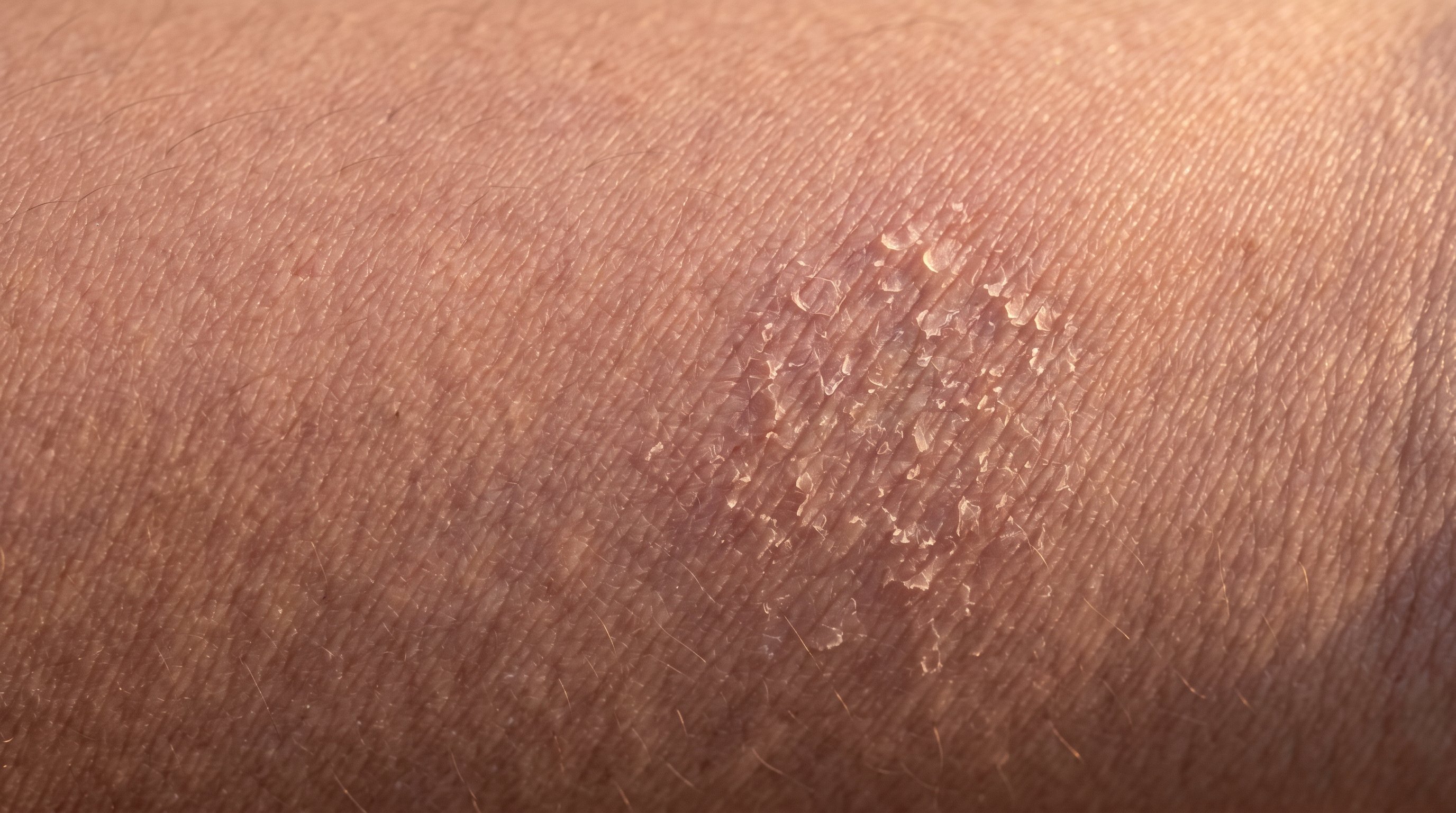
That shedding process can slow down or get patchy, especially when life gets busy and routines get skipped. The result is a build-up of surface cells that makes skin look dull, feel a little rough, and show uneven texture in certain light.
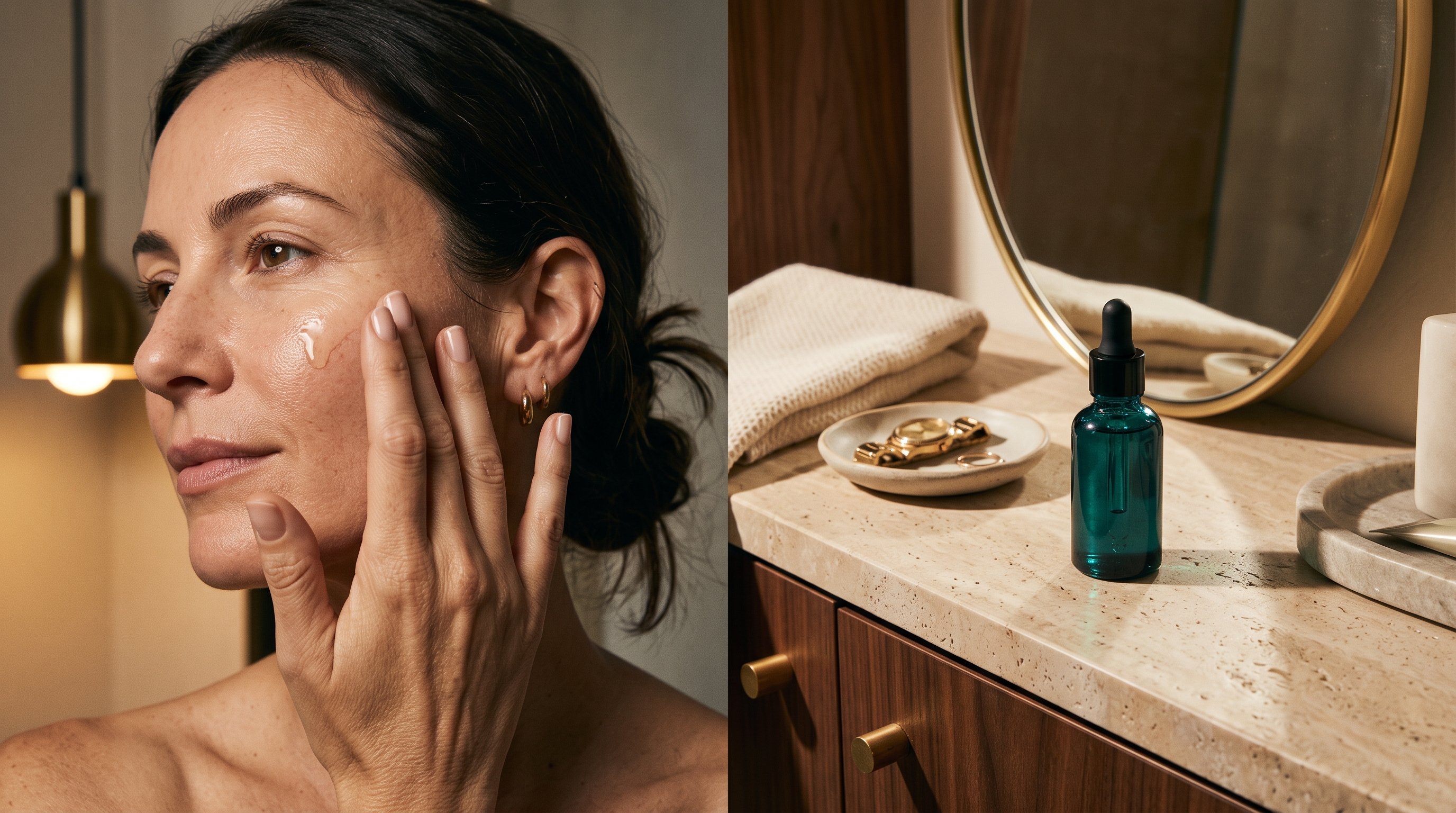
Exfoliating lifts away this build-up. Skin looks brighter and more even, and feels smoother under your fingertips. Here's the part people often miss though: the serums and moisturisers you apply afterwards sit on fresher skin, rather than on a layer of built-up cells, so they can actually do their job. If you want to check you're getting the basics right, this guide on common exfoliation mistakes is worth a read.
What Are the Different Kinds of Exfoliation, and Who Do They Suit?
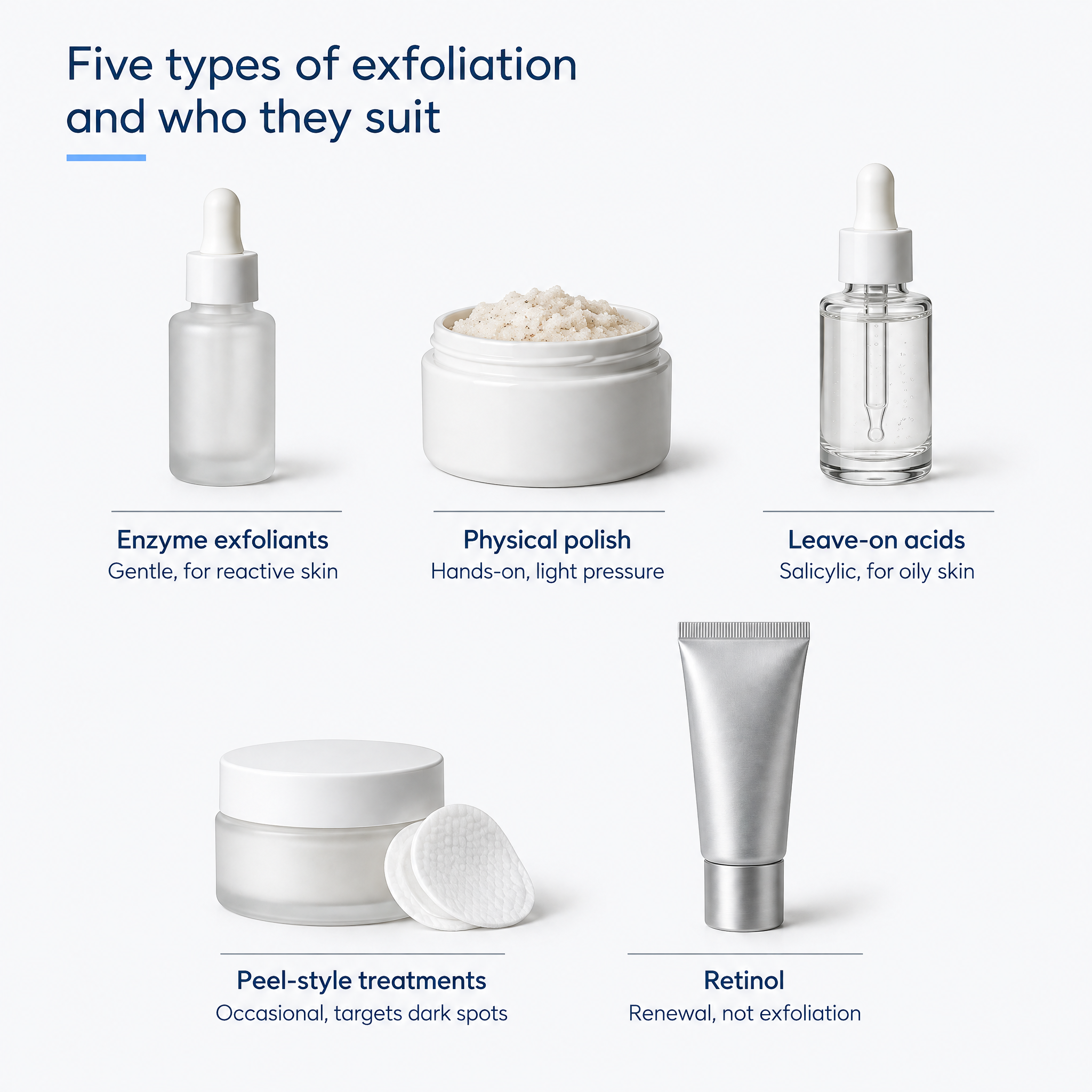
Enzyme exfoliants: gentle, for skin that's quick to react
Enzyme exfoliants use natural fruit enzymes to help loosen surface cells, without rubbing or strong acids. They're a good starting point if your skin is quick to react, or if you're new to exfoliating altogether. We've covered why an enzyme exfoliant is worth trying in more detail if you'd like to explore this option.
Physical polish: a hands-on option
A physical polish, like a rice-based powder mixed with a little water, works through gentle friction. You massage it over damp skin, and it buffs away surface roughness as you rinse. This suits skin that handles touch well, but it's easy to overdo, so a light hand matters.
Leave-on acids: salicylic acid for oily or congested skin
Salicylic acid is a leave-on acid that gets into oily pores and helps clear congestion from within. It's a good fit if your skin runs oily, or if you notice blocked pores and uneven texture around your nose, chin, or forehead. Read more on what salicylic acid does for the skin.
Peel-style acid treatments: for the look of dark spots and uneven tone
A peel-style acid treatment works harder again. It's designed as an occasional, more intensive step, aimed at softening the look of dark spots and smoothing uneven tone over time. Because it does more work on the surface, it needs less frequent use than gentler options.
Retinol: renewal, not exfoliation
Retinol often gets grouped in with exfoliants, but it works differently. Instead of lifting away surface cells, retinol (a form of vitamin A) works from within skin cells, speeding up how quickly new cells form. We'd call this renewal, not exfoliation. It's a separate step in your routine, and shouldn't be used on the same night as a peel-style treatment. Our full guide to starting retinol walks through this in more depth.
When and How Often Should You Exfoliate?
The best approach is to start slowly and build up. Begin with one exfoliating step, two to three times a week. And watch how your skin responds over a couple of weeks before adding anything stronger.

Gentle options, like enzyme exfoliants, tend to suit evening use, around two to three times a week. Leave-on acids such as salicylic acid often work well in the evening too, roughly three to four nights a week, depending on how your skin responds.
Stronger steps need more space between uses. A peel-style acid treatment and retinol both ask a lot of skin, so we suggest just one strong exfoliating step per evening, never both together. Many people find it works well to alternate, a peel-style treatment one night, retinol on a different night, with rest nights in between.
Whatever you use at night, mornings need one non-negotiable step: broad-spectrum SPF30 or higher, every day, all year round. Fresh skin cells are more exposed to the sun, so sun protection matters even more after an evening of exfoliating.
Key Takeaways
- How often you should exfoliate depends on the type you use.
- Gentle enzyme exfoliants suit skin that reacts easily, and can be used two to three times a week.
- Leave-on acids, like salicylic acid, often work well three to four nights a week for oily or congested skin.
- Stronger peel-style treatments and retinol are more powerful, so they usually work best once or twice a week, on alternating nights, never together.
- Start slowly, watch how your skin responds, and build up over several weeks.
What Are the Signs You Might Be Overdoing It?
Your skin is good at telling you when it's had enough. If it feels tight after cleansing, looks a bit flushed, or feels warm to the touch, take that as a cue to ease back.
These signs don't mean something has gone wrong. They simply mean your skin needs a breather. Drop back to one or two uses a week, give it a week or so to settle, then build up again slowly from there.
If in doubt, less is more. A simple, steady routine beats a complicated one that leaves skin feeling sore.
Exfoliating isn't about doing more, it's about doing it well. Pick the kind that suits your skin, start slowly, and build up as your skin tells you it's ready.
Once dull, built-up cells are out of the way, the rest of your routine, your serums, your moisturiser, can finally do their job properly. If you'd like a closer look at matching the right exfoliant to your skin, our guide on exfoliation and what's best for you is a good next read.


