If you've read the label on a good vitamin C serum, you've likely seen ferulic acid listed near the end of the ingredients. It looks small on the list, but its role is large. Ferulic acid skincare has become a mainstay in professional formulas because of one landmark study from Duke University in the United States.
This plant-based antioxidant does more than sit quietly in your serum. It stabilises other actives. It boosts their power against sun damage. It also helps your skin fight oxidative stress, the process that speeds up visible ageing. Let's look at what the science actually shows, and why brands like mesoestetic build entire formulas around this ingredient.
What Is Ferulic Acid and Where Does It Come From?
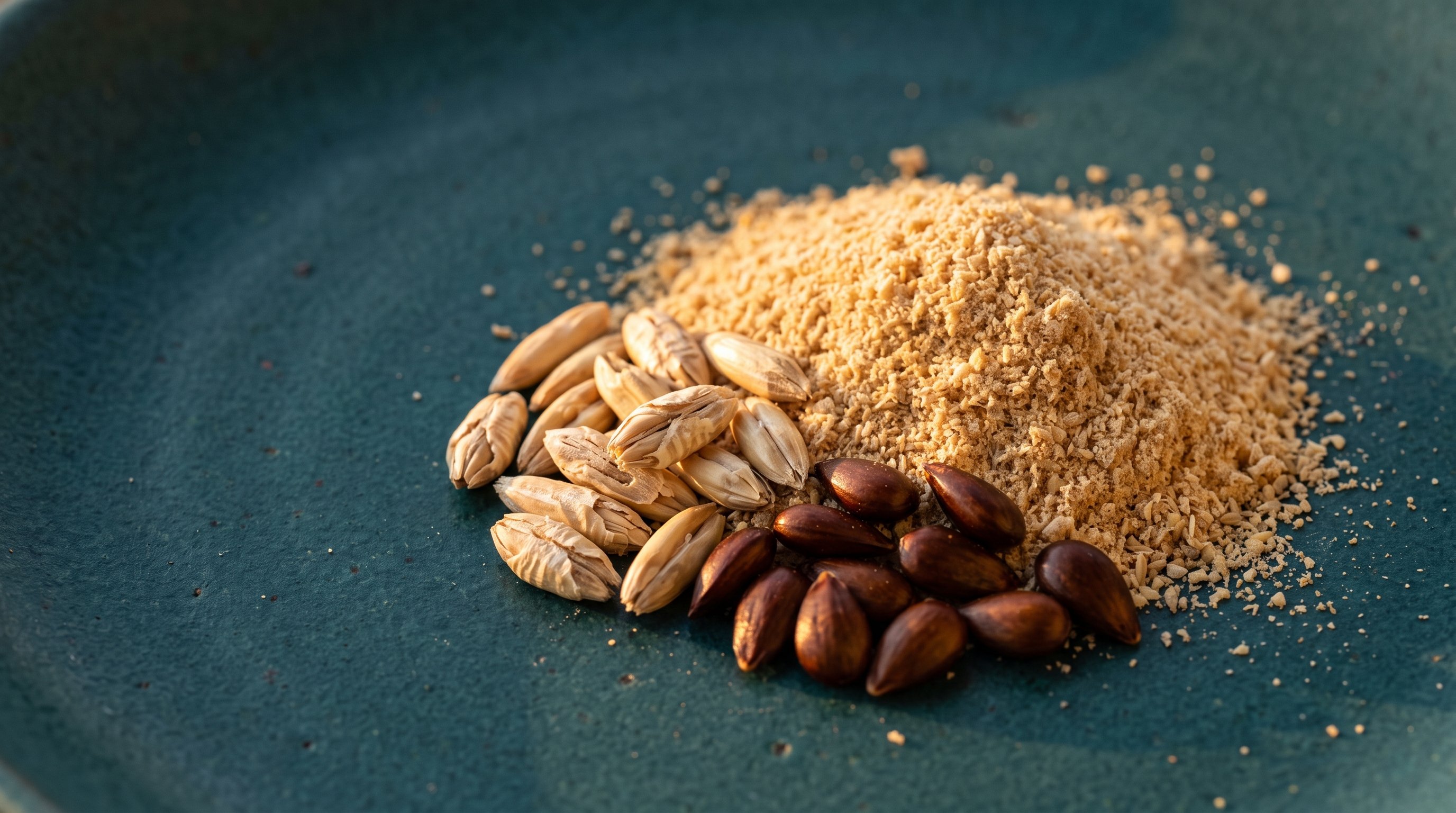
Ferulic acid is a plant compound found in the cell walls of foods like rice bran, oats, and apple seeds. It belongs to a group of antioxidants called polyphenols. In skincare, it is extracted and purified for use in serums and boosters.
Antioxidants work by neutralising free radicals. These are unstable molecules created by UV light, pollution, and normal cell activity. Free radicals steal electrons from healthy skin cells. This process, called oxidative stress, damages collagen and speeds up visible ageing.
On its own, ferulic acid offers modest antioxidant protection. Its real value shows up when it is combined with other antioxidants, especially vitamin C and vitamin E. That combination is where the science gets interesting.
What Did Duke University Discover About Ferulic Acid?
In 2003, a research team led by Dr. Sheldon Pinnell at Duke University Medical Center published a study that changed professional serum formulas. The team tested a formula containing 15% vitamin C, 1% vitamin E, and 0.5% ferulic acid on skin exposed to simulated sunlight.
The results were striking. This three-ingredient combination, now often called CE Ferulic, provided up to eight times more protection against UV-induced skin damage than untreated skin. It also doubled the sun protection benefit of vitamin C and E used alone (Lin et al., 2003).
A follow-up study found the combination reduced thymine dimer formation. This is a marker of UV damage to skin DNA. The reduction was much greater compared to vitamin C alone (Murray et al., 2008). This gave dermatologists solid evidence that ferulic acid was not just filler. It was doing real biological work.
Key Takeaways
- Ferulic acid is a plant-based antioxidant found in rice bran, oats, and apple seeds.
- In skincare, it works best paired with vitamin C and vitamin E, a combination studied at Duke University in 2003.
- That research found ferulic acid stabilises both vitamins, so they don't break down as fast.
- It also boosts their power against UV damage by up to eight times, compared to untreated skin.
- This is why most professional antioxidant serums, including mesoestetic AOX Ferulic, include ferulic acid rath...
Why Do Professional Serums Combine Vitamin C, Vitamin E and Ferulic Acid?
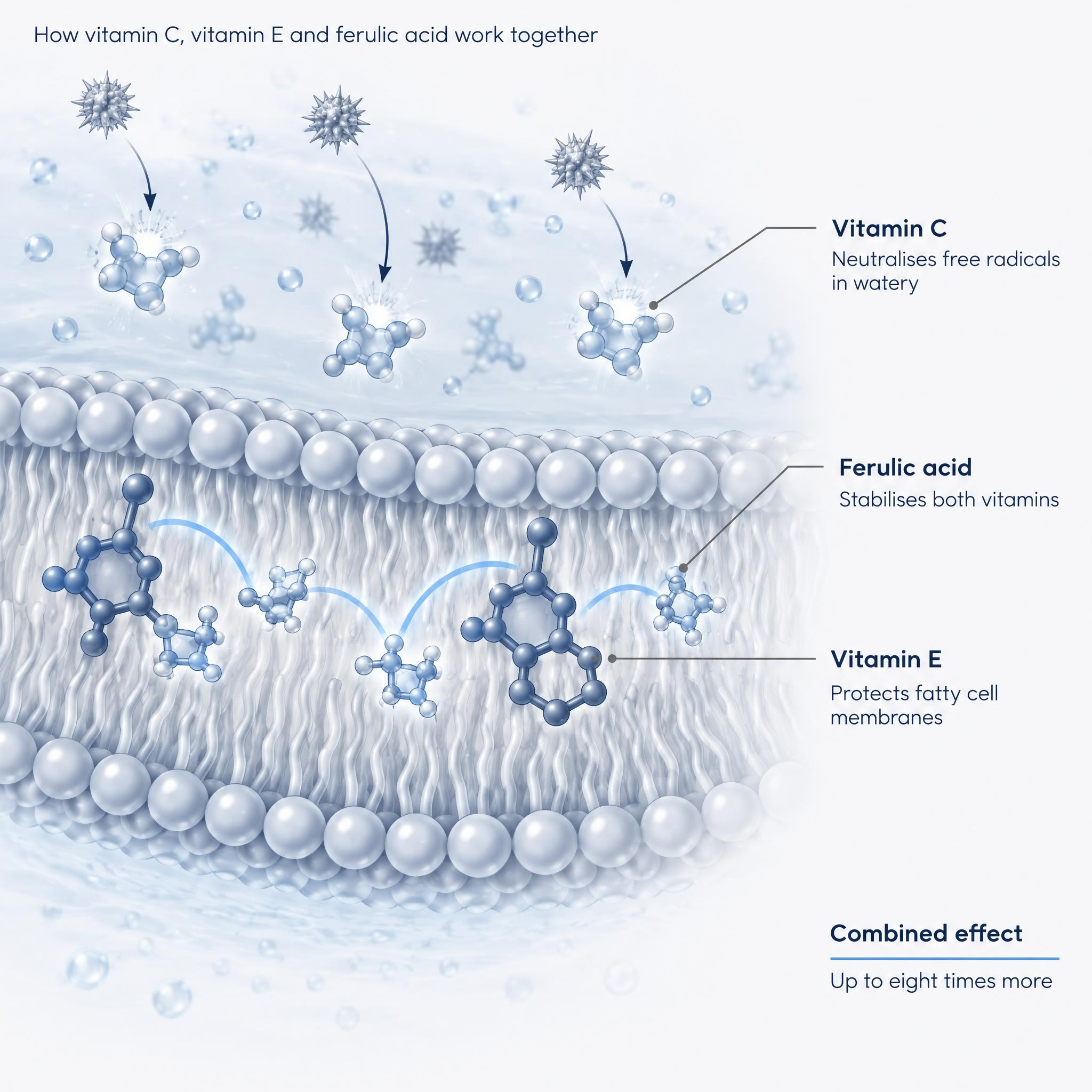
The answer comes down to teamwork. Vitamin C is water-soluble and neutralises free radicals in the watery parts of your skin cells. Vitamin E is fat-soluble and protects the fatty membranes that surround each cell. Used together, they cover more ground than either one alone.
But there's a catch. When vitamin E neutralises a free radical, it becomes unstable itself. Vitamin C can restore it, but this cycle eventually uses up both antioxidants. Ferulic acid steps in here. It stabilises both vitamin C and vitamin E, extending how long they stay active in your serum and on your skin.
This is also why properly formulated vitamin C serums often list ferulic acid on the label. Without it, vitamin C can oxidise quickly, turning the serum yellow or brown and reducing its effectiveness. You can read more about choosing a stable formula in our guide on why you need vitamin C in your skincare routine.
How Does Ferulic Acid Help Protect Skin From Sun Damage and Ageing?
Australia has some of the highest UV levels in the world. Every day outdoors, sunlight creates free radicals in your skin. These molecules trigger an enzyme called MMP-1, which breaks down collagen and elastin, the proteins that keep skin firm. Supporting that collagen network is also where peptides can play a complementary role.
Ferulic acid helps slow this process in two ways. First, it directly neutralises free radicals generated by UV exposure. Second, by stabilising vitamin C and E, it keeps those ingredients working longer throughout the day, when your skin needs protection most.
It's worth being clear about one thing. A ferulic acid serum is not a substitute for sunscreen. Think of it as a second layer of defence that catches some of the oxidative damage your sunscreen doesn't fully block. For the full picture on sun protection, our article on UVA and UVB rays explains why daily SPF still comes first, and our guide to sunscreen filters and why SPF50+ matters in Australia covers the rest.

Featured: Dermalogica Stabilizing Repair Serum
Discover how Dermalogica Stabilizing Repair Serum can help with your skincare routine.
Shop NowWhat Makes mesoestetic AOX Ferulic a Standout Antioxidant Serum?
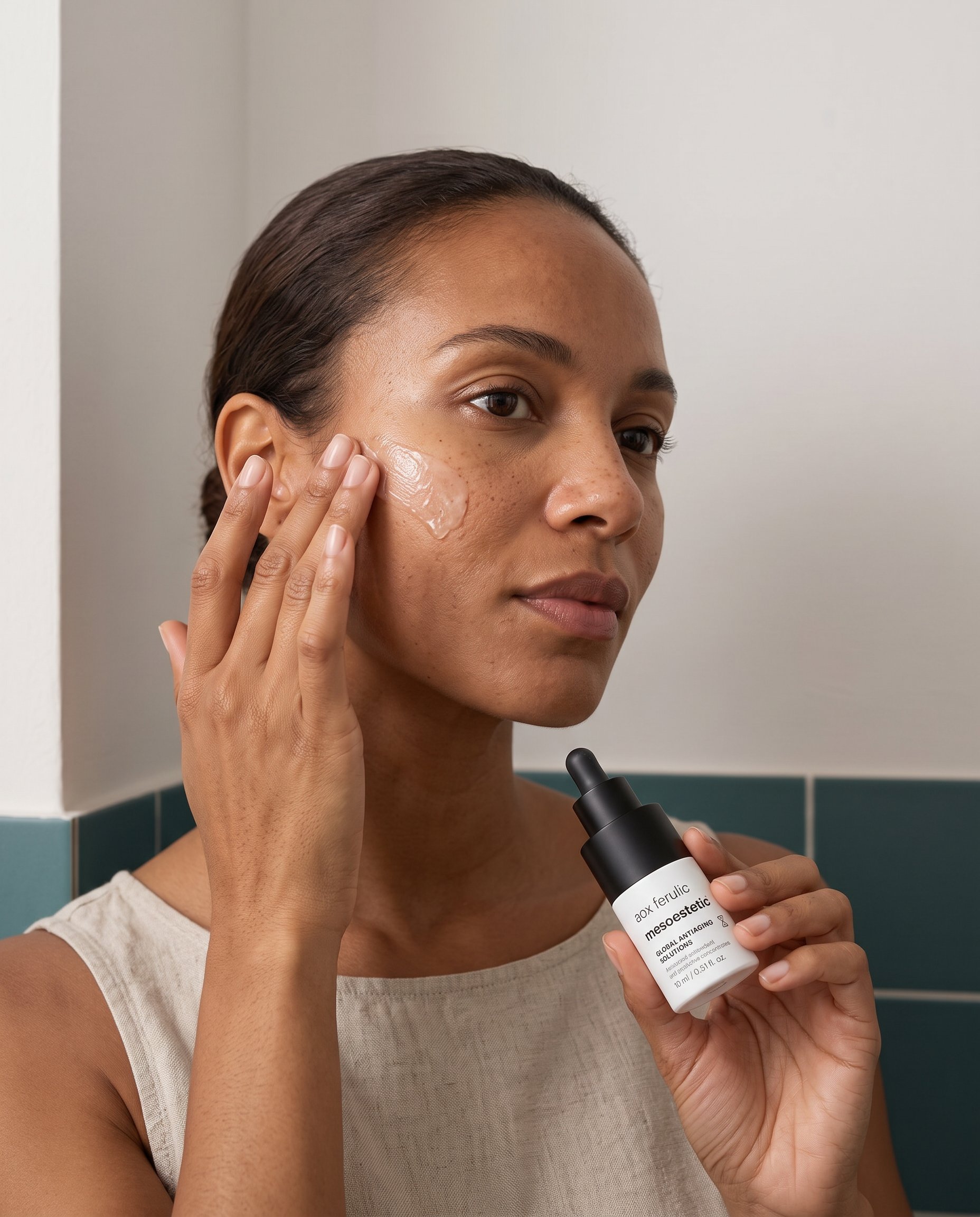
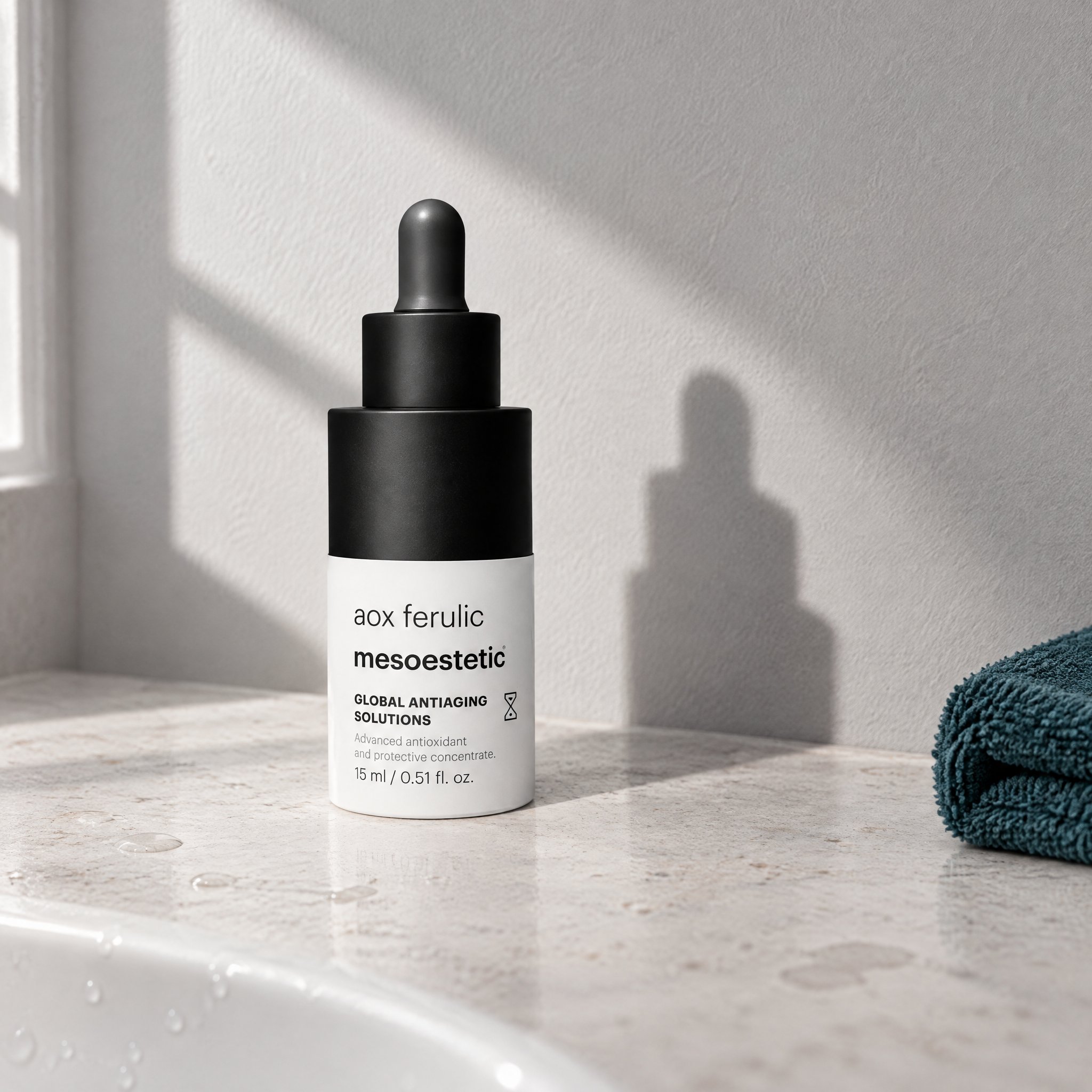
Among the professional brands we curate, mesoestetic AOX Ferulic stands out as a well-built example of this antioxidant science in action. It's formulated to deliver ferulic acid alongside other antioxidants in a stable base. This keeps the actives effective from the first use to the last drop.
What we look for when we recommend an antioxidant serum is simple. Does the formula match the concentrations shown to work in research? Is it packaged to prevent oxidation from light and air? Does it fit into a routine without causing irritation? mesoestetic AOX Ferulic meets these standards, which is why it earns a place in our range.
This isn't about pushing one brand over another. It's about matching the ingredient science to a formula built with the same care Duke University researchers applied in their lab. You can browse this and other evidence-based options in our serums and boosters collection.
How Do You Add Ferulic Acid to Your Skincare Routine?
Ferulic acid works best in the morning, applied after cleansing and before moisturiser and sunscreen. This timing lets the antioxidant serum absorb into clean skin so it's ready to work as soon as you step outside.
Because it's gentle and stable, ferulic acid layers well with most other ingredients, including niacinamide, hyaluronic acid, and barrier-supporting ceramides. If you're building a full routine from scratch, our guide on choosing the right serums walks through the order that gets the best results.
One tip. Always finish your morning routine with broad-spectrum sunscreen. Ferulic acid and its partner antioxidants add a meaningful layer of protection, but they work alongside SPF, not instead of it. For more on building out a full routine, see our guide on how to supercharge your skincare routine.

Featured: Mesoestetic Age Element Anti-Wrinkle Concentrate
Bakuchiol stimulates collagen production and accelerates cell renewal with a retinol-comparable mechanism — without retinol's associated irritation.
Shop NowFerulic acid skincare isn't a passing trend. It's backed by more than two decades of research. It started with the Duke University study that proved a simple truth: some antioxidants work better as a team. When vitamin C, vitamin E, and ferulic acid combine in the right amounts, they protect skin from sun damage far better than any single ingredient.
If you're curious how this fits your own routine, our range of evidence-based antioxidant serums is a good place to start. This includes mesoestetic AOX Ferulic. Understanding what's in your serum, and why, is the first step towards skincare choices that are actually right for you.


