
Acne, redness, and dark spots feel like three separate battles. Most routines treat them that way too, with one product for breakouts, another for rosacea, and a third for pigmentation. Azelaic acid skincare breaks that pattern. This one ingredient works on all three fronts at once, and the science behind it is solid.
Azelaic acid comes from grains like wheat, barley, and rye. It occurs naturally in your skin too, in small amounts. It's gentle enough for sensitive, rosacea-prone skin. Yet it's strong enough to fade pigmentation and calm breakouts. It's also one of the few active ingredients considered safe to use during pregnancy.
What Is Azelaic Acid, and How Does It Work?
Azelaic acid is a dicarboxylic acid, a type of acid with two acid groups instead of one. Your skin makes small amounts of it naturally. Skincare formulas use a stronger, purified version to get real results. Unlike glycolic acid or salicylic acid, it doesn't work by exfoliating dead skin cells.
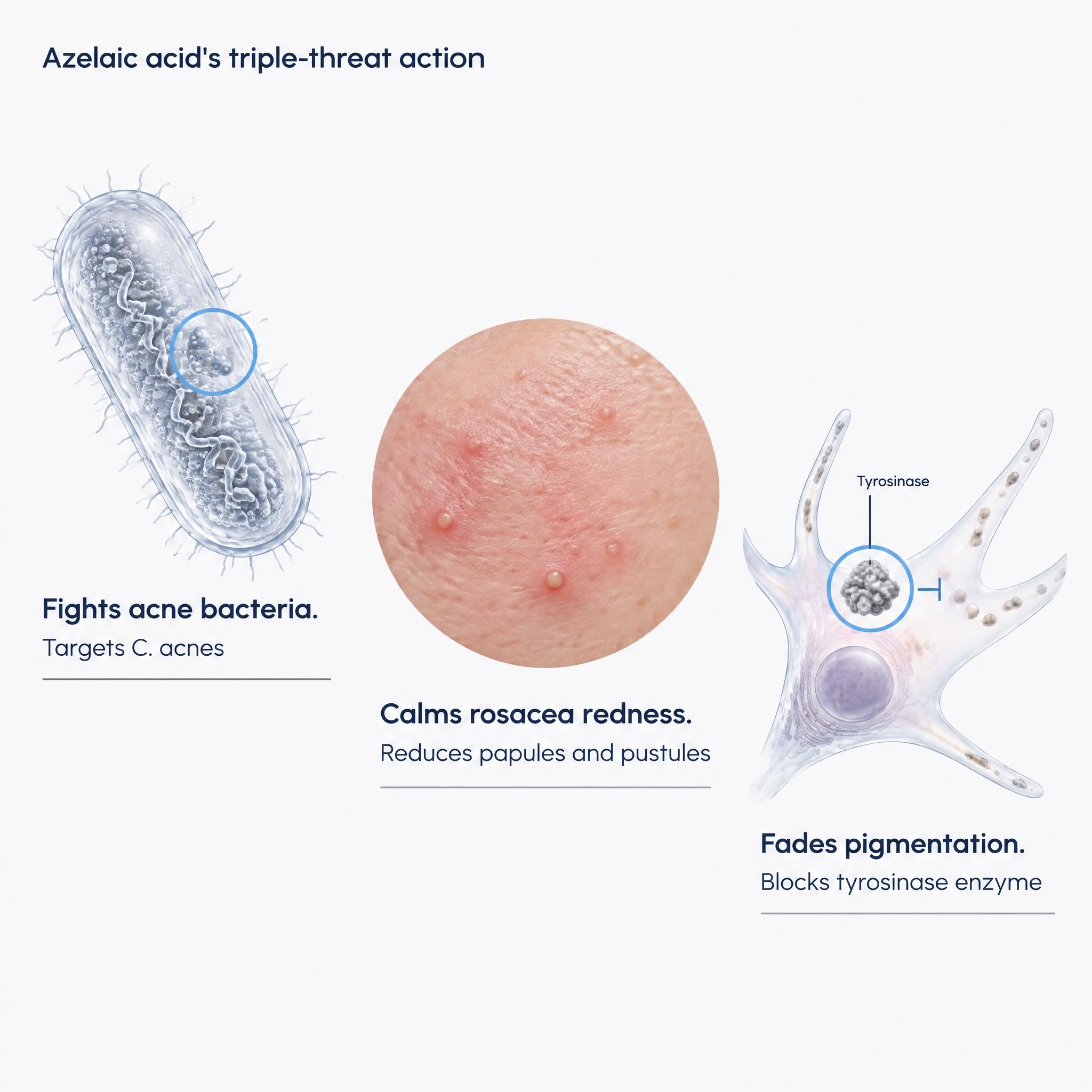
Instead, azelaic acid works on three different pathways inside your skin. It fights the bacteria linked to acne. It calms the inflammation behind rosacea flare-ups. And it blocks the enzyme that creates excess pigment. This is why dermatologists call it a triple-threat ingredient. Few actives can claim that range of benefit.
If you're already dealing with breakouts, our guide on what to look for in skincare for breakouts is a good place to start before adding azelaic acid to your routine.
What Are the Triple-Threat Benefits of Azelaic Acid?
For acne-prone skin, azelaic acid targets Cutibacterium acnes, the bacteria that triggers breakouts. It also helps normalise how skin cells shed inside the pore, so pores are less likely to clog. Clinical trials show 15-20% azelaic acid works about as well as some prescription acne treatments, with fewer side effects (Fitton & Goa, 1991).
For rosacea, azelaic acid reduces the redness, swelling, and small bumps known as papules and pustules. Studies published in the Journal of the American Academy of Dermatology tested this. A 15% azelaic acid gel cut rosacea symptoms far more than a placebo did (Thiboutot et al., 2003). This makes it a first-line option many dermatologists recommend before stronger treatments.
For pigmentation, azelaic acid blocks tyrosinase, the enzyme your skin cells use to produce melanin (the pigment that causes dark spots). Less tyrosinase activity means less excess pigment forms. Research shows azelaic acid works well on melasma and post-acne dark marks, without the risks linked to hydroquinone (Sarkar et al., 2002). If pigmentation is your main concern, our article on saying goodbye to pigmentation explains more treatment options.
Key Takeaways
- Azelaic acid is a naturally occurring acid found in grains like wheat, barley, and rye, and it's known as a triple-threat skincare ingredient.
- It fights the bacteria linked to acne, calms the redness and bumps of rosacea, and fades pigmentation by blocking the enzyme that produces excess melanin (the pigment behind dark spots).
- Unlike many acne and pigmentation treatments, azelaic acid is considered safe to use during pregnancy, falling into Category B.
- Professional brands like Mesoestetic bu...
Is Azelaic Acid Safe to Use During Pregnancy?
Many effective acne and pigmentation ingredients aren't safe in pregnancy. Retinoids, for example, are off the table. Azelaic acid is different. It falls into pregnancy Category B, meaning animal studies show no risk to a developing baby.
This makes azelaic acid a trusted option for treating melasma (pregnancy-related pigmentation) and hormonal breakouts during pregnancy. Many dermatologists recommend it as a first choice for expecting mums dealing with skin changes. Still, always check with your doctor or midwife before starting any new active ingredient.
How Does Mesoestetic Use Azelaic Acid for Pigmentation?
Mesoestetic, a Spanish clinical skincare brand known for advanced pigmentation protocols, builds azelaic acid into several of its depigmentation formulas. Their approach pairs azelaic acid with other brightening agents, like kojic acid and arbutin, to attack pigment production from multiple angles at once.

This combination approach reflects a wider trend in professional skincare. Single ingredients rarely solve pigmentation alone. Layering azelaic acid with complementary actives, under expert guidance, tends to deliver more even, lasting results than any one ingredient could on its own.
What Other Azelaic Acid Options Are Worth Knowing?
Mesoestetic isn't the only brand doing this well. Azelaic acid shows up in many professional skincare ranges. Some blend it with niacinamide for extra barrier support. Others pair it with vitamin C, an antioxidant that fights free radicals, for added protection. Formulation strength, texture, and pairing ingredients all affect how well an azelaic acid product suits your skin.
This is why we look across brands rather than pushing one range. The right azelaic acid product depends on your skin type, sensitivity, and main concern, whether that's breakouts, redness, or pigmentation. Exploring the full range of serums and boosters gives you a clearer picture of what's out there.
How Do You Add Azelaic Acid to Your Skincare Routine?
Azelaic acid is forgiving compared to many other actives, but it still pays to start slowly. Begin with two to three applications a week, then build up as your skin adjusts. Apply it after cleansing and before moisturiser, both morning and night if your skin tolerates it well.
It plays well with most other ingredients, including niacinamide and hyaluronic acid. Be more cautious pairing it with strong exfoliating acids like glycolic acid at first, since combining actives can increase irritation. If breakouts are part of your picture too, our guide on why we get blackheads explains how pore congestion and actives connect.
Always finish with SPF in the morning. Azelaic acid doesn't increase sun sensitivity the way retinoids do, but sun protection is non-negotiable for anyone treating pigmentation. Fading dark spots only to have them return from unprotected sun exposure defeats the purpose.
Azelaic acid earns its reputation as a triple-threat ingredient. It calms rosacea, clears acne-causing bacteria, and fades pigmentation, all while staying gentle enough for pregnancy and sensitive skin. Few ingredients cover this much ground with this much evidence behind them.
Whether you find it in a Mesoestetic depigmentation formula or a serum from another professional brand, azelaic acid is worth understanding before you buy. If you're weighing up your options, our team can help. We'll point you toward the formula and strength that genuinely fits your skin, not just what's trending.


